Pythagoras — "Silence is better than unmeaning words."
Silence is better than unmeaning words.
Silence is better than unmeaning words.
Click any product to generate a realistic preview. Up to 3 at a time.
* Initial load can take up to 90 seconds — revising the preview in another color is nearly instant.
"Do not wear a tight shoe."
"Leave not a trace of the pot in the ashes."
"The most beautiful thing is harmony."
"Don't walk on the highway."
"The stars in the heavens sing a music if only we had ears to hear."
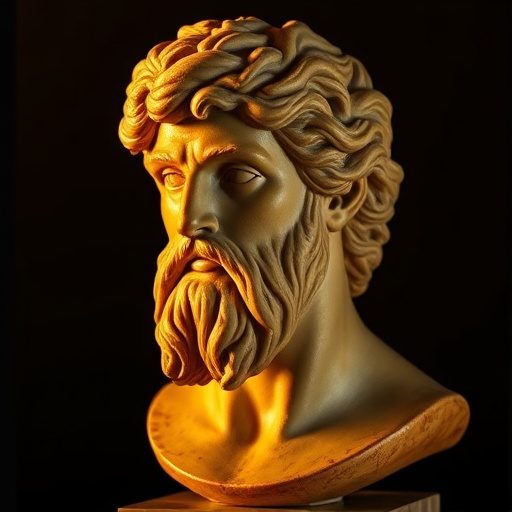
Greek philosopher and mathematician whose school in Croton combined geometry (the Pythagorean theorem), number-mysticism, and a religious-vegetarian way of life. Closely associated with Thales of Miletus (earlier pre-Socratic and the first philosopher). For an intellectual contrast, see Heraclitus, pre-Socratic Greek philosopher of flux — Heraclitus called Pythagoras 'the chief of swindlers' — among the founding insults of the philosophical-rivalry tradition. Their 'all is flux' vs 'all is number' poles still organize the philosophy of mathematics today (Platonist vs anti-realist).
A philosophical statement on the value of meaningful speech.
Date: c. 570-495 BCE (attributed later)
WisdomFound in 3 providers: gemini,deepseek,grok
3 sources checked
When you have nothing worthwhile to say, staying quiet is the smarter choice. Empty words waste everyone's time and dilute genuine communication. Speaking just to fill silence, or talking without substance, does more harm than good. Real understanding comes through deliberate, meaningful expression — not noise. Restraint in speech signals wisdom, while rambling signals confusion or insecurity.
Pythagoras founded a secretive philosophical brotherhood in Croton where initiates observed mandatory silence — sometimes for years — before earning the right to speak. He believed disciplined thought preceded worthy speech. His mathematical worldview prized precision: every number had meaning, every statement should too. Vague or empty talk contradicted his core conviction that truth is exact, not approximate.
In 6th-century BCE Greece, rhetoric and public discourse were rising arts, with sophists increasingly valued for verbal cleverness over truth. Pythagoras pushed back against this culture, insisting wisdom required inner discipline. His school's silence vow was radical when oral culture dominated Greek life. Meaningful speech carried sacred weight in a world where philosophy, religion, and civic life were inseparable.
AI-generated insights based on extensive research and information for context. Factual errors? Email [email protected].
Your cart is empty