What it means
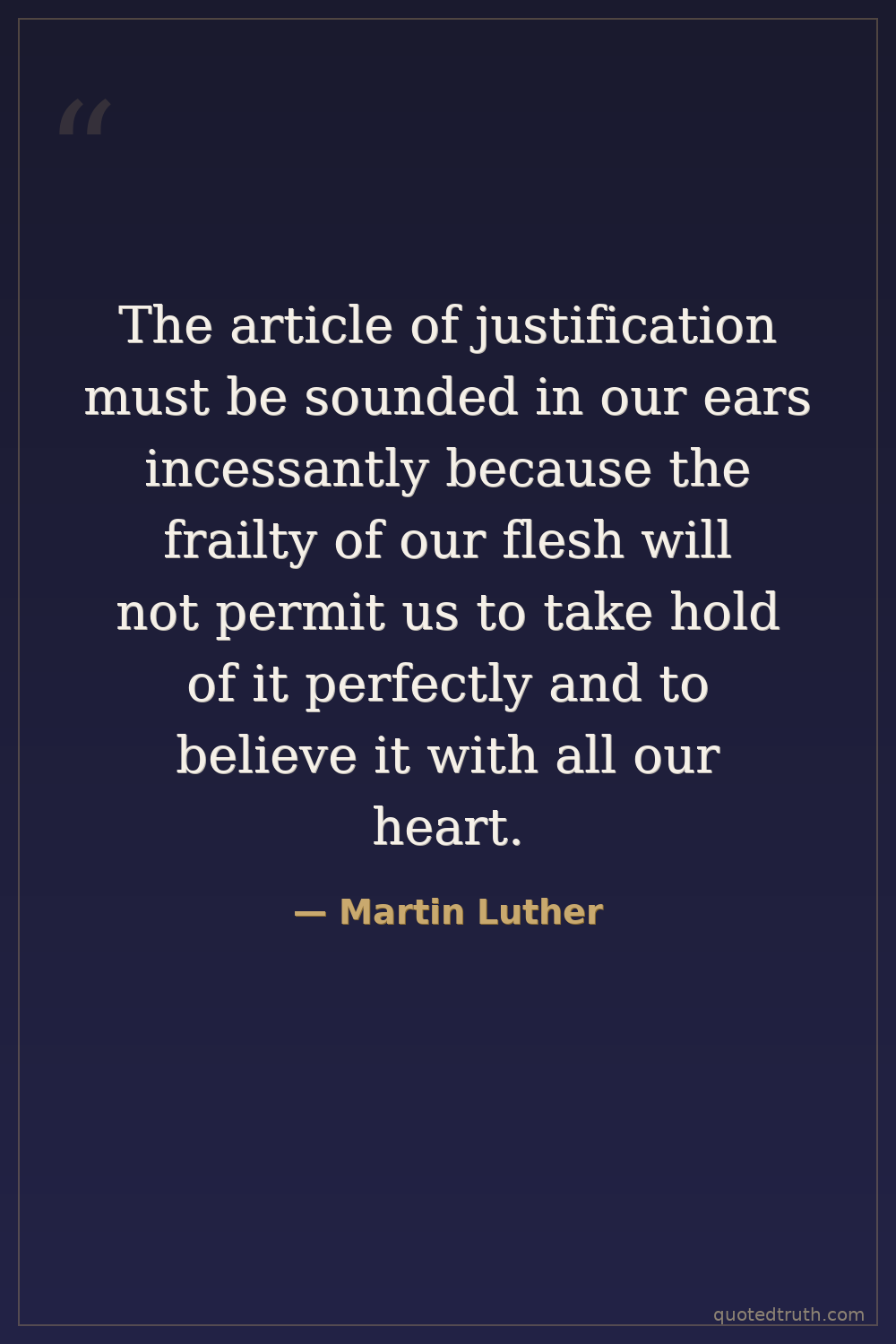
We need to hear the message of justification by faith constantly because our weak human nature keeps us from fully grasping or trusting it. Even sincere believers struggle to internalize that righteousness comes as a gift, not through their own effort. Repetition matters because our instincts keep pulling us back toward earning approval. The truth has to be preached again and again to sink past our resistance and take root in the heart.
Relevance to Martin Luther
Justification by faith alone was the doctrine Luther staked his life on, the cornerstone of his break with Rome in 1517. As a former Augustinian monk tormented by scrupulosity and fear of damnation, he knew firsthand how hard it is for the human conscience to rest in unearned grace. His sermons, catechisms, and commentaries hammered this point repeatedly, convinced that even pastors backslide into works-righteousness without constant reminder.
The era
In early modern Europe, the late medieval Catholic Church taught salvation through sacraments, penance, indulgences, and good works. Luther's 95 Theses in 1517 challenged indulgence sales and ignited the Reformation, splintering Western Christianity. The printing press spread his German writings rapidly. Amid peasant revolts, wars of religion, and fierce Catholic counterattack, Luther saw ordinary Christians constantly tempted to slip back into merit-based piety, making incessant preaching of grace a pastoral necessity.
AI-generated insights based on extensive research and information for context. Factual errors? Email [email protected].