What it means
Human longing to fly isn't a modern ambition — it stretches back to prehistory. Watching birds navigate the sky while humans remained earthbound created a deep, inherited yearning across civilizations. This quote frames aviation not as cold engineering but as the fulfillment of an ancient emotional need, passed generation to generation through myth, imagination, and the simple observation of creatures that could do what humans could not.
Relevance to Wright Brothers (Orville & Wilbur)
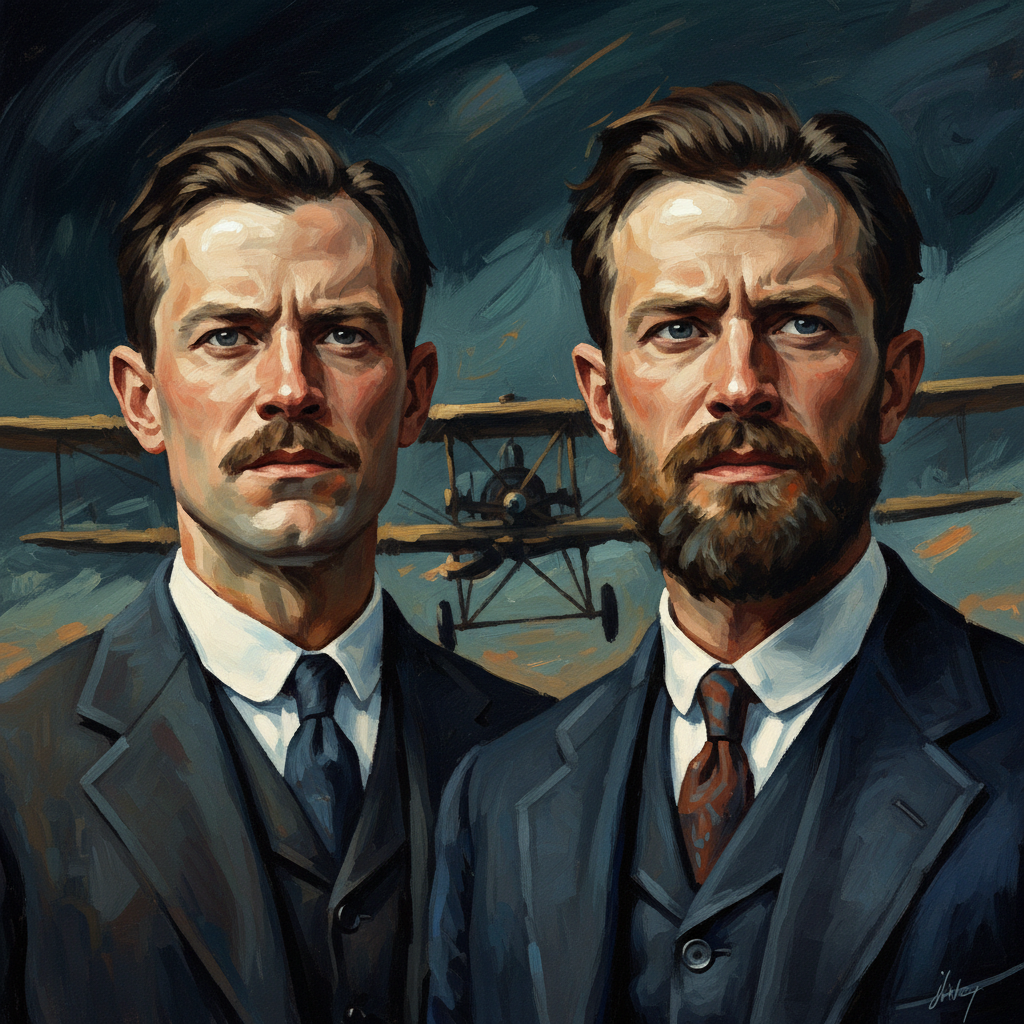
Orville and Wilbur Wright were bicycle mechanics from Dayton, Ohio — practical men who nonetheless pursued an almost mystical goal. Their years of meticulous glider tests at Kill Devil Hills showed they understood flight as both science and calling. When they achieved powered flight on December 17, 1903, they weren't merely solving an engineering problem; they saw themselves as answering a longing they believed was hardwired into humanity across all of recorded history.
The era
The Wright Brothers flew in 1903, when heavier-than-air flight remained unproven and widely mocked. Otto Lilienthal had died in an 1896 glider crash; Samuel Langley's government-funded Aerodrome failed publicly weeks before Kitty Hawk. The industrial revolution had mechanized nearly everything, yet the sky remained unconquered. Ancient myths like Icarus still defined humanity's aerial imagination, making the Wright Brothers' success feel like the literal culmination of centuries of inherited, earth-bound longing finally answered.
AI-generated insights based on extensive research and information for context. Factual errors? Email [email protected].