Wright Brothers (Orville & Wilbur) — "The machine is now quite stable in the air and can be controlled with ease."
The machine is now quite stable in the air and can be controlled with ease.
The machine is now quite stable in the air and can be controlled with ease.
Click any product to generate a realistic preview. Up to 3 at a time.
* Initial load can take up to 90 seconds — revising the preview in another color is nearly instant.
"The flying machine is a thing of the future, and it is a thing that will change the world."
"If its engine stops, it must fall with deathly violence, for it can neither glide like the aeroplane or float like the balloon. The helicopter is much easier to design than the aeroplane, but is worth…"
"The desire to fly is an idea handed down to us by our ancestors who, in their grueling travels across trackless lands in prehistoric times, looked enviously on the birds soaring freely through space, …"
"The machine itself is but a tool, the spirit that controls it is the thing."
"The desire to fly is an idea handed down to us by our ancestors who, in their dim terrestrial captivity, looked enviously on the birds soaring freely through space…"
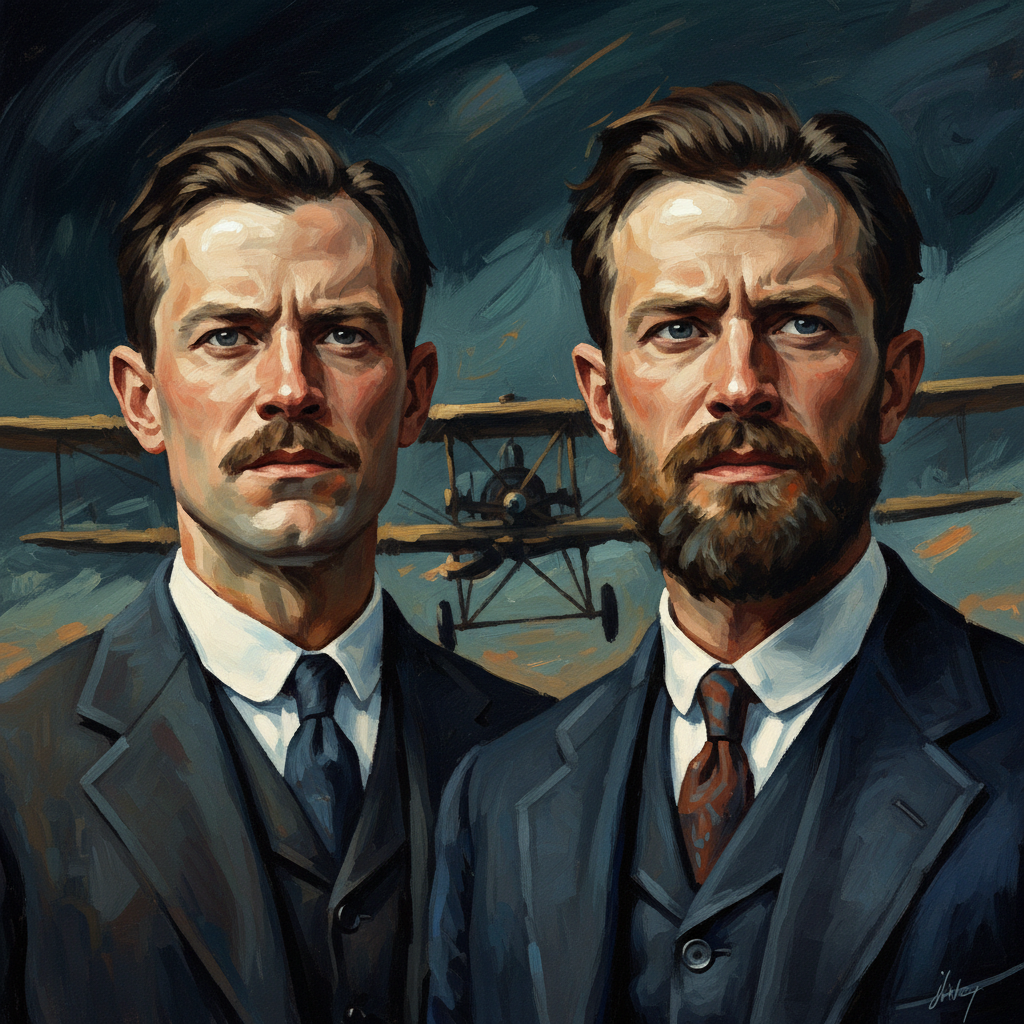
American aviation pioneers who achieved the first sustained powered controlled airplane flight at Kitty Hawk, NC, on December 17, 1903. Closely associated with Octave Chanute (their gliding mentor and aeronautical correspondent). For an intellectual contrast, see Samuel Pierpont Langley, Smithsonian Institution Secretary and government-funded aviation researcher — Langley's Aerodrome crashed twice into the Potomac in October-December 1903 with $50,000 of War Department funding; the Wright Brothers' bicycle-shop empiricism beat Langley's institutional Big Science by 9 days. The most-cited example in engineering history of empirical-tinkerer beating institution-funded credentialism.
Found in 1 providers: grok
1 source checked
True mastery isn't just making something work once — it's making it work reliably and obediently. This quote declares that a machine has crossed from unpredictable experiment into a controllable tool. Stability means it doesn't fight the pilot; control means the pilot can direct it intentionally. Together, these qualities transform a dangerous novelty into something genuinely useful — the difference between a one-time stunt and a repeatable, practical technology.
The Wright Brothers understood that flight's core problem wasn't lift — it was control. While rivals chased raw power, Orville and Wilbur spent 1900–1902 testing gliders at Kitty Hawk specifically to perfect three-axis control: pitch, roll, and yaw. Their patented wing-warping system and movable rudder solved what had killed others' attempts. By 1905, their Flyer III could bank, turn, and circle — finally matching the calm confidence this quote expresses.
In the early 1900s, powered flight was a global race littered with failure. Samuel Langley's government-funded Aerodrome crashed twice into the Potomac in late 1903, just weeks before Kitty Hawk. European experimenters like Ader and Maxim had produced machines that briefly left the ground but couldn't be steered. The era's hunger for flight was immense — railroads and steamships dominated but couldn't conquer the sky — making controlled, repeatable flight revolutionary.
AI-generated insights based on extensive research and information for context. Factual errors? Email [email protected].
Your cart is empty