What it means
Humanity's longing to fly isn't a modern invention — it's ancient and inherited. Our prehistoric ancestors, struggling painfully across difficult terrain on foot, watched birds glide effortlessly above every obstacle and felt deep envy. That yearning became embedded in human nature, passed down through generations. The sky represented pure freedom: unlimited speed, no barriers, boundless space. This quote frames aviation not as a technological ambition but as the fulfillment of a primal, collective human dream.
Relevance to Wright Brothers (Orville & Wilbur)
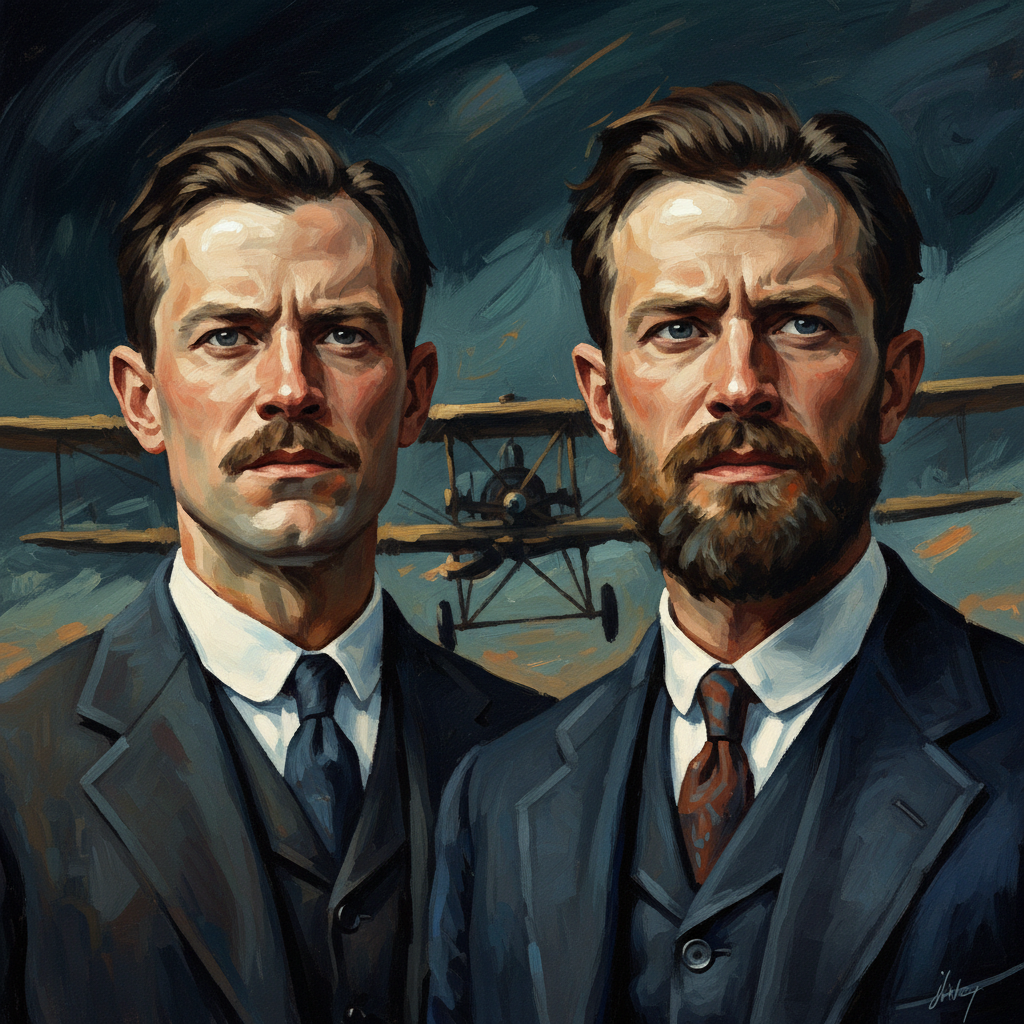
The Wright Brothers were the men who finally answered that ancient call. Orville and Wilbur spent years in Dayton studying bird wing-warping mechanics, building and crashing gliders at Kitty Hawk, before achieving sustained powered flight in December 1903. They consistently framed their work not as personal genius but as the culmination of a dream older than civilization. Their humility about standing at the end of a very long human aspiration defined their character and shaped their meticulous, methodical approach.
The era
In the early 1900s, industrialization made the impossible feel achievable. Railroads and telegraphs had collapsed land distances; automobiles were arriving. Aviation was the last frontier. Otto Lilienthal had died gliding in 1896; Samuel Langley failed publicly just nine days before Kitty Hawk. Public skepticism was enormous. The Wright Brothers' 1903 success ignited an aviation revolution — within a decade, aircraft began reshaping warfare, commerce, and humanity's fundamental relationship with geography and distance.
AI-generated insights based on extensive research and information for context. Factual errors? Email [email protected].