What it means
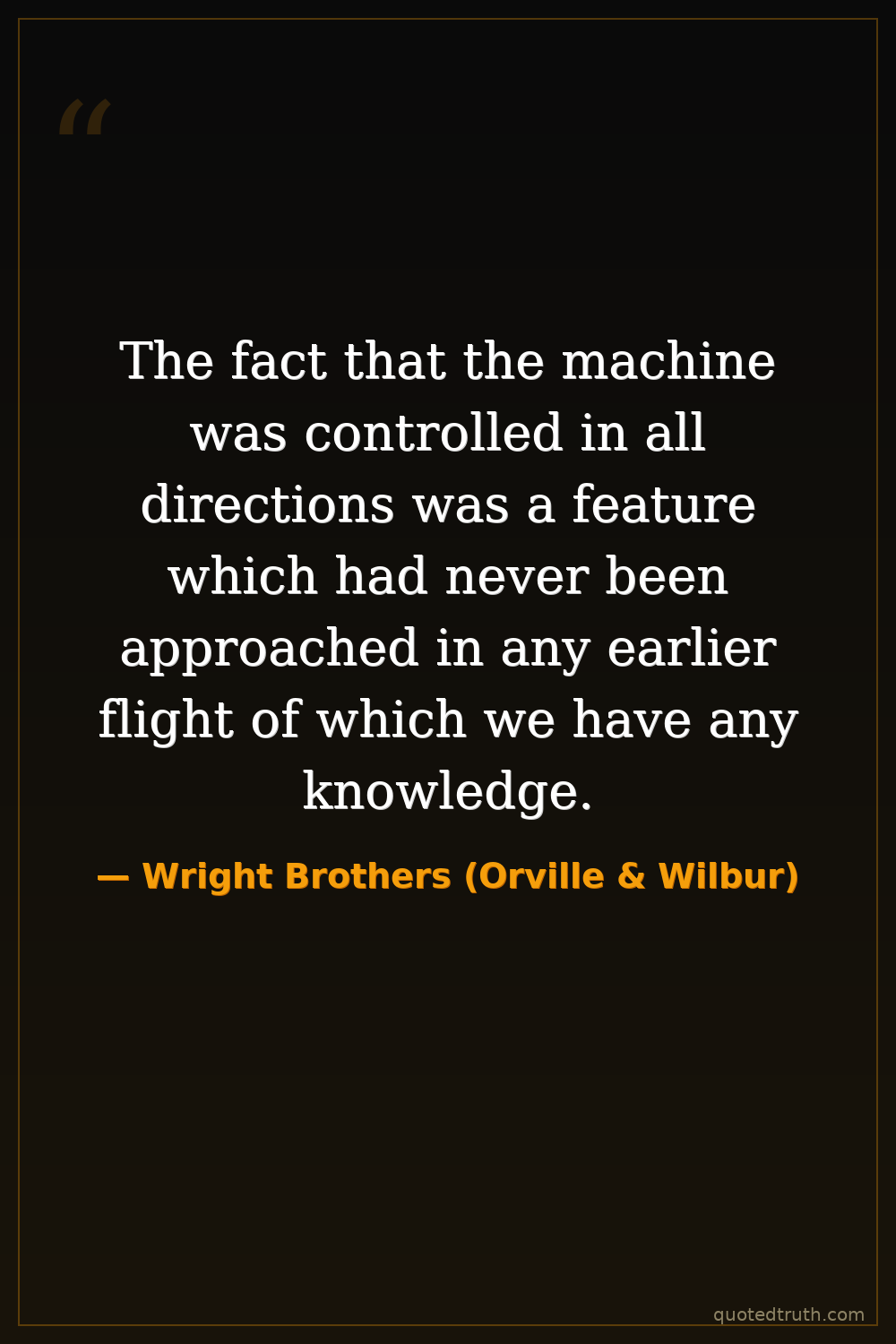
The speaker emphasizes that what made their flight truly groundbreaking was not just leaving the ground but steering the craft deliberately through the air. Earlier attempts might have achieved brief lift or glides, but none gave the pilot real command over pitch, roll, and yaw. True flight, they argue, requires mastery of direction, not merely hanging in the air for a few seconds before crashing down.
Relevance to Wright Brothers (Orville & Wilbur)
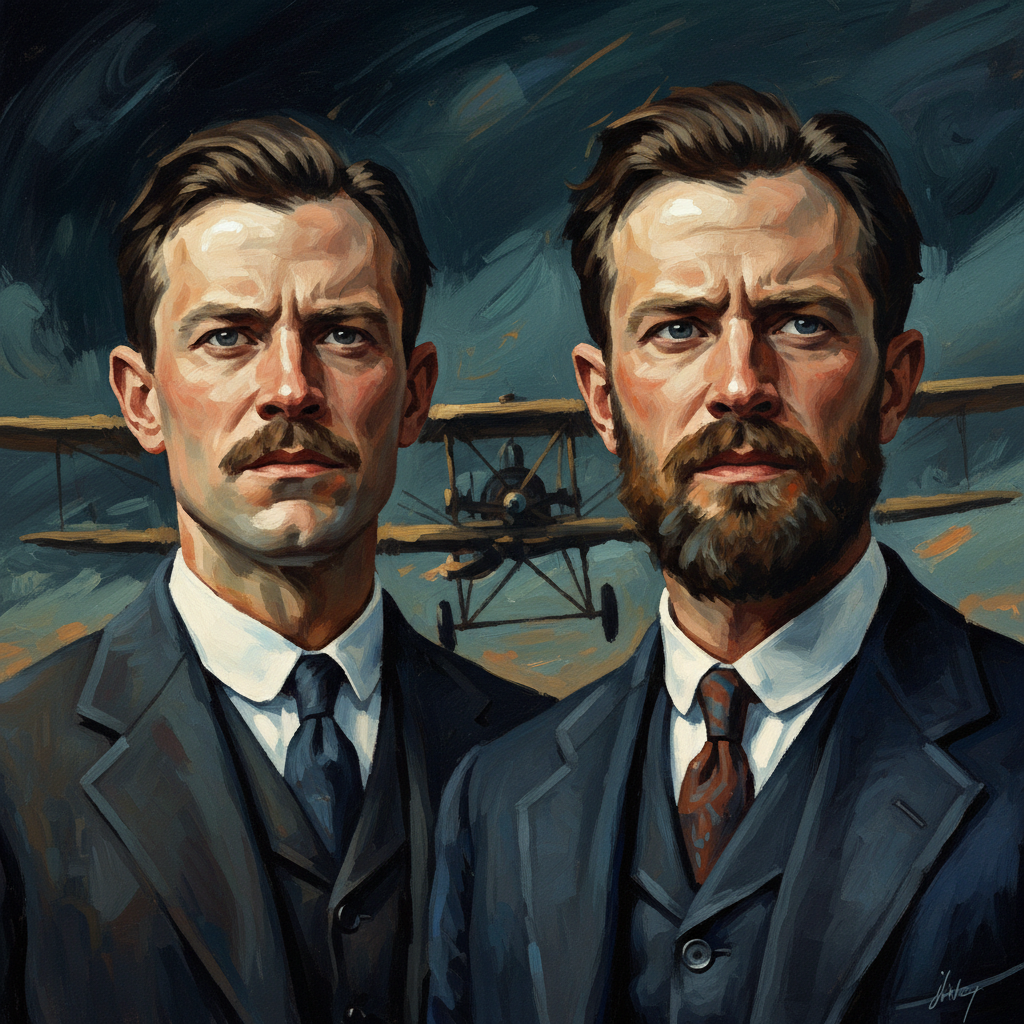
Orville and Wilbur obsessed over control long before power, studying birds and building gliders at Kitty Hawk to perfect wing-warping, rudder, and elevator coordination. Bicycle mechanics by trade, they understood balance as an active skill, not a passive condition. While rivals like Langley chased engine thrust, the brothers solved three-axis control first, which is why their 1903 Flyer, and this very quote, redefined what counted as genuine human flight.
The era
At the dawn of the twentieth century, inventors worldwide were racing to crack heavier-than-air flight, and many had briefly hopped into the air using underpowered engines or launching ramps. The press often credited these stunts as 'flight.' The Wrights were pushing back against that loose definition during an age enamored with mechanical progress, electricity, and automobiles, insisting that controllable, sustained, pilot-directed movement was the real threshold aviation had to cross.
AI-generated insights based on extensive research and information for context. Factual errors? Email [email protected].