Wright Brothers (Orville & Wilbur) — "We could hardly wait to get up in the morning."
We could hardly wait to get up in the morning.
We could hardly wait to get up in the morning.
Click any product to generate a realistic preview. Up to 3 at a time.
* Initial load can take up to 90 seconds — revising the preview in another color is nearly instant.
"It is difficult to understand how anyone could have been so blind to the truth."
"The machine itself was a thing of beauty, a marvel of ingenuity and simplicity."
"The greatest value of our work is that it will be an inspiration to others."
"We do not intend to make a fortune out of this, but to make a machine that will fly."
"The fact that the machine has not failed in any material part is a source of great satisfaction."
American aviation pioneers who achieved the first sustained powered controlled airplane flight at Kitty Hawk, NC, on December 17, 1903. Closely associated with Octave Chanute (their gliding mentor and aeronautical correspondent). For an intellectual contrast, see Samuel Pierpont Langley, Smithsonian Institution Secretary and government-funded aviation researcher — Langley's Aerodrome crashed twice into the Potomac in October-December 1903 with $50,000 of War Department funding; the Wright Brothers' bicycle-shop empiricism beat Langley's institutional Big Science by 9 days. The most-cited example in engineering history of empirical-tinkerer beating institution-funded credentialism.
Found in 1 providers: deepseek
1 source checked
Pure enthusiasm for work so consuming that sleep itself becomes an obstacle. It captures the rare state of being absorbed in something so meaningful that each morning feels like an opportunity rather than a burden. No external reward required — just the magnetic pull of purposeful work. People driven this way don't need motivation or alarms; the work calls them. It's the clearest sign someone has found their life's purpose.
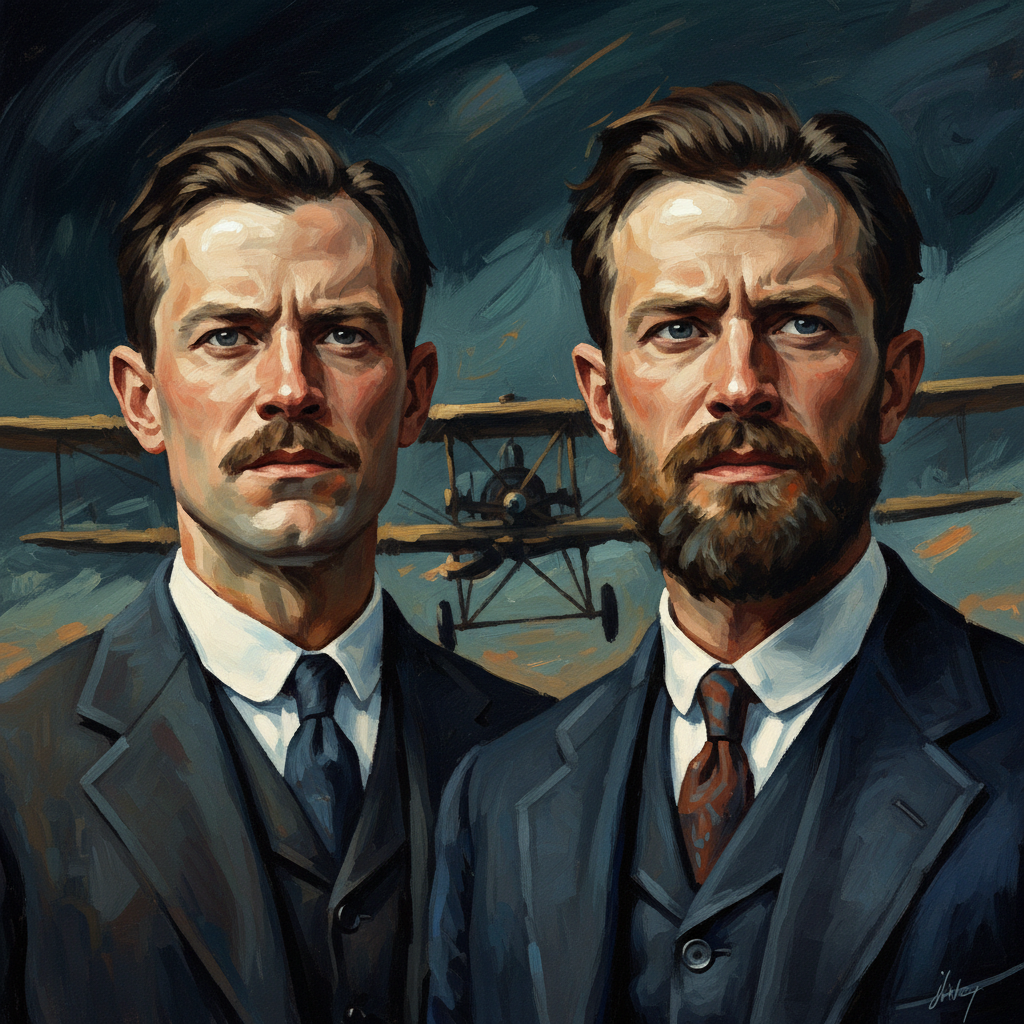
The Wright Brothers were bicycle mechanics — entirely self-taught — who transformed their Dayton shop into an aeronautical laboratory. They built their own wind tunnel, spent years testing gliders at Kitty Hawk, and corresponded obsessively with scientists worldwide. Neither sought fame or fortune; they were drawn purely by the puzzle of flight. Their meticulous, joy-driven work ethic made December 17, 1903 — the day powered flight became real — an inevitable outcome of that morning enthusiasm.
At the turn of the 20th century, most scientists believed heavier-than-air powered flight was physically impossible. The Smithsonian's Samuel Langley had just failed publicly with a government-funded machine weeks before the Wright Brothers succeeded. America's Progressive Era celebrated individual ingenuity, yet institutional skepticism reigned in aviation. The same years brought Edison's electrical grid, early automobiles, and industrial expansion — a world exploding with possibility, where the most audacious dreamers moved civilization forward.
AI-generated insights based on extensive research and information for context. Factual errors? Email [email protected].
Your cart is empty