What it means
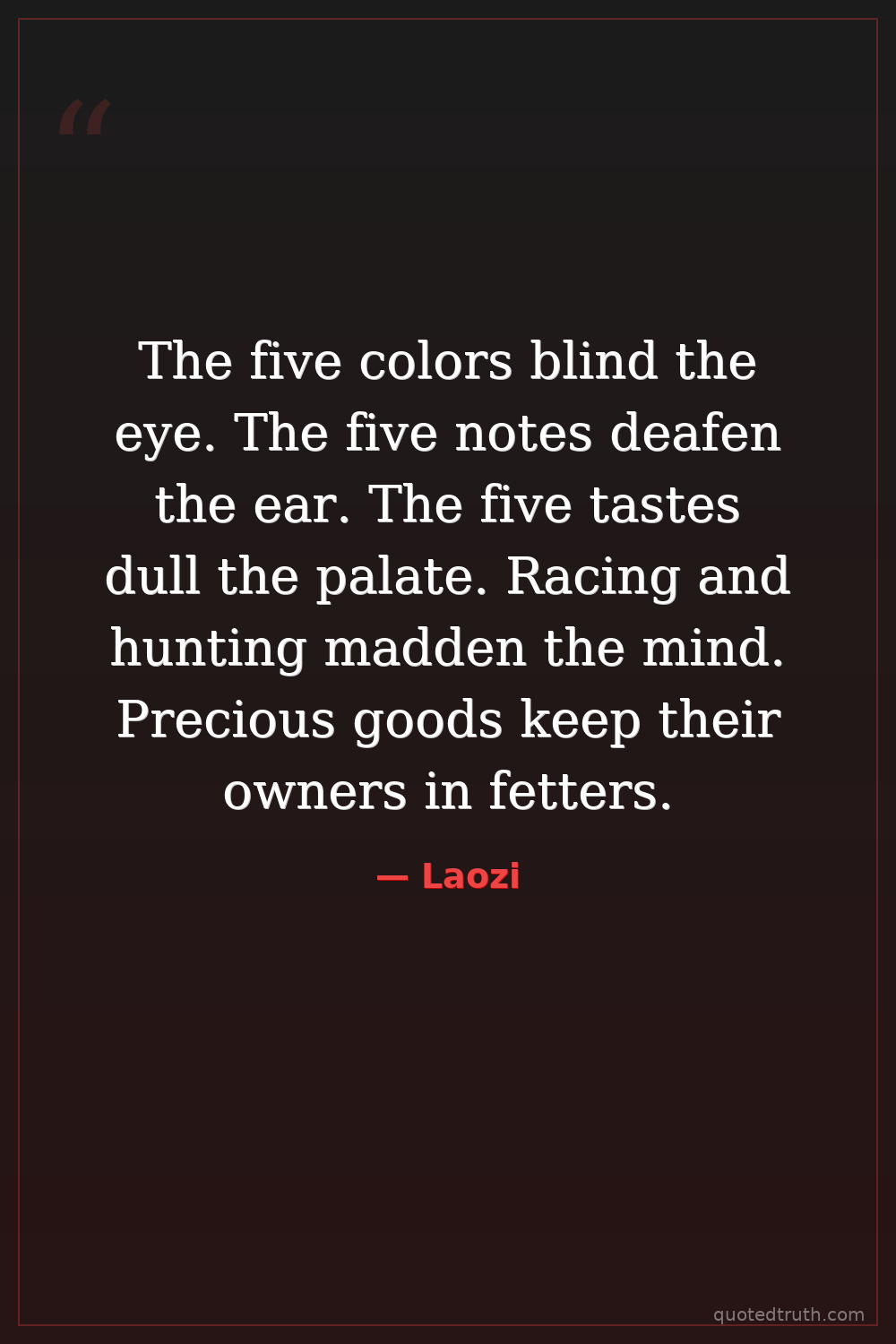
Overstimulation and excess dull our senses rather than sharpen them. Chasing too many visual, auditory, and culinary pleasures numbs our ability to enjoy them. Thrilling pursuits like the hunt send the mind into frenzy, and hoarding valuables traps the owner in anxiety about protecting them. Simplicity and restraint preserve genuine perception, clarity, and freedom, while indulgence quietly robs us of the very satisfactions we sought.
Relevance to Laozi
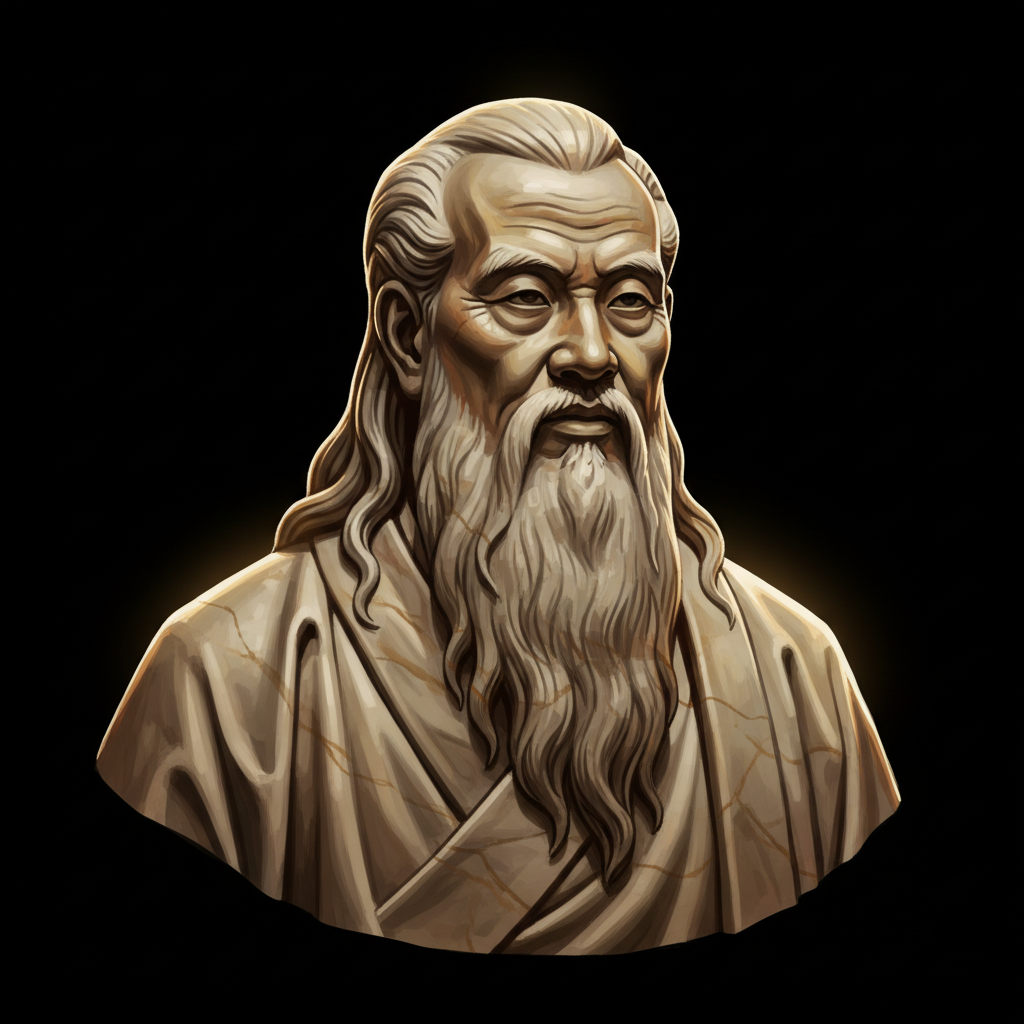
Laozi, the legendary sage credited with founding Taoism, championed wu wei (effortless action), simplicity, and harmony with the Tao. Tradition holds he served as an archivist in the Zhou court before withdrawing from its decadence to live as a recluse. This passage embodies his rejection of sensory indulgence and material accumulation, reflecting his preference for quiet contemplation over courtly luxury and his conviction that the Tao is found through emptying, not filling.
The era
Laozi lived during the late Zhou dynasty (roughly 6th century BCE), amid political fragmentation preceding the Warring States era. Aristocrats amassed wealth, staged elaborate hunts, and displayed refined court music and cuisine as status markers. Rival philosophies like Confucianism stressed ritual propriety, while Laozi's Taoism pushed back against elite excess and artificial refinement. His warning against sensory overload spoke directly to nobles whose indulgence and power struggles were destabilizing Chinese society.
AI-generated insights based on extensive research and information for context. Factual errors? Email [email protected].