William Harvey — "The greatest pleasure is to be found in the service of humanity."
The greatest pleasure is to be found in the service of humanity.
The greatest pleasure is to be found in the service of humanity.
Click any product to generate a realistic preview. Up to 3 at a time.
* Initial load can take up to 90 seconds — revising the preview in another color is nearly instant.
"The blood, therefore, returns by the veins to the heart."
"It is by experiment alone that we can arrive at the knowledge of nature."
"I have often wondered, and indeed not a little, at the great difference of opinion among anatomists and physicians in the matter of the pulse and the motion of the heart."
"Truth is the daughter of time, not of authority."
"The heart itself is the first to live and the last to die."
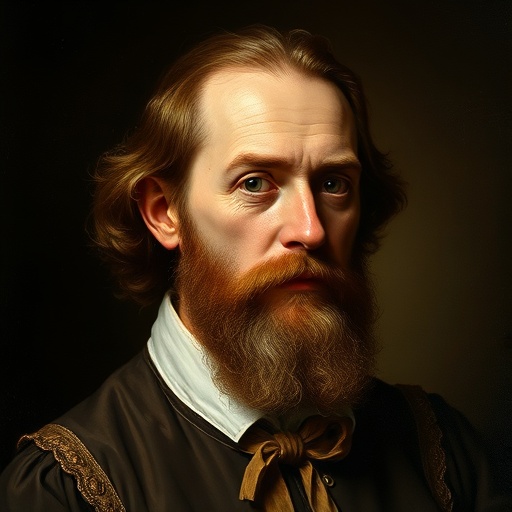
English physician whose On the Motion of the Heart and Blood in Animals (1628) demonstrated blood circulation, overturning 1,400 years of Galenic medicine. Closely associated with Francis Bacon (his contemporary in the new English empiricism). For an intellectual contrast, see Galenic medicine, the 2nd-century Greek medical tradition (humors, blood-as-consumed-fuel) — Harvey calculated that the heart pumps more blood per hour than the body could possibly produce as fuel — a single quantitative observation that demolished the entire Galenic-Aristotelian medical worldview. The cleanest example in medical history of arithmetic disproving 14 centuries of authority.
A statement on the humanitarian motivation behind medical work.
Date: Uncertain (attributed)
WisdomFound in 1 providers: gemini
1 source checked
True satisfaction comes not from personal gain, wealth, or fame, but from contributing to the well-being of other people. The deepest fulfillment a person can experience is found in work that helps, heals, or improves the lives of others. This is a rejection of purely self-centered ambition in favor of a life oriented toward collective benefit — service as the highest calling and most rewarding pursuit available to any individual.
Harvey spent his career advancing medicine through painstaking anatomical study, ultimately proving blood circulates continuously through the body — overturning 1,400 years of Galenic dogma. He served as physician to both James I and Charles I, treating patients while simultaneously conducting research. He donated his library and personal estate to the Royal College of Physicians. His entire life was structured around medical service, demonstrating this quote reflects his genuine lived philosophy, not mere rhetoric.
Harvey lived through the heart of the Scientific Revolution, when Europe was shedding centuries of unquestioned classical authority. The Thirty Years' War ravaged the continent, religious schisms divided societies, and established institutions — including medicine — faced unprecedented scrutiny. Against this backdrop, dedicating one's life to human betterment through empirical science was a radical moral statement. Physicians were beginning to see verifiable knowledge as a form of public duty, replacing inherited superstition with observation-based understanding.
AI-generated insights based on extensive research and information for context. Factual errors? Email [email protected].
Your cart is empty