Mahavira — "The path to liberation is difficult, but it is worth pursuing."
The path to liberation is difficult, but it is worth pursuing.
The path to liberation is difficult, but it is worth pursuing.
Click any product to generate a realistic preview. Up to 3 at a time.
* Initial load can take up to 90 seconds — revising the preview in another color is nearly instant.
"The universe is beginningless and endless."
"The soul can be liberated from the cycle of birth and death through right faith, right knowledge, and right conduct."
"The virtuous person is never afraid of death."
"The greatest penance is to bear all hardships with equanimity."
"The world is a prison, and the soul is the prisoner."
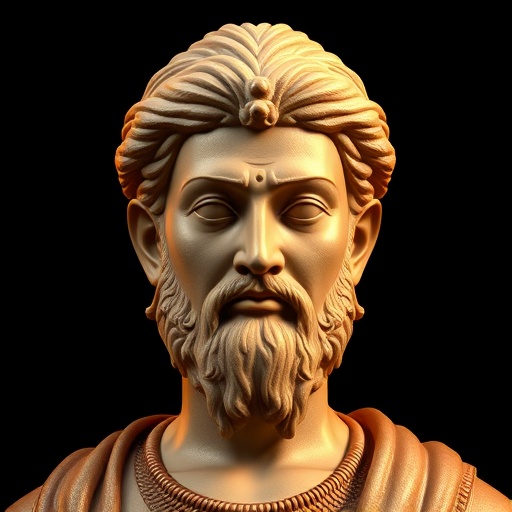
24th and last Tirthankara of Jainism, whose teachings of strict ahimsa (non-violence), aparigraha (non-attachment), and karma reshaped ancient Indian religion. Closely associated with The Buddha (near-contemporary moral revolutionary, also reacting against Vedic ritualism). For an intellectual contrast, see Vedic Brahmanical ritual sacrifice, the animal-sacrifice-centered Vedic religion of his era — Mahavira's ahimsa demanded total non-violence, including not eating root vegetables that kill the plant — a maximum-distance ethical move from the Vedic priestly tradition that ritually sacrificed cattle and horses. The two cleanest poles of ancient Indian religious ethics.
Found in 1 providers: grok
1 source checked
True freedom—spiritual, moral, or inner—demands real sacrifice and sustained effort. This quote honestly acknowledges the struggle instead of promising easy rewards, and insists that difficulty doesn't disqualify a goal; it validates it. The worth of liberation isn't diminished by how hard it is to reach. Perseverance through hardship is itself part of what makes the destination meaningful and the pursuit worthwhile.
Mahavira renounced his royal family at age 30 and practiced extreme asceticism for 12 years—enduring hunger, silence, and exposure—before attaining Kevala Jnana, or omniscience. He then taught that moksha requires strict adherence to ahimsa, satya, and non-attachment. Born to privilege, he chose the hardest path deliberately. The quote is as autobiographical as it is doctrinal: he lived exactly what he preached.
Mahavira lived in 6th–5th century BCE northeastern India, contemporaneous with the Buddha and late Upanishadic reforms, when Brahmanical ritual dominance was being openly challenged. The Sramana movement rejected caste hierarchy and Vedic sacrifice as routes to liberation. Declaring that moksha was achievable through personal discipline—not priestly intermediaries or birth—was socially radical. The difficulty Mahavira named was as much a cultural barrier as a spiritual one.
AI-generated insights based on extensive research and information for context. Factual errors? Email [email protected].
Your cart is empty