Wright Brothers (Orville & Wilbur) — "The machine itself was nothing; the method was everything."
The machine itself was nothing; the method was everything.
The machine itself was nothing; the method was everything.
Click any product to generate a realistic preview. Up to 3 at a time.
* Initial load can take up to 90 seconds — revising the preview in another color is nearly instant.
"It is our view that morally the world owes its almost universal use of our system of lateral control entirely to us. It is also our opinion that legally it owes it to us."
"The airplane stays up because it doesn’t have the time to fall."
"We did not find it necessary to use any of the formulas of the scientists, but we worked out our own formulas."
"We were confident that we had solved the problem of human flight."
"When one comes to increase the size of the craft, the possibility rapidly fades away. This is because of the difficulties of carrying sufficient fuel. It will readily be seen, therefore, why the Atlan…"
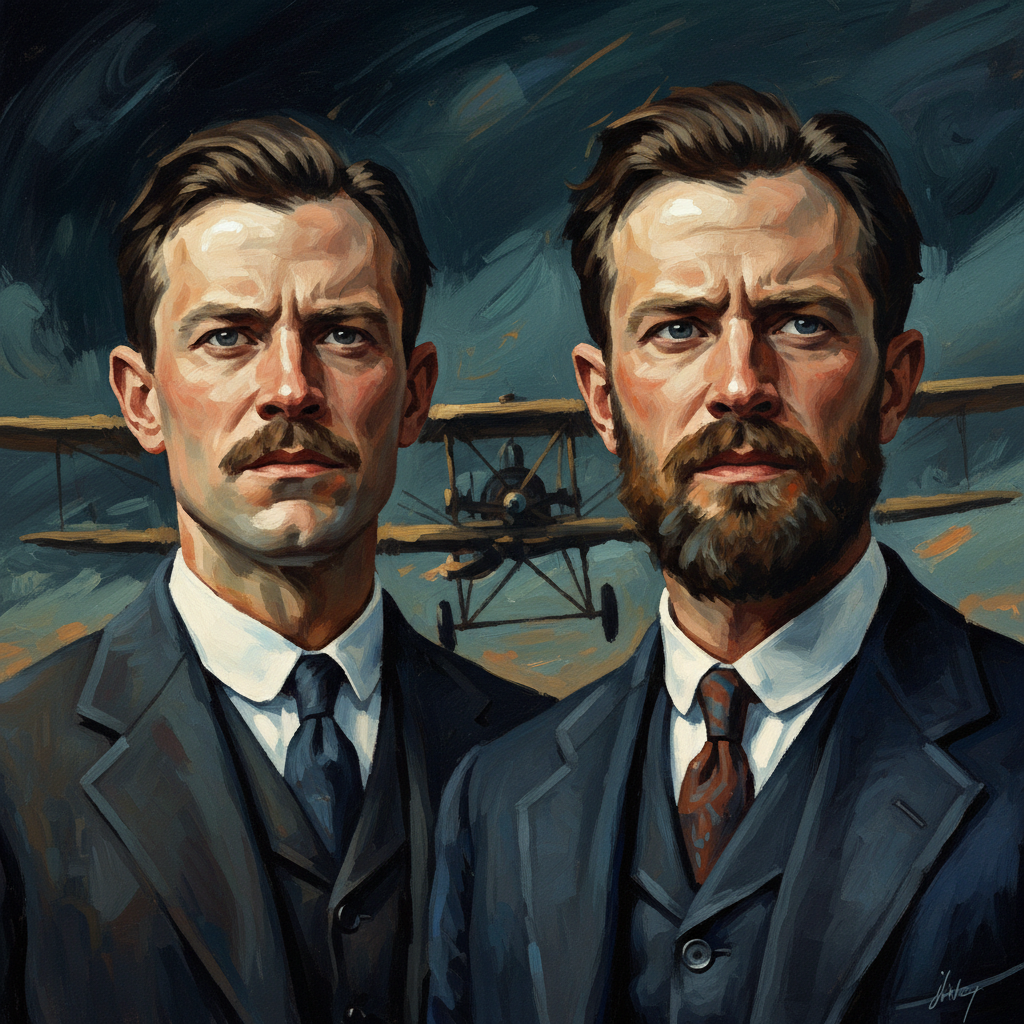
American aviation pioneers who achieved the first sustained powered controlled airplane flight at Kitty Hawk, NC, on December 17, 1903. Closely associated with Octave Chanute (their gliding mentor and aeronautical correspondent). For an intellectual contrast, see Samuel Pierpont Langley, Smithsonian Institution Secretary and government-funded aviation researcher — Langley's Aerodrome crashed twice into the Potomac in October-December 1903 with $50,000 of War Department funding; the Wright Brothers' bicycle-shop empiricism beat Langley's institutional Big Science by 9 days. The most-cited example in engineering history of empirical-tinkerer beating institution-funded credentialism.
Found in 1 providers: grok
1 source checked
Success comes from the disciplined process behind a creation, not the physical object itself. A working invention is just the visible result of countless hours of testing, measuring, correcting, and rethinking. Anyone can stumble onto a lucky prototype, but only a rigorous methodology produces repeatable, improvable results. The tool in your hand matters far less than the systematic thinking that shaped it and can shape the next one.
The Wrights beat better-funded rivals like Samuel Langley because they built a wind tunnel, tabulated lift and drag data, and corrected flawed aeronautical tables before touching their 1903 Flyer. As bicycle mechanics, they prized iterative tinkering and control systems, famously solving three-axis steering through wing-warping. Their notebooks, gliding tests at Kitty Hawk, and engine calculations embodied this quote: the Flyer worked because the method was sound, not because the wood and muslin were special.
At the turn of the twentieth century, inventors chased flight with bravado and backing from the Smithsonian and War Department, yet most crashed spectacularly. The era glorified heroic tinkerers, but the Wrights lived during the rise of scientific engineering, Taylorism, and industrial standardization. Powered flight in December 1903 arrived amid electric light, automobiles, and wireless telegraphy, all products of disciplined experimentation. Their method-first approach distinguished them from showmen and validated the new age of empirical, data-driven invention.
AI-generated insights based on extensive research and information for context. Factual errors? Email [email protected].
Your cart is empty