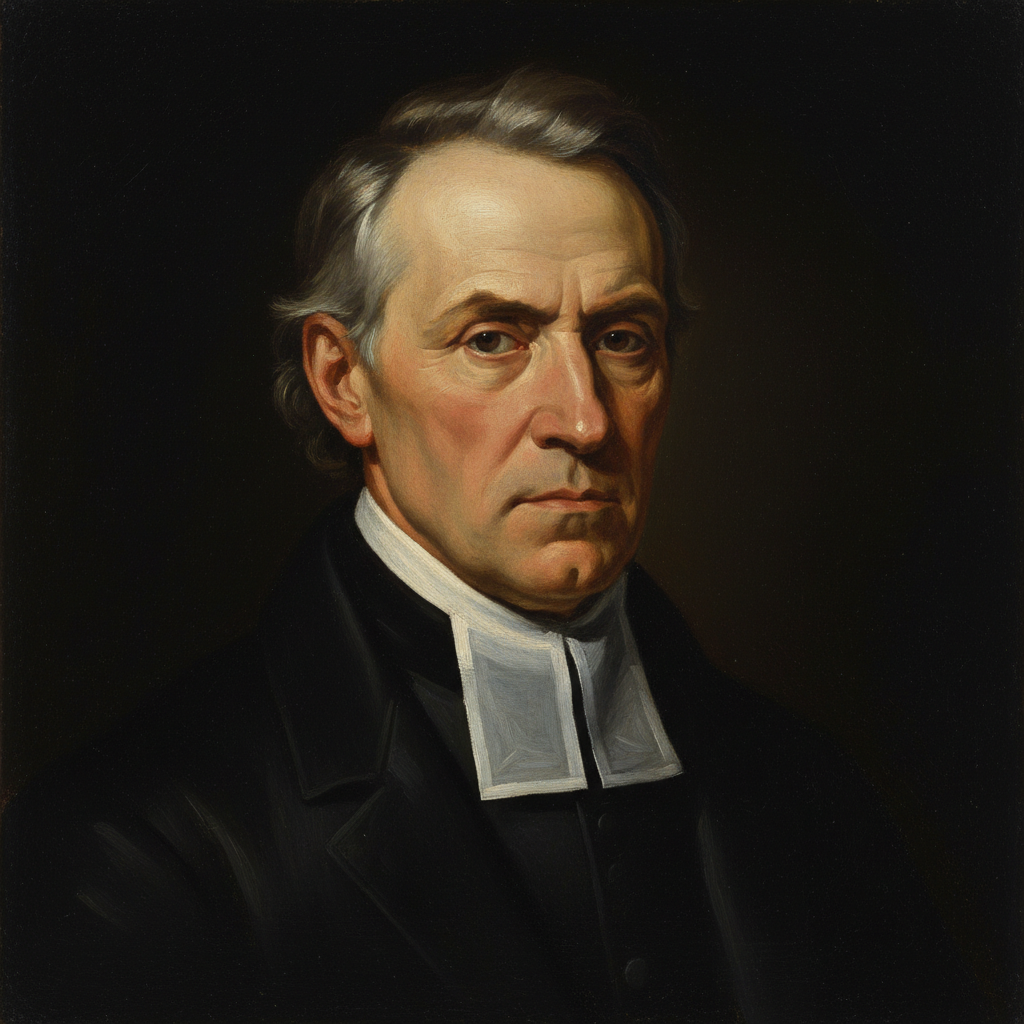
John Wesley — "I have learned to suffer in silence, and not to make my complaints known to any …"
I have learned to suffer in silence, and not to make my complaints known to any but God.
I have learned to suffer in silence, and not to make my complaints known to any but God.
Click any product to generate a realistic preview. Up to 3 at a time.
* Initial load can take up to 90 seconds — revising the preview in another color is nearly instant.
"Beware of judging men by their outward appearance, but judge them by their fruits."
"My hair is much whiter than it was a year ago; but my eyes are not much dimmer, nor my natural strength much abated."
"I am a creature of a day, passing through life as an arrow through the air."
"I have been accounted a madman, a fool, a knave, a liar, a deceiver, and a devil."
"What a work has God wrought in our day!"
English Anglican cleric and founder of Methodism, whose open-air preaching and class-meeting structure created the largest 18th-century evangelical revival. Closely associated with Charles Wesley (his hymn-writing brother) and George Whitefield (early co-revivalist, later doctrinal opponent). For an intellectual contrast, see George Whitefield, Calvinist evangelical revivalist — Whitefield's predestinarian Calvinism vs Wesley's free-grace Arminian theology split the early Methodist movement permanently in the 1739-41 break. The founding evangelical Calvinist-Arminian schism — the two parallel evangelical traditions American Christianity descends from.
Found in 1 providers: grok
1 source checked
The quote expresses disciplined inner endurance — bearing personal pain without broadcasting it to others. Rather than seeking sympathy or validation from people, the speaker channels all grievance directly to God in private prayer. It reflects a commitment to emotional restraint, treating complaint as something sacred and intimate rather than social. Suffering becomes a private spiritual act rather than a public performance of hardship.
Wesley endured extraordinary personal trials — his wife Mary Vazeille grew hostile and eventually abandoned him, Anglican bishops barred him from their pulpits, and violent mobs repeatedly attacked his open-air meetings. He traveled 250,000 miles on horseback across Britain, often cold and physically depleted, yet rarely complained publicly. His journals reveal deep private suffering absorbed in prayer. This quiet endurance mirrored his Methodist doctrine that authentic faith transforms inward character more than outward circumstance.
Wesley's 18th-century Britain saw entrenched class suffering, violent anti-Methodist riots, and religious upheaval. Dissenters faced social exclusion and physical danger, while Enlightenment rationalism challenged traditional faith, making personal religious experience contested. Stoic endurance had deep Protestant roots — suffering silently was framed as Christlike virtue. For Wesley, navigating institutional rejection from the established Church of England, directing complaint privately to God was both theological conviction and practical survival strategy in a hostile public sphere.
AI-generated insights based on extensive research and information for context. Factual errors? Email [email protected].
Your cart is empty