What it means
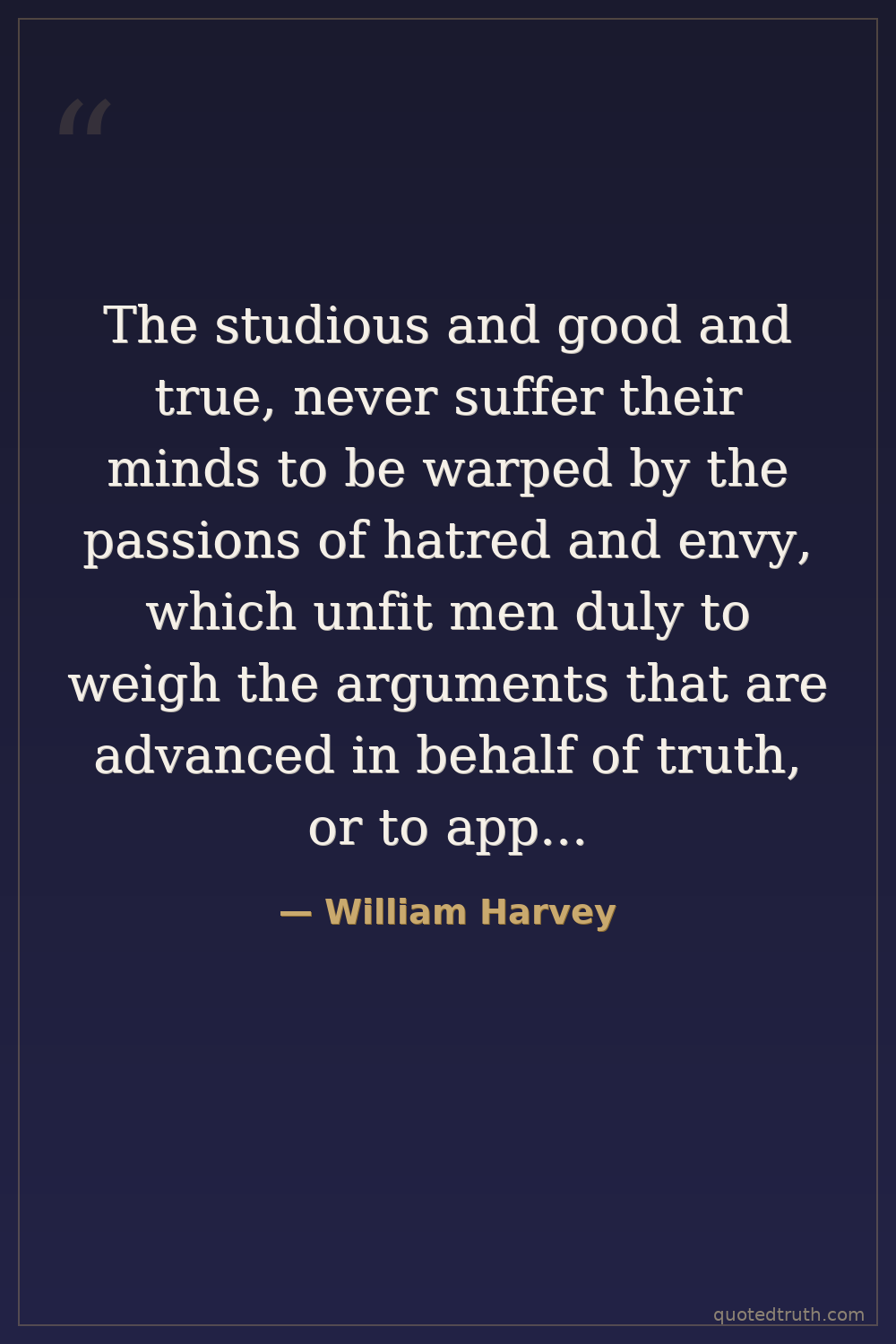
People who are genuinely scholarly, moral, and truth-seeking never let hatred or envy distort their judgment. Those emotions make it impossible to evaluate arguments objectively or accept conclusions that have been clearly proven. Real intellectual honesty requires emotional discipline — you cannot fairly weigh evidence while blinded by resentment toward whoever presents it or jealousy of their discovery.
Relevance to William Harvey
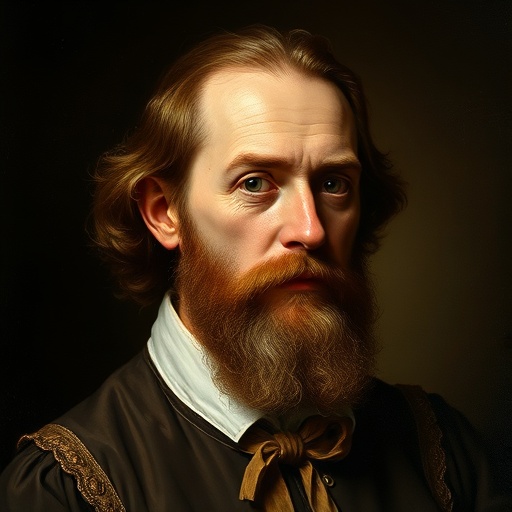
Harvey published his proof of blood circulation in 1628, overturning 1,400 years of Galenic medicine. The backlash was fierce — established physicians attacked him from professional jealousy and doctrinal attachment rather than engaging his evidence. He reportedly lost patients and endured sustained ridicule. This quote captures his lived frustration: watching colleagues let envy and bias prevent them from accepting what he had rigorously demonstrated through dissection and quantitative experiment.
The era
The early 17th century was the Scientific Revolution's peak — Galileo, Kepler, and Vesalius had already challenged ancient authority. Yet institutional medicine clung to Galen's 2nd-century framework as near-sacred doctrine. Challenging it risked professional ruin and social condemnation. Academic disputes were intensely personal, driven by guild loyalty and status rather than evidence. New empirical findings were routinely rejected not on logical grounds but through entrenched envy and ideological inertia.
AI-generated insights based on extensive research and information for context. Factual errors? Email [email protected].