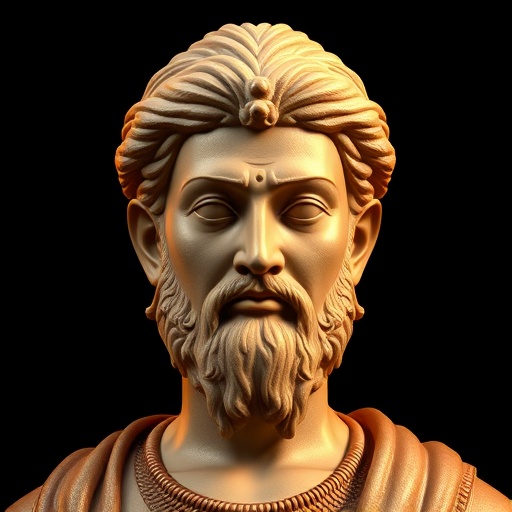
Mahavira — "The true nature of the soul is bliss."
The true nature of the soul is bliss.
The true nature of the soul is bliss.
Click any product to generate a realistic preview. Up to 3 at a time.
* Initial load can take up to 90 seconds — revising the preview in another color is nearly instant.
"All things are impermanent, and the soul is eternal."
"The path of purification is the path of liberation."
"What is the use of a lamp when the sun has risen?"
"He who knows one’s own soul knows the souls of all beings."
"The highest form of worship is to serve humanity."
24th and last Tirthankara of Jainism, whose teachings of strict ahimsa (non-violence), aparigraha (non-attachment), and karma reshaped ancient Indian religion. Closely associated with The Buddha (near-contemporary moral revolutionary, also reacting against Vedic ritualism). For an intellectual contrast, see Vedic Brahmanical ritual sacrifice, the animal-sacrifice-centered Vedic religion of his era — Mahavira's ahimsa demanded total non-violence, including not eating root vegetables that kill the plant — a maximum-distance ethical move from the Vedic priestly tradition that ritually sacrificed cattle and horses. The two cleanest poles of ancient Indian religious ethics.
Found in 1 providers: grok
1 source checked
At its core, every soul is not defined by pain, craving, or fear — those are layers imposed on it. Strip away karma and attachment, and what remains is pure, unobstructed joy. This is not about feeling happy in daily life; it means the soul's default, uncorrupted state is bliss itself. Realizing this is the goal of Jain spiritual practice: not earning happiness but uncovering what was always there.
Mahavira abandoned royal wealth and family at 30 to wander as an ascetic for 12 years, enduring extreme hardship without seeking pleasure. His entire philosophy rests on the jiva — the soul — being inherently pure and free. His attainment of Kevala Jnana, or perfect omniscience, was Jainism's proof: beneath karma's weight, the liberated soul experiences infinite bliss. His life was the living demonstration of this claim.
In 6th-century BCE India, Vedic Brahmanism dominated — liberation required elaborate rituals, animal sacrifices, and priestly intermediaries. Mahavira's claim that bliss is the soul's inherent nature was a direct challenge to that system: no priest, no ritual, no caste privilege could grant what the soul already possessed. This was the Axial Age, when thinkers across cultures were simultaneously questioning inherited authority and locating truth inward rather than in external ceremony.
AI-generated insights based on extensive research and information for context. Factual errors? Email [email protected].
Your cart is empty