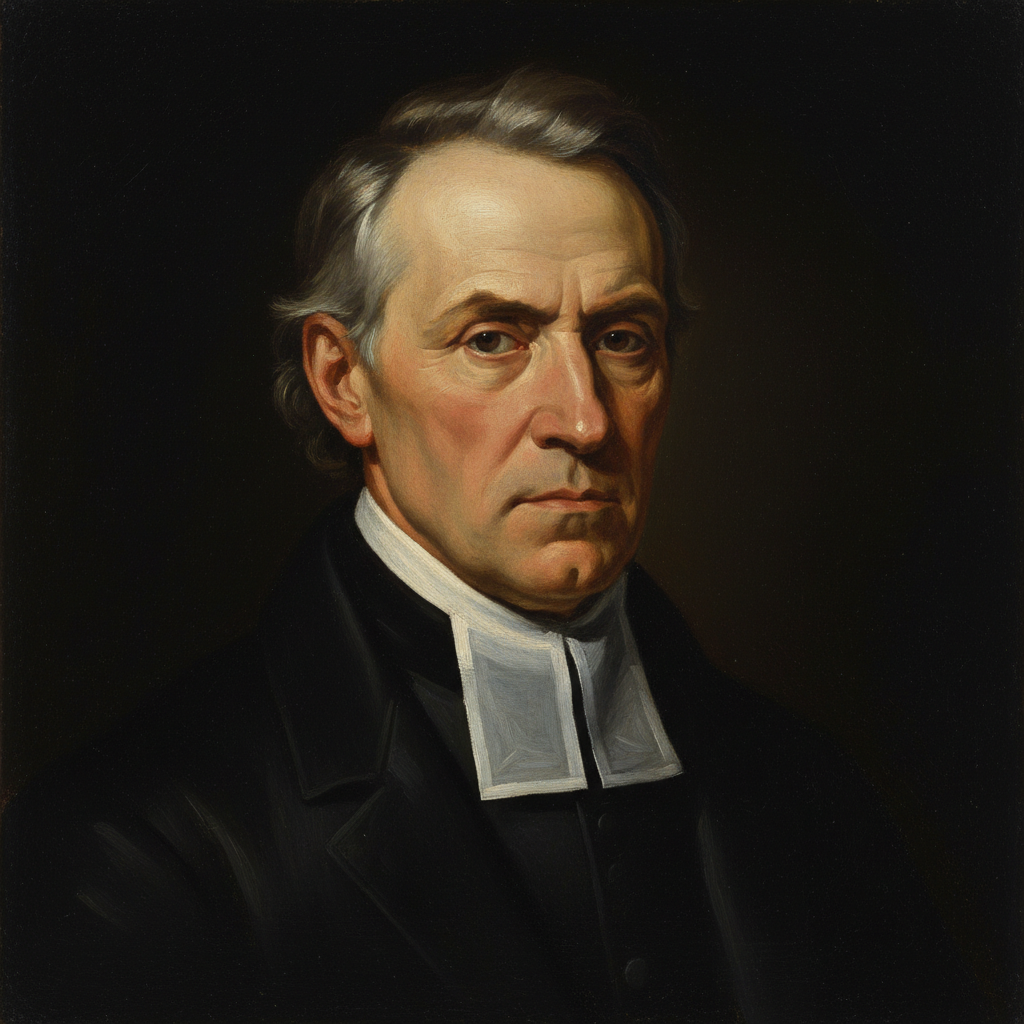
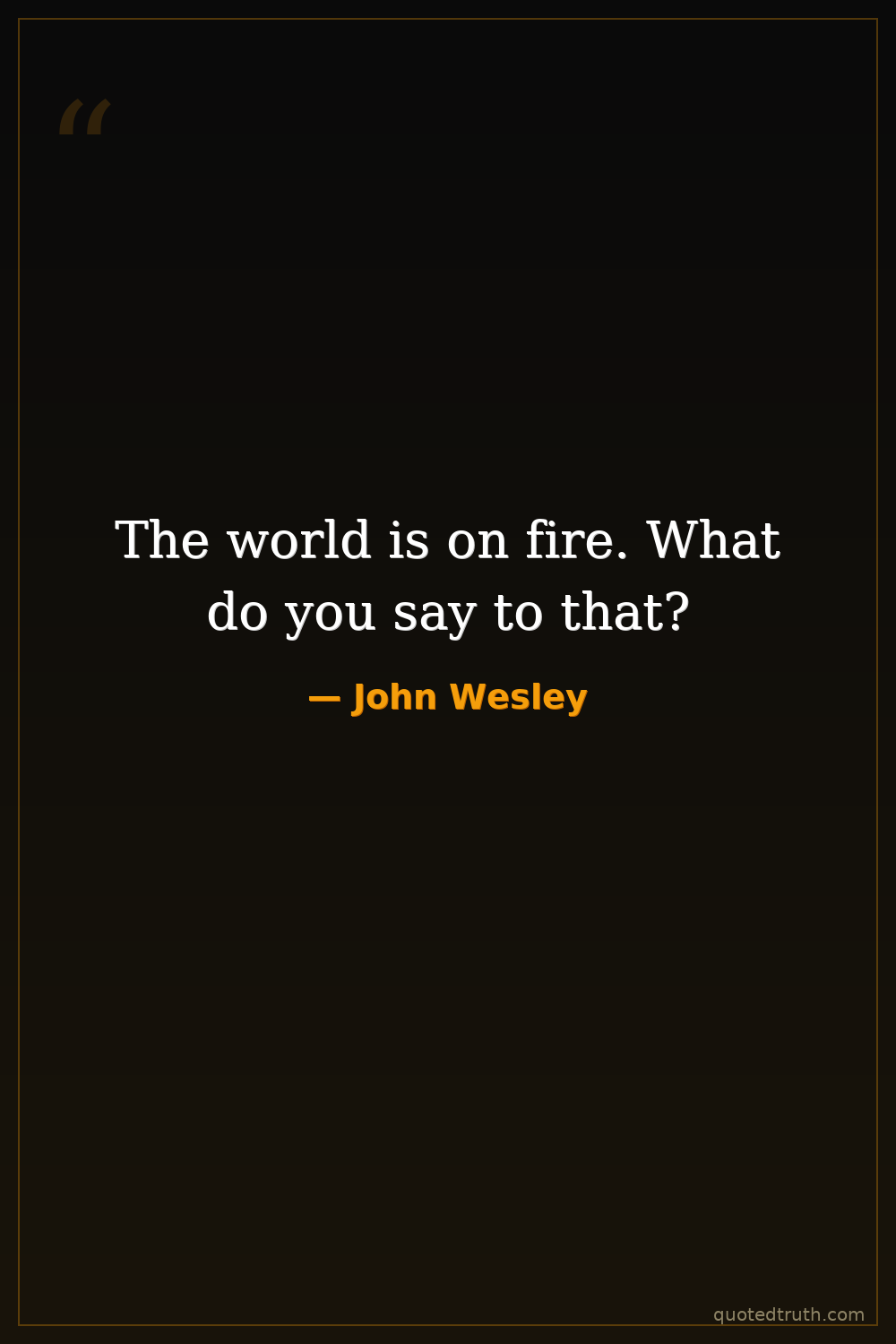
John Wesley — "The world is on fire. What do you say to that?"
The world is on fire. What do you say to that?
The world is on fire. What do you say to that?
Click any product to generate a realistic preview. Up to 3 at a time.
* Initial load can take up to 90 seconds — revising the preview in another color is nearly instant.
"I have been accounted a madman, a fool, a knave, a liar, a deceiver, and a devil."
"I am not afraid of any man, but I am afraid of God."
"I am not afraid of the devil himself."
"God grant that I may never live to be useless!"
"I have been writing a sermon on the use of money. Oh, what a flat, unprofitable subject it is!"
English Anglican cleric and founder of Methodism, whose open-air preaching and class-meeting structure created the largest 18th-century evangelical revival. Closely associated with Charles Wesley (his hymn-writing brother) and George Whitefield (early co-revivalist, later doctrinal opponent). For an intellectual contrast, see George Whitefield, Calvinist evangelical revivalist — Whitefield's predestinarian Calvinism vs Wesley's free-grace Arminian theology split the early Methodist movement permanently in the 1739-41 break. The founding evangelical Calvinist-Arminian schism — the two parallel evangelical traditions American Christianity descends from.
Found in 1 providers: grok
1 source checked
This quote confronts the listener with urgent crisis and demands a personal response. Rather than describing or lamenting, it asks: given that catastrophe surrounds us, what will you do? It rejects passive observation and forces accountability. The rhetorical directness implies no answer is still an answer — inaction is a choice. It captures the moral weight of living through tumultuous times and the obligation that awareness creates.
Wesley spent decades traveling thousands of miles across Britain and America, preaching urgency to coal miners, factory workers, and prisoners. He founded schools, dispensaries, and orphanages, and wrote pamphlets against slavery days before his death. His ministry was built on crisis-response — the belief that spiritual and social fires demanded immediate action. This quote mirrors his signature method: confronting people with uncomfortable reality, then demanding they act rather than theorize.
Eighteenth-century Britain was convulsed by industrialization, mass poverty, gin epidemics, and the brutal transatlantic slave trade. Political revolutions in America and France were overturning old orders. The established Church served the comfortable classes while millions lived in squalor. Methodist revival emerged precisely as a response to these compounding crises — Wesley's followers were expected not just to pray but to build hospitals, fight addiction, and oppose slavery. The fires were literal and figurative.
AI-generated insights based on extensive research and information for context. Factual errors? Email [email protected].
Your cart is empty