John Wesley — "I have been accounted a madman, a fool, a knave, a liar, a deceiver, and a devil…"
I have been accounted a madman, a fool, a knave, a liar, a deceiver, and a devil.
I have been accounted a madman, a fool, a knave, a liar, a deceiver, and a devil.
Click any product to generate a realistic preview. Up to 3 at a time.
* Initial load can take up to 90 seconds — revising the preview in another color is nearly instant.
"I was much surprised to find that the Bishop of London, in his late Pastoral Letter, has taken occasion to caution the Clergy of his diocese against 'enthusiasm,' and to warn them against 'the new doc…"
"By Methodists, I mean such as profess to pursue a Christian life by Scriptural rules and methods."
"I do not love to dispute about religion. I had rather feel it."
"I set myself on fire, and people come to watch me burn."
"What God has joined together, let no man put asunder."
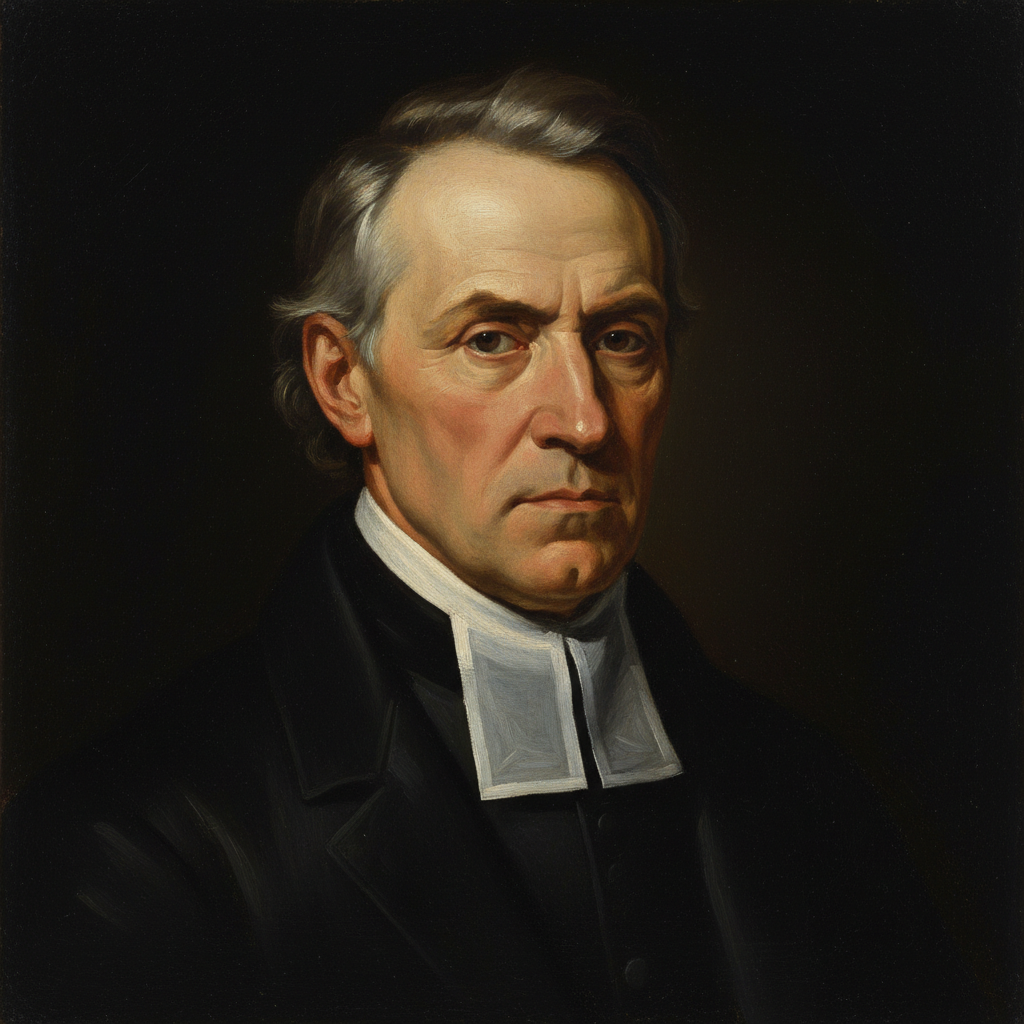
English Anglican cleric and founder of Methodism, whose open-air preaching and class-meeting structure created the largest 18th-century evangelical revival. Closely associated with Charles Wesley (his hymn-writing brother) and George Whitefield (early co-revivalist, later doctrinal opponent). For an intellectual contrast, see George Whitefield, Calvinist evangelical revivalist — Whitefield's predestinarian Calvinism vs Wesley's free-grace Arminian theology split the early Methodist movement permanently in the 1739-41 break. The founding evangelical Calvinist-Arminian schism — the two parallel evangelical traditions American Christianity descends from.
Found in 1 providers: grok
1 source checked
Wesley catalogs the harshest labels his critics threw at him throughout his ministry. He is not complaining but bearing witness: doing genuinely transformative religious work made him a target for every insult respectable society could muster. The list moves from eccentric to criminal to supernatural evil, showing how far hostility toward serious spiritual commitment could reach.
Wesley traveled 250,000 miles on horseback preaching to miners, prisoners, and the poor whom the established Church of England ignored. His open-air preaching and emotional revival meetings scandalized clergy and gentry alike. He was physically attacked by mobs, barred from pulpits, and accused of Jacobitism and fanaticism. This quote reflects his lifelong experience of being the outsider reformer within a hierarchical religious establishment.
Eighteenth-century England prized social order, rational religion, and Anglican decorum. Enthusiasm in religion was considered dangerous, even seditious, after the upheavals of the Civil War. Wesley's Methodist movement arose during rapid industrialization, when urban and rural poor were spiritually neglected. His grassroots revival threatened church authority and class boundaries simultaneously, making institutional condemnation not just likely but nearly inevitable.
AI-generated insights based on extensive research and information for context. Factual errors? Email [email protected].
Your cart is empty