Martin Luther — "There are three ways of growing: by study, by experience, and by prayer."
There are three ways of growing: by study, by experience, and by prayer.
There are three ways of growing: by study, by experience, and by prayer.
Click any product to generate a realistic preview. Up to 3 at a time.
* Initial load can take up to 90 seconds — revising the preview in another color is nearly instant.
"The hair is the finest ornament a woman has. If she be a virgin, let her wear it loose; if married, let her wear it up."
"We should not break our heads at work and injure our bodies … I myself used to do such things, and I have racked my brains because I still have not overcome the bad habit of overworking. Nor shall I o…"
"I would not have believed salvation could be so easy."
"Let us therefore be rid of the Mass and all that pertains to it, and let us use the holy Supper of Christ in its simplicity."
"I confess that I am a man, and that I have erred."
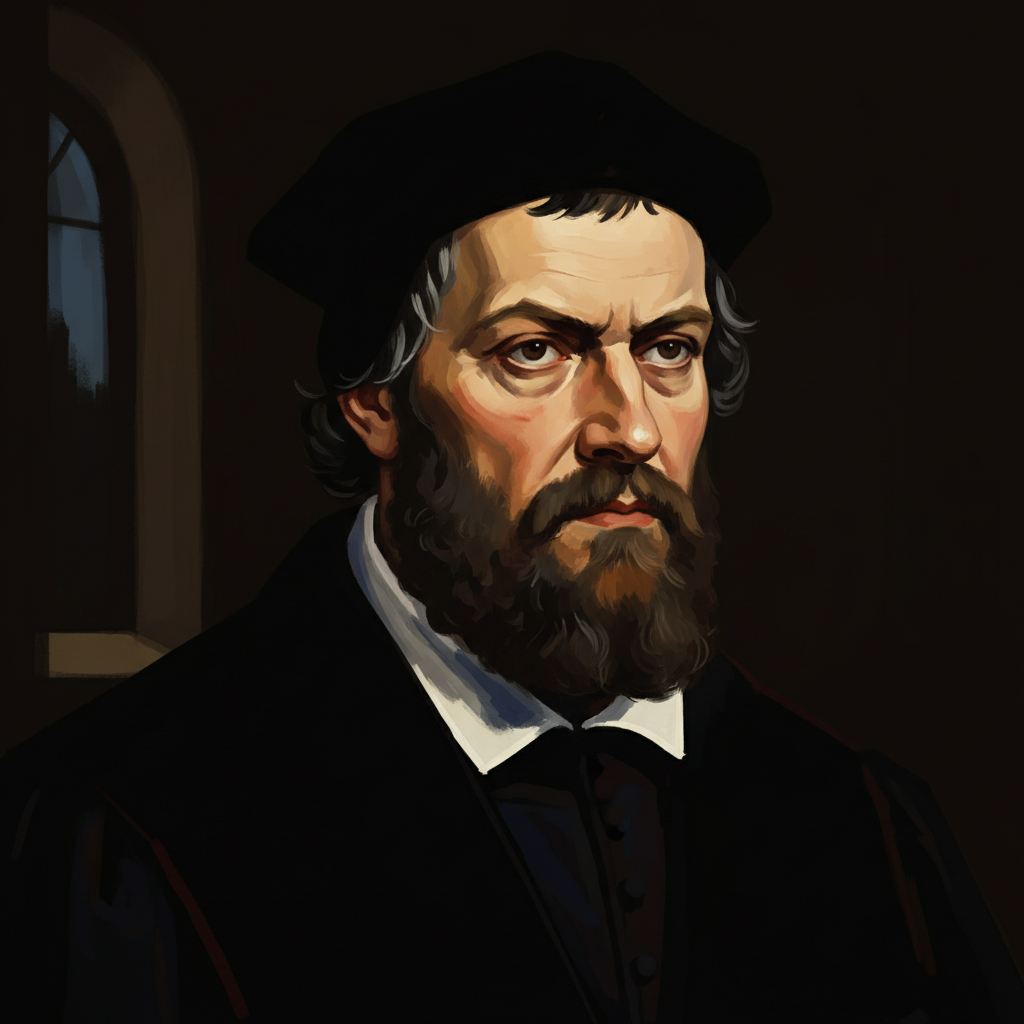
German theologian whose 95 Theses (1517) launched the Protestant Reformation and broke the Catholic Church's monopoly on Western Christianity. Closely associated with Philipp Melanchthon (Lutheran systematizer) and John Calvin (later Reformer who built on Luther's break). For an intellectual contrast, see Pope Leo X, Renaissance pope (1513-1521) — Leo X's indulgence sales triggered Luther's break and Leo excommunicated him in 1521 — Luther's entire Reformation is structured as a direct answer to the indulgence-funded Vatican Leo represented.
Found in 1 providers: grok
1 source checked
Personal growth comes from three distinct sources working together: studying texts and ideas to gain knowledge, living through real situations to gain wisdom, and prayer or quiet reflection to gain spiritual depth. None alone is enough. Book learning without lived experience stays abstract, experience without reflection becomes mere reaction, and prayer without study or action drifts into empty piety. A complete person draws from all three throughout life.
Luther embodied this triad. As a university professor of theology at Wittenberg, he poured himself into rigorous study of scripture and the church fathers. His experience as a tormented monk struggling with guilt drove his theological breakthroughs. And prayer was central to his spirituality, famously quipping he was so busy he had to pray three hours a day. He rejected purely intellectual or purely ritualistic Christianity.
Early sixteenth-century Europe was reshaped by the printing press, which made study accessible beyond monastery walls, and by the Renaissance return to original sources. Luther's 1517 Ninety-Five Theses ignited the Reformation, breaking the Catholic Church's monopoly on biblical interpretation. Ordinary believers were suddenly expected to read scripture themselves, examine their own consciences, and pray directly to God without priestly mediation, making this triad of study, experience, and prayer revolutionary advice.
AI-generated insights based on extensive research and information for context. Factual errors? Email [email protected].
Your cart is empty