What it means
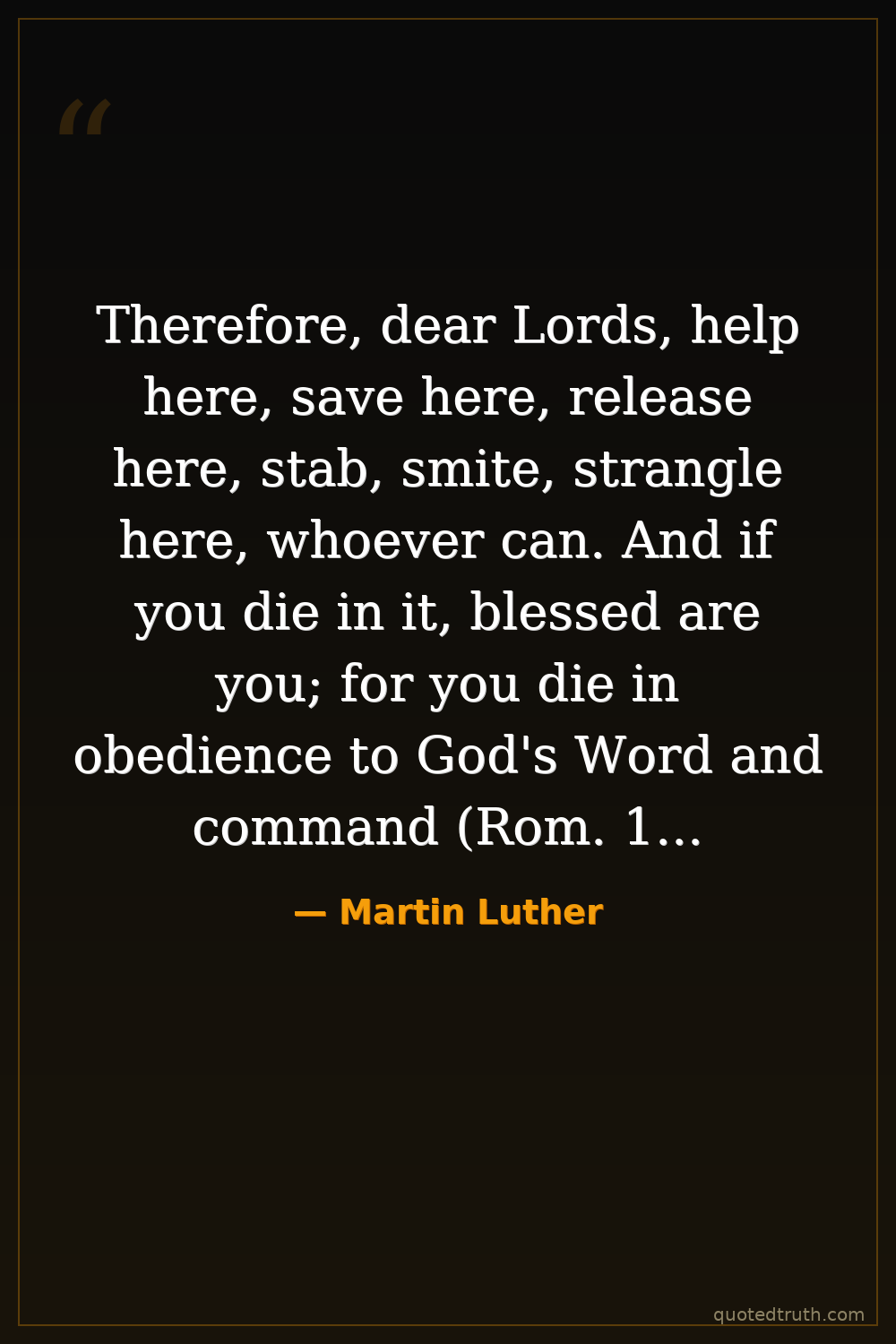
Luther is urging rulers to take violent, decisive action against a grave threat, framing killing as a moral duty. He promises that anyone who dies while fighting is blessed because they are obeying God's command and acting out of love for neighbors, rescuing them from damnation. The passage treats lethal force not as sin but as merciful protection, transforming soldiers and lords into instruments of salvation.
Relevance to Martin Luther
This comes from Luther's 1525 pamphlet against rebelling peasants, where he notoriously urged princes to slaughter them. It reveals his paradoxical alliance with secular authority: though he defied the Pope and Emperor, he insisted earthly rulers held God-given swords (Romans 13). His theology of two kingdoms, fierce polemical temperament, and belief that disorder served Satan all converge here, exposing how the Reformer of conscience could also sanction brutal state violence.
The era
Written during the 1524-1525 German Peasants' War, when roughly 300,000 commoners revolted citing Luther's own gospel of Christian freedom. Early modern Europe was convulsing as the Reformation fractured Christendom, princes seized church lands, and apocalyptic expectation ran high. Luther, needing princely protection against Rome, sided decisively with the nobility. Around 100,000 peasants were massacred, cementing the Reformation as a top-down princely movement rather than a social revolution.
AI-generated insights based on extensive research and information for context. Factual errors? Email [email protected].