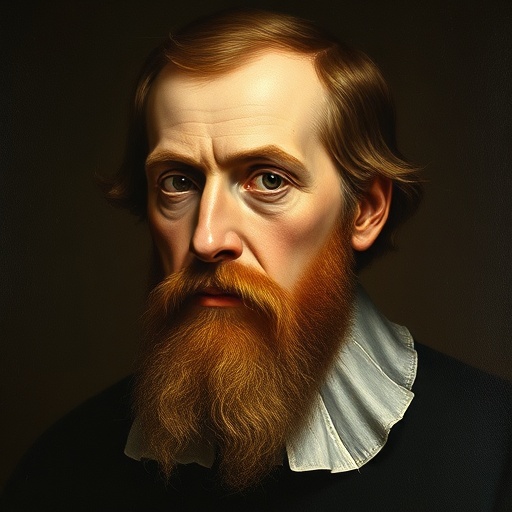
John Calvin — "We are pilgrims and strangers on earth."
We are pilgrims and strangers on earth.
We are pilgrims and strangers on earth.
Click any product to generate a realistic preview. Up to 3 at a time.
* Initial load can take up to 90 seconds — revising the preview in another color is nearly instant.
"The reprobate are created for the purpose of being destroyed."
"The executioner is a good physician for the church."
"The true knowledge of God consists in acknowledging him as our Father and Lord."
"When God wants to punish a nation, he sends them bad preachers."
"Faith is a firm and certain knowledge of God's benevolence toward us, founded upon the truth of the freely given promise in Christ, both revealed to our minds and sealed upon our hearts through the Ho…"
French theologian whose Institutes of the Christian Religion (1536) systematized Protestant Reformed doctrine, including predestination. Closely associated with Martin Luther (Reformation founder, Calvin's predecessor). For an intellectual contrast, see Jacobus Arminius, Dutch Reformed theologian (1560-1609) — Arminius's rejection of strict double-predestination founded Arminianism — the theological tradition modern Methodism, most evangelicalism, and Pentecostalism descend from. The Calvinist-Arminian debate has divided Protestantism for 400 years.
Found in 1 providers: grok
1 source checked
Life on earth is temporary — we're passing through, not settling down. This means resisting the pull of wealth, comfort, and status, since none of it lasts. Think of yourself as a traveler in a country that isn't yours: you meet your needs but don't build your whole life around it. The real destination lies ahead. Earthly attachments distract from what actually matters — the eternal life that comes after this one.
Calvin was literally a displaced person — a French exile who fled Catholic persecution and spent most of his adult life in Geneva, a foreigner in a foreign city. His theology centered on human unworthiness, God's absolute sovereignty, and disciplined, austere living. His Institutes of the Christian Religion systematized this worldview. His own biography — constant threats, exile, chronic illness — made 'pilgrim and stranger' less a metaphor and more an honest self-description.
Calvin lived 1509–1564, during the Protestant Reformation — a period of violent religious fracture across Europe. Protestants faced forced exile, imprisonment, and execution for their beliefs. Wars of religion devastated entire regions. In Geneva, Calvin built a model Reformed city while refugees poured in from France and the Netherlands. In a world where your faith could cost you your home or your life, framing earthly existence as temporary wasn't pessimism — it was survival theology for persecuted believers.
AI-generated insights based on extensive research and information for context. Factual errors? Email [email protected].
Your cart is empty