What it means
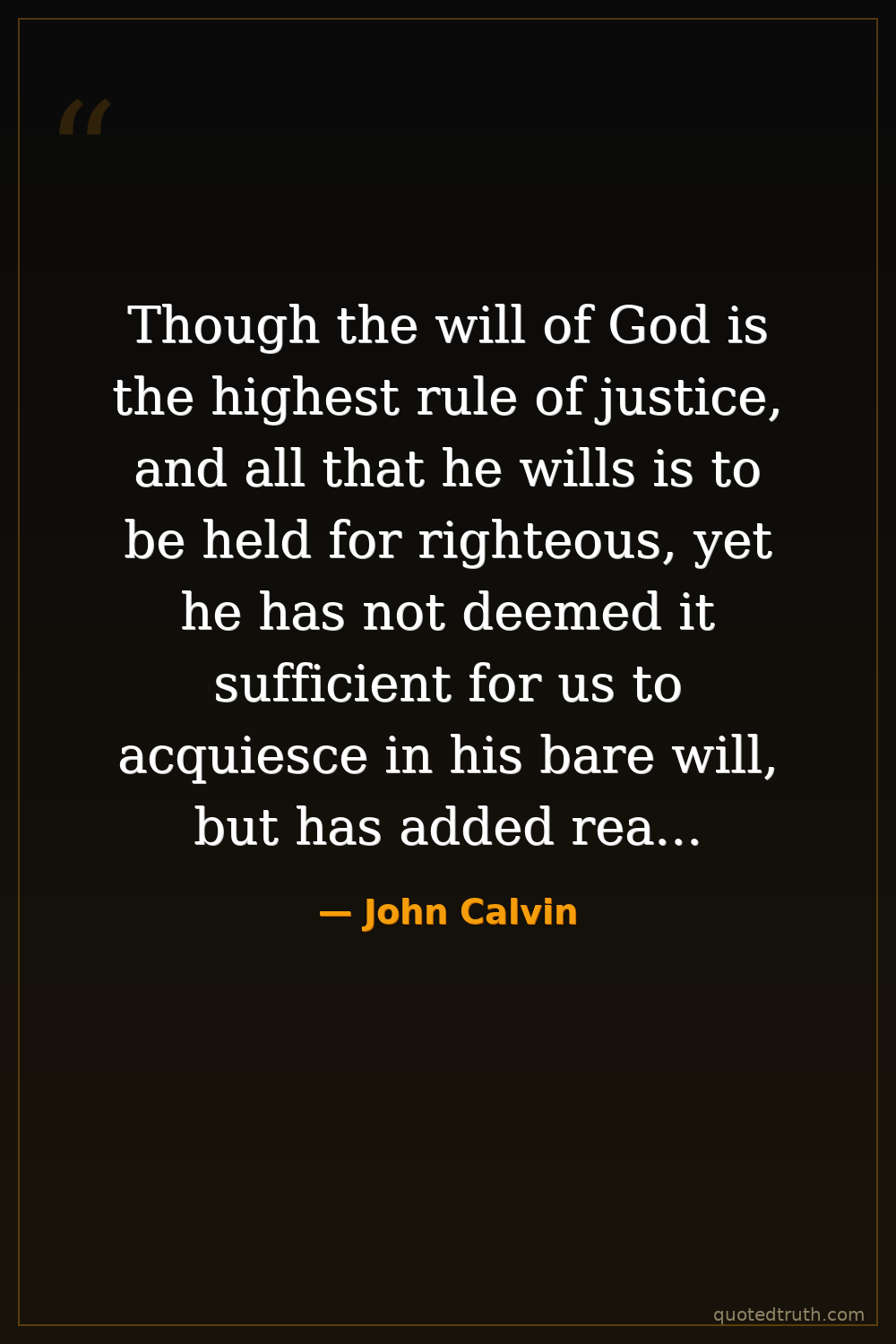
God's will is the ultimate standard of right and wrong—whatever He wills is just by definition. But God doesn't simply demand blind obedience to arbitrary commands. He has given humanity reasons and explanations for His actions, allowing us to see the rational logic behind divine decisions. Obedience is therefore informed rather than coerced. Faith and reason are not opposites; God invites understanding alongside submission.
Relevance to John Calvin
Calvin was trained as a humanist lawyer before his conversion, and that legal-rational mind shaped all his theology. His Institutes of the Christian Religion is among history's most systematically argued theological works. While his doctrine of predestination drew accusations of making God arbitrary and tyrannical, Calvin pushed back hard: God's sovereignty is absolute, but God reveals His reasoning through Scripture so believers can understand, not merely obey blindly.
The era
The 16th-century Reformation was erupting across Europe, and Reformed theology's emphasis on predestination attracted fierce criticism—if God pre-selects the saved and damned, is He not capricious? Medieval philosophy had long debated whether God acts by will alone or by reason. Calvin's statement directly engages that controversy, defending divine rationality at a moment when Protestant theology urgently needed to prove it was not replacing papal authority with sheer divine arbitrariness.
AI-generated insights based on extensive research and information for context. Factual errors? Email [email protected].