Siddhartha Gautama (Buddha) — "We are what we think. All that we are arises with our thoughts. With our thought…"
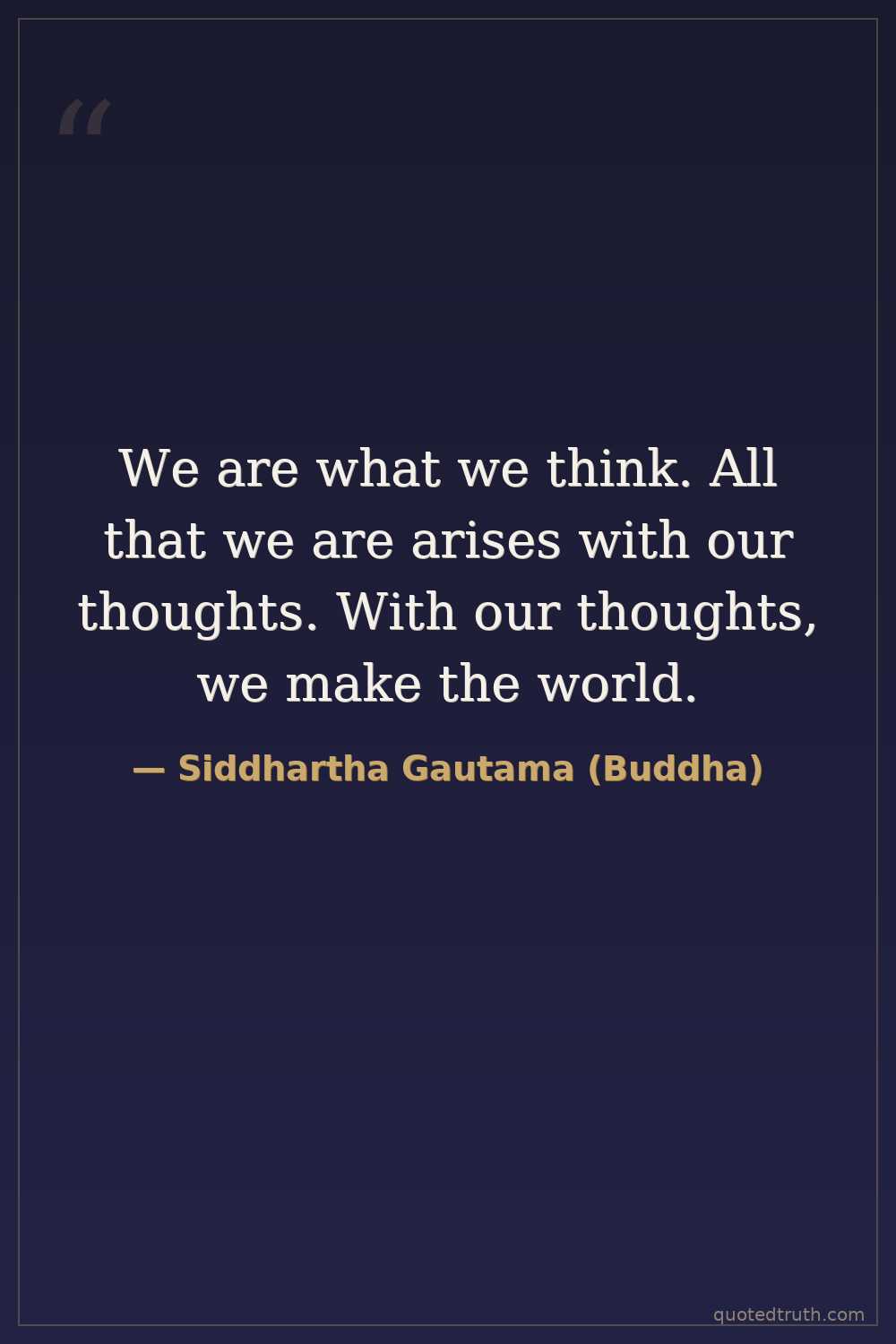
We are what we think. All that we are arises with our thoughts. With our thoughts, we make the world.
We are what we think. All that we are arises with our thoughts. With our thoughts, we make the world.
Click any product to generate a realistic preview. Up to 3 at a time.
* Initial load can take up to 90 seconds — revising the preview in another color is nearly instant.
"Do not believe anything simply because you have heard it. Do not believe in traditions because they have been handed down for many generations. Do not believe anything because it is spoken and rumored…"
"To keep the body in good health is a duty... otherwise we shall not be able to keep our mind strong and clear."
"Monks, I will teach you the all. Listen and pay close attention. I will speak. And what is the all? The eye and forms, ear and sounds, nose and odors, tongue and tastes, body and tactile sensations, i…"
"Better than a thousand hollow words, is one word that brings peace."
"Should you find a wise critic to point out your faults, follow him as you would a guide to hidden treasure."
Found in 1 providers: gemini
1 source checked
Your mind shapes your reality. Every experience, emotion, and judgment begins as a thought, and those thoughts build the person you become and the world you perceive around you. Change what you think, and you change who you are and how life looks to you. Nothing you call 'the world' exists for you independent of the mental filter you bring to it.
Siddhartha abandoned royal comfort to investigate why humans suffer, and his answer centered on the mind. His teaching that craving and ignorance originate in thought, not external circumstance, is the backbone of Buddhism. After his awakening under the Bodhi tree, he spent 45 years teaching meditation and mindfulness as tools to retrain mental habits, making this saying a direct summary of his entire diagnostic and therapeutic project.
In 5th-century BCE northern India, the dominant Vedic religion located salvation in external rituals, caste duty, and priestly sacrifice. Wandering ascetics like the Buddha challenged that framework, arguing liberation came from inner discipline instead. Urbanization around Magadha was producing wealth and anxiety in equal measure, and competing sramana movements debated karma, rebirth, and consciousness. Locating the world's construction inside the thinking mind was a radical reframing of where human problems and solutions actually lived.
AI-generated insights based on extensive research and information for context. Factual errors? Email [email protected].
Your cart is empty