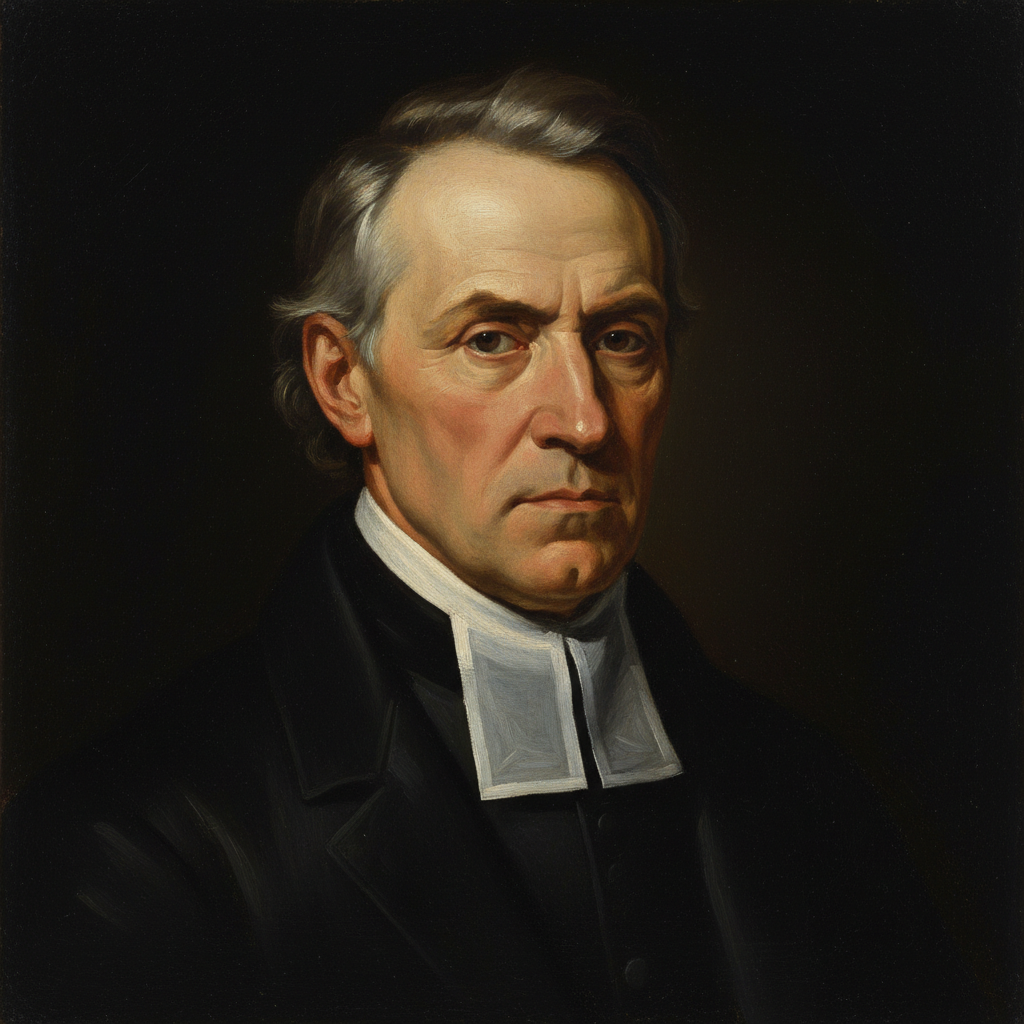
John Wesley — "What is the Lord’s Supper? It is a feast upon a sacrifice."
What is the Lord’s Supper? It is a feast upon a sacrifice.
What is the Lord’s Supper? It is a feast upon a sacrifice.
Click any product to generate a realistic preview. Up to 3 at a time.
* Initial load can take up to 90 seconds — revising the preview in another color is nearly instant.
"I deny that I am an enthusiast in the common sense of the word. I am no visionary. I do not pretend to any new revelations, to any extraordinary gifts of the Holy Ghost, to any particular inspiration,…"
"I am a debtor to all the world, to do all the good I can, in every place, to every soul."
"I have not lost a day since I was born."
"I cannot but observe, that the Methodists are not a people who are fond of novelties."
"Are we not a little too apt to forget that the Methodists are not the only Christians in the world?"
English Anglican cleric and founder of Methodism, whose open-air preaching and class-meeting structure created the largest 18th-century evangelical revival. Closely associated with Charles Wesley (his hymn-writing brother) and George Whitefield (early co-revivalist, later doctrinal opponent). For an intellectual contrast, see George Whitefield, Calvinist evangelical revivalist — Whitefield's predestinarian Calvinism vs Wesley's free-grace Arminian theology split the early Methodist movement permanently in the 1739-41 break. The founding evangelical Calvinist-Arminian schism — the two parallel evangelical traditions American Christianity descends from.
Found in 1 providers: grok
1 source checked
The Lord's Supper is simultaneously a joyful meal and a participation in Christ's atoning death. Calling it a 'feast' signals abundance and celebration — believers receive real spiritual nourishment. Calling it a 'sacrifice' grounds that celebration in Christ's crucifixion. Together, the phrase argues communion is more than ritual memory: it is active, grace-filled reception of the benefits won by Christ's death, experienced communally at the table.
Wesley held an unusually high view of communion for a Protestant, treating it as a 'means of grace' — a channel through which God actively transforms believers. He and brother Charles wrote 166 hymns specifically about the Lord's Supper. Wesley preached that communion could even convert unbelievers, calling it a 'converting ordinance.' His insistence on frequent reception and sacramental depth drove Methodist worship and distinguished his movement from drier Anglican formalism.
Wesley wrote amid fierce Protestant debates about the Eucharist stretching back to the Reformation. Catholics held transubstantiation; Lutherans taught Christ's real presence; Zwinglians reduced communion to pure symbol. The Church of England occupied uneasy middle ground. Simultaneously, Enlightenment rationalism was eroding sacramental reverence, making Wesley's insistence on the supper as a genuine grace-delivering sacrifice countercultural. His phrasing deliberately collapsed Protestant divisions by stressing participation over doctrinal precision.
AI-generated insights based on extensive research and information for context. Factual errors? Email [email protected].
Your cart is empty