Martin Luther — "When I am assailed by temptation, I merely eat and drink more, and laugh and jok…"
When I am assailed by temptation, I merely eat and drink more, and laugh and joke, and so kill the thoughts.
When I am assailed by temptation, I merely eat and drink more, and laugh and joke, and so kill the thoughts.
Click any product to generate a realistic preview. Up to 3 at a time.
* Initial load can take up to 90 seconds — revising the preview in another color is nearly instant.
"He who does not understand the devil, does not understand God."
"Your home, once the holiest of all, has become the most licentious den of thieves, the most shameless of all brothels, the kingdom of sin, death, and hell. It is so bad that even Antichrist himself, i…"
"The law of God is not given to make us righteous, but to show us our unrighteousness."
"The Bible is alive, it speaks to me; it has feet, it runs after me; it has hands, it lays hold on me."
"He who does not love wine, women, and song remains a fool his whole life long."
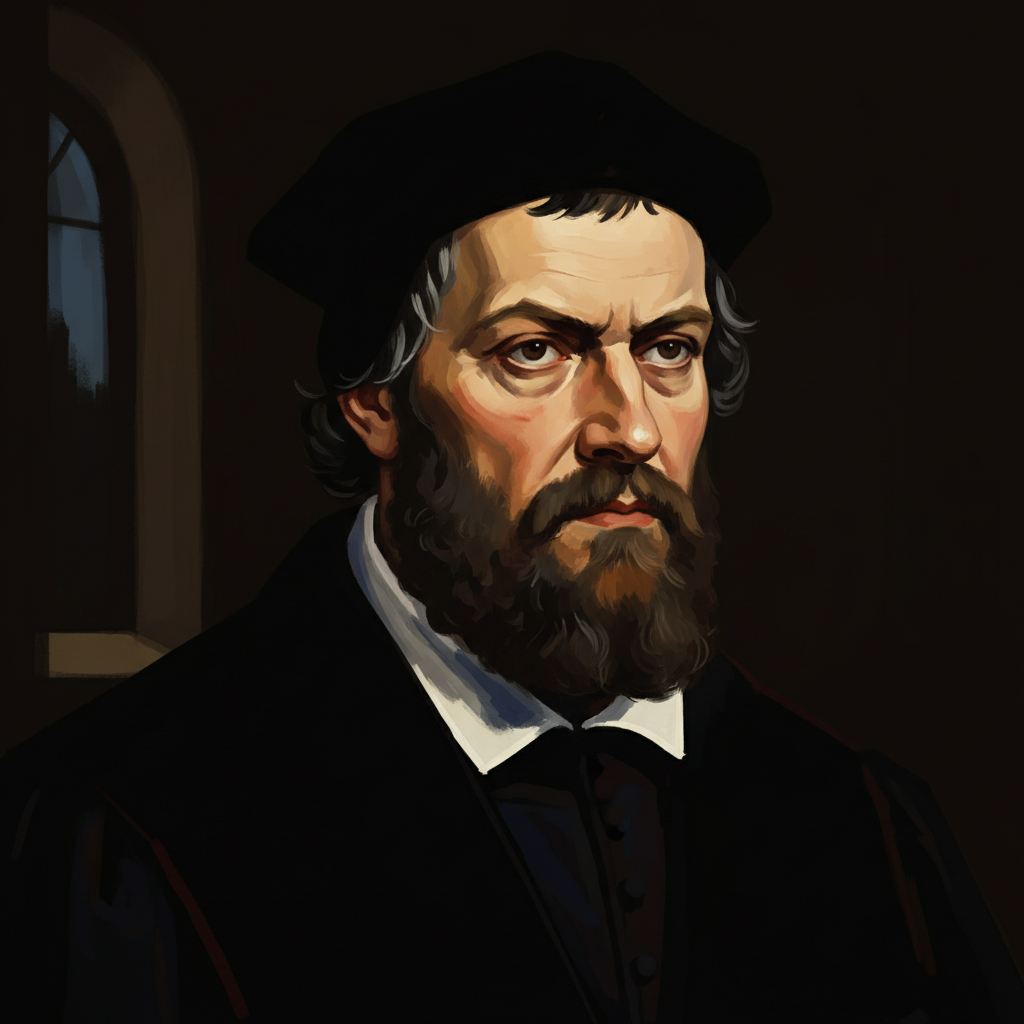
German theologian whose 95 Theses (1517) launched the Protestant Reformation and broke the Catholic Church's monopoly on Western Christianity. Closely associated with Philipp Melanchthon (Lutheran systematizer) and John Calvin (later Reformer who built on Luther's break). For an intellectual contrast, see Pope Leo X, Renaissance pope (1513-1521) — Leo X's indulgence sales triggered Luther's break and Leo excommunicated him in 1521 — Luther's entire Reformation is structured as a direct answer to the indulgence-funded Vatican Leo represented.
Found in 1 providers: grok
1 source checked
When dark thoughts, doubts, or urges press in on you, don't sit and brood over them. Distract yourself with ordinary pleasures: have a hearty meal, pour another drink, share a joke with friends. Treating temptation with playful contempt strips it of its power, while solemn struggle only feeds it. Lightness and good company can drown out the inner voice that torments you better than grim self-discipline ever will.
Luther famously battled what he called Anfechtungen, crushing spiritual despair he believed was demonic assault. Unlike his monastic past of fasting and self-flagellation, the reformer prescribed beer, food, music, and laughter as weapons against the devil. He married ex-nun Katharina von Bora, fathered six children, and hosted boisterous Table Talks where this advice was recorded, embodying his rejection of joyless asceticism for embodied Christian freedom.
Early 16th-century Germany was saturated with anxious piety: indulgences, purgatory fears, plague, and rigid monastic discipline shaped daily life. Luther's 1517 Theses ignited the Reformation, but converts struggled with conscience without confession or penance to soothe them. By prescribing food, drink, and laughter against the devil, Luther overturned centuries of medieval asceticism and defined a new Protestant sensibility where sanctified ordinary life replaced cloistered self-denial as the path to grace.
AI-generated insights based on extensive research and information for context. Factual errors? Email [email protected].
Your cart is empty