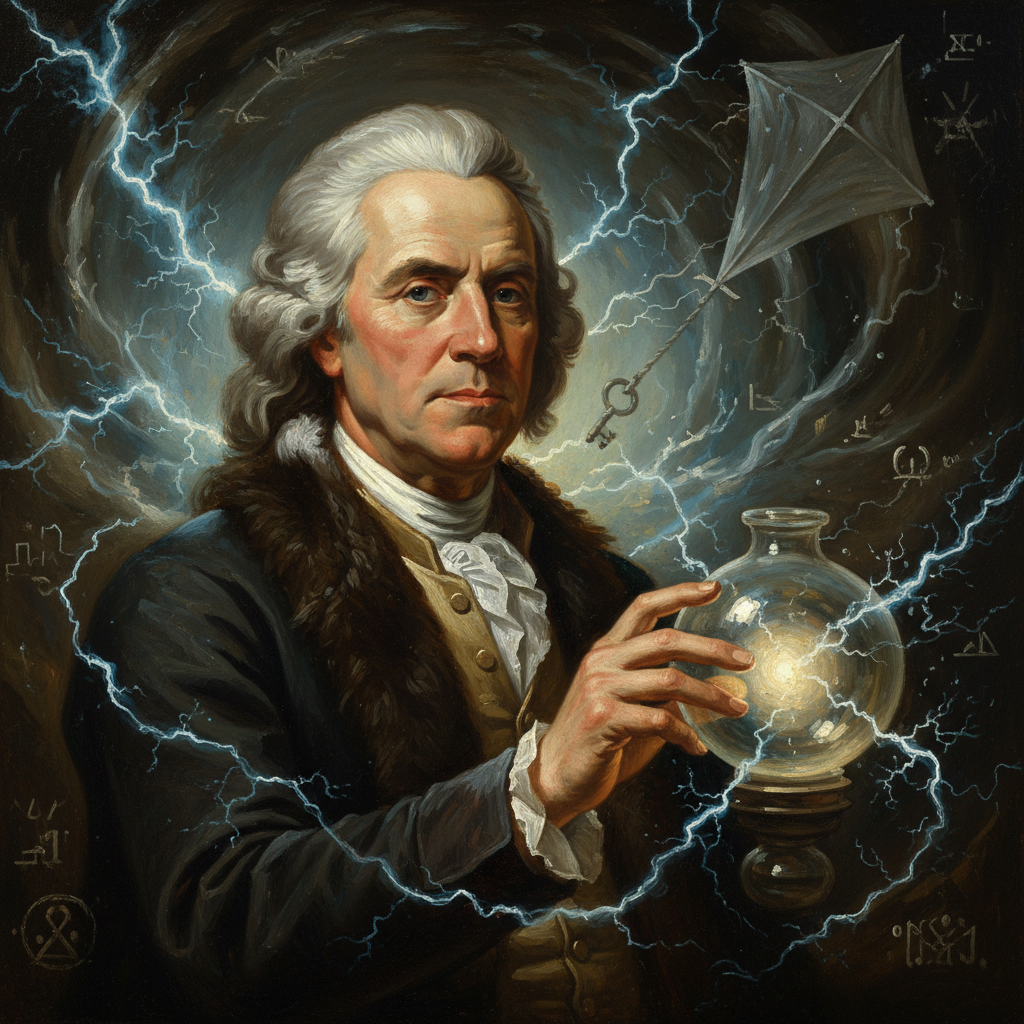
Benjamin Franklin — "Where there's marriage without love, there will be love without marriage."
Where there's marriage without love, there will be love without marriage.
Where there's marriage without love, there will be love without marriage.
Click any product to generate a realistic preview. Up to 3 at a time.
* Initial load can take up to 90 seconds — revising the preview in another color is nearly instant.
"Those who would give up essential Liberty, to purchase a little temporary Safety, deserve neither Liberty nor Safety."
"Either write something worth reading or do something worth writing."
"It is easier to prevent bad habits than to break them."
"A false friend and a shadow attend only while the sun shines."
"Money can't buy happiness, but it can make you awfully comfortable while you're being miserable."
Polymath Founding Father, diplomat, and Poor Richard's Almanack author who helped draft the Declaration of Independence and the Constitution. Closely associated with John Adams (fellow Founder, Massachusetts statesman) and Thomas Jefferson (fellow Declaration drafter). For an intellectual contrast, see Thomas Hutchinson, last royal governor of colonial Massachusetts — Franklin leaked Hutchinson's loyalist correspondence to Boston in 1772 to inflame revolutionary sentiment — Hutchinson represented the colonial-aristocrat crown-loyalty that Franklin's revolution was organized to dismantle.
Found in 1 providers: grok
1 source checked
A transactional marriage—built on status, money, or obligation rather than genuine affection—leaves emotional needs unmet. Those needs don't disappear; they find satisfaction elsewhere, through affairs or other attachments. Franklin warns that forcing people into loveless unions doesn't extinguish romantic desire—it redirects it. The absence of love inside the institution creates the very behavior the institution is meant to contain and channel.
Franklin's own domestic life embodied this insight. Before his common-law marriage to Deborah Read, he had already fathered an illegitimate son. Their union was largely a practical household partnership; he spent sixteen years abroad while she ran the business and died before he returned. In Paris he openly courted married women. As Poor Richard, he dispensed unsentimental observations about human nature—and his biography confirmed what he wrote: legal arrangement and genuine love rarely march together.
In Franklin's colonial and Enlightenment-era world, marriage was fundamentally a legal and economic contract—property transfers, family alliances, and social rank drove partner selection far more than affection. Divorce was nearly impossible, and women held almost no independent legal standing. Yet Enlightenment philosophy was elevating individual happiness and authentic feeling as legitimate moral claims. Against that backdrop, Franklin's quip carried real edge: societies that denied love inside marriage would inevitably find it flourishing outside, regardless of law or custom.
AI-generated insights based on extensive research and information for context. Factual errors? Email [email protected].
Your cart is empty