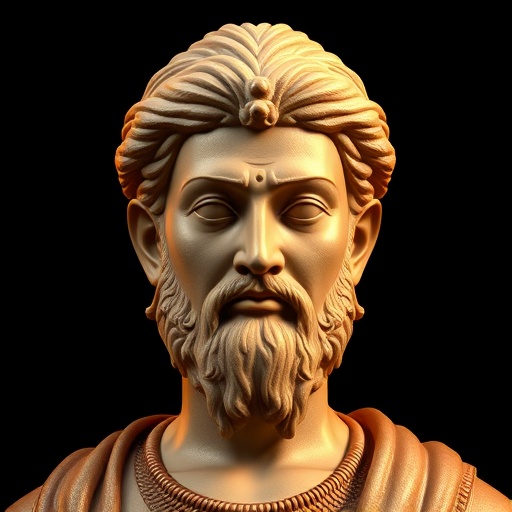
Mahavira — "Live and allow others to live; hurt no one; life is dear to all living beings."
Live and allow others to live; hurt no one; life is dear to all living beings.
Live and allow others to live; hurt no one; life is dear to all living beings.
Click any product to generate a realistic preview. Up to 3 at a time.
* Initial load can take up to 90 seconds — revising the preview in another color is nearly instant.
"The universe is governed by immutable laws."
"One should not steal."
"One who is pure in thought, word, and deed is truly happy."
"Ignorance is the root of all misery."
"The self is the friend and enemy of the self."
24th and last Tirthankara of Jainism, whose teachings of strict ahimsa (non-violence), aparigraha (non-attachment), and karma reshaped ancient Indian religion. Closely associated with The Buddha (near-contemporary moral revolutionary, also reacting against Vedic ritualism). For an intellectual contrast, see Vedic Brahmanical ritual sacrifice, the animal-sacrifice-centered Vedic religion of his era — Mahavira's ahimsa demanded total non-violence, including not eating root vegetables that kill the plant — a maximum-distance ethical move from the Vedic priestly tradition that ritually sacrificed cattle and horses. The two cleanest poles of ancient Indian religious ethics.
Found in 1 providers: grok
1 source checked
Treat your own life as precious, then extend that same regard to every creature around you. Do not harm others physically, emotionally, or in any way, because every living being values its existence as much as you value yours. Mutual respect and nonviolence are not ideals but practical obligations we owe one another simply because we all share the drive to survive and flourish.
Mahavira renounced royal comfort around 599 BCE, adopted extreme asceticism, and made ahimsa the cornerstone of Jain ethics. He walked carefully to avoid crushing insects, filtered water before drinking, and taught that every soul, however small, possesses the same innate worth. This quote is essentially his life's governing principle translated into a single imperative, directly mirroring his vow of total nonviolence.
Sixth-century BCE India was a period of intense philosophical ferment: Upanishadic thought questioned Vedic ritual, Buddhism was emerging, and caste-based animal sacrifice was widespread. Mahavira's radical insistence that no creature could be killed for ritual or food directly challenged Brahminical practice. In a world where life was routinely sacrificed for religious merit, declaring all life equally dear was a subversive and transformative ethical claim.
AI-generated insights based on extensive research and information for context. Factual errors? Email [email protected].
Your cart is empty