What it means
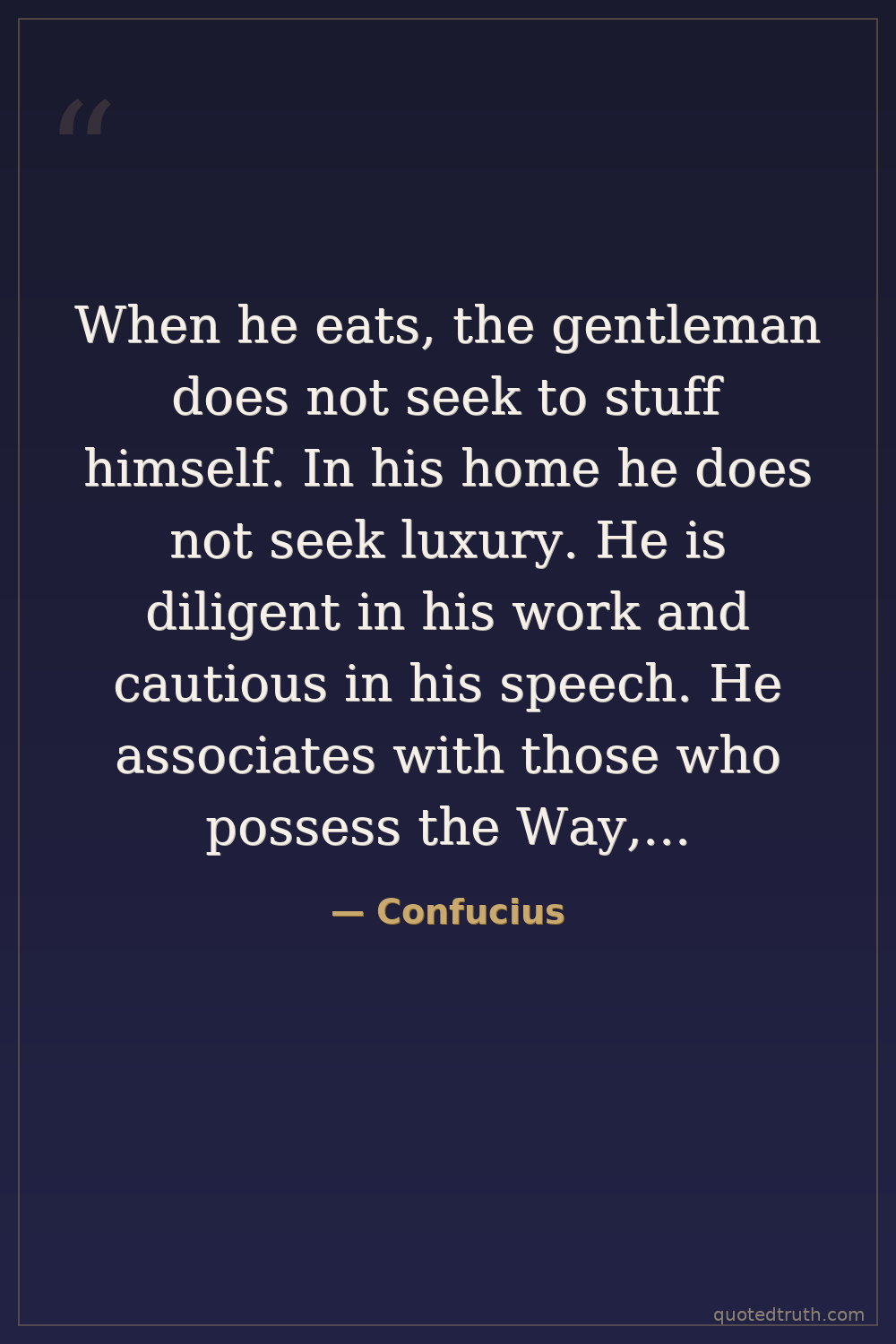
A truly refined person doesn't chase comfort, gourmet meals, or fancy possessions. Instead, they focus on doing their work carefully, speaking thoughtfully rather than carelessly, and spending time around wise, morally grounded people who help correct their flaws. Someone who lives this way, constantly refining their character through discipline and good company, deserves to be called a genuine student of life, not just someone who reads books.
Relevance to Confucius
Confucius spent his life teaching that moral cultivation mattered more than wealth or status, famously praising his poor student Yan Hui for staying joyful on rice and water. He worked as a teacher and minor official, valued ritual propriety and careful speech, and gathered disciples who shaped one another's character. This saying captures his core definition of learning as ethical self-improvement through practice and community, not mere accumulation of facts.
The era
Confucius lived during the Spring and Autumn period of late Zhou China, when feudal states warred constantly and aristocratic excess contrasted with widespread peasant suffering. Old ritual traditions were decaying, and rulers indulged in banquets and palaces while neglecting governance. Against this backdrop of luxury-chasing elites and political chaos, Confucius's insistence that a true gentleman prioritize diligence, restraint, and moral companionship over feasting and comfort was a pointed rebuke of his era's ruling class.
AI-generated insights based on extensive research and information for context. Factual errors? Email [email protected].