Martin Luther — "For I know One who suffered and made satisfaction on my behalf. His name is Jesu…"
For I know One who suffered and made satisfaction on my behalf. His name is Jesus Christ, Son of God, and where He is there I shall be also!
For I know One who suffered and made satisfaction on my behalf. His name is Jesus Christ, Son of God, and where He is there I shall be also!
Click any product to generate a realistic preview. Up to 3 at a time.
* Initial load can take up to 90 seconds — revising the preview in another color is nearly instant.
"To kill a peasant is not murder; it is helping to extinguish the conflagration. Let there be no half measures! Crush them! Cut their throats! Transfix them!"
"The stomach is the greatest lord on earth."
"Melanchthon is a miserable little worm of a man."
"There are three ways of growing: by study, by experience, and by prayer."
"Seventhly, let the young and strong Jews and Jewesses be given flail, axe, spade, and spindle, and let them earn their bread in the sweat of their brow, as was imposed on Adam's children."
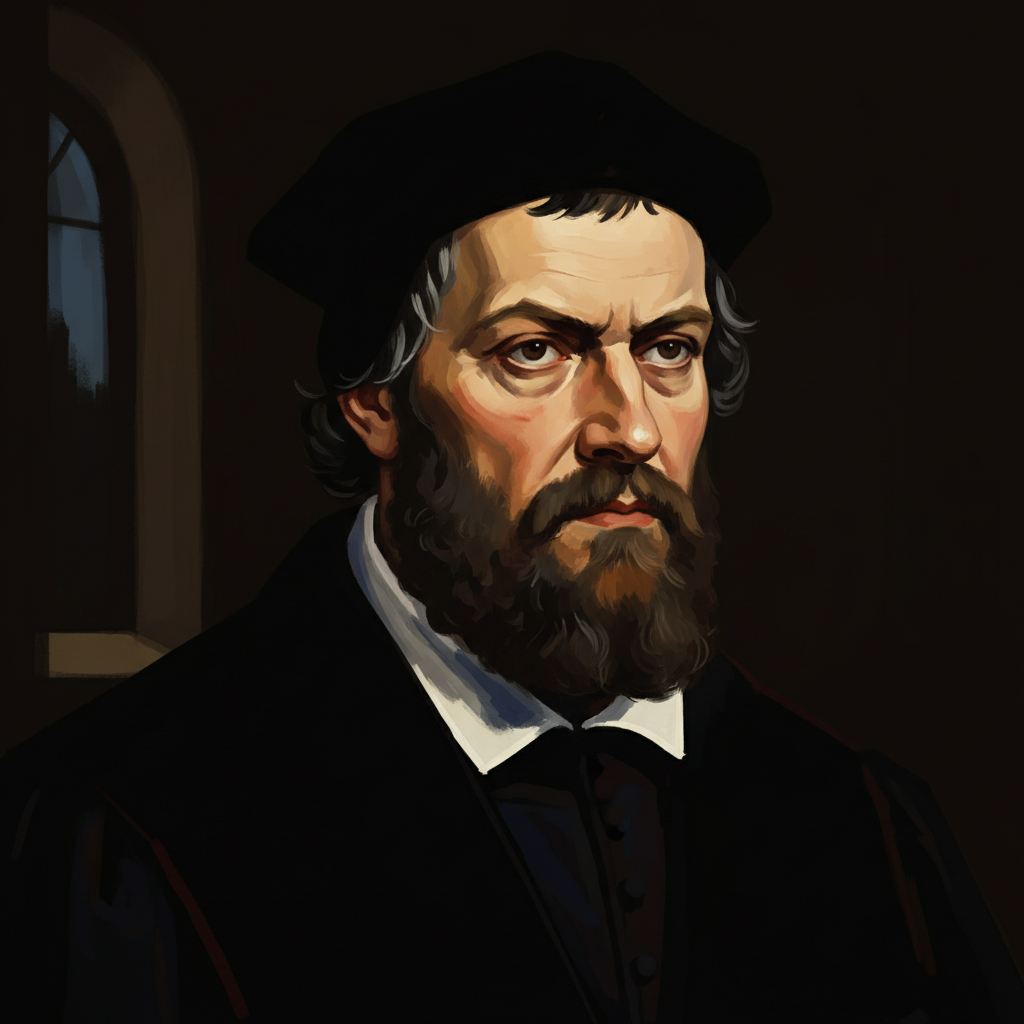
German theologian whose 95 Theses (1517) launched the Protestant Reformation and broke the Catholic Church's monopoly on Western Christianity. Closely associated with Philipp Melanchthon (Lutheran systematizer) and John Calvin (later Reformer who built on Luther's break). For an intellectual contrast, see Pope Leo X, Renaissance pope (1513-1521) — Leo X's indulgence sales triggered Luther's break and Leo excommunicated him in 1521 — Luther's entire Reformation is structured as a direct answer to the indulgence-funded Vatican Leo represented.
Found in 1 providers: gemini
1 source checked
The speaker finds complete confidence in facing death or judgment by trusting that Jesus Christ already paid the full price for their wrongdoing. Rather than relying on personal achievements or religious works to earn acceptance, they rest on someone else's sacrifice. Because Christ has gone ahead, the speaker expects to end up wherever Christ is, treating that destination as guaranteed rather than earned.
This captures the core of Luther's theological breakthrough: justification by faith alone, not by works, penance, or indulgences. After years of anguished self-examination as an Augustinian monk, Luther concluded salvation was a completed gift through Christ's substitutionary atonement. The quote's personal certainty reflects his pastoral voice, often written to comfort the dying and anxious, and mirrors his famous hymn 'A Mighty Fortress' in its defiant confidence.
In early-modern Europe, the medieval Catholic Church taught that salvation required sacraments, penance, purgatorial suffering, and indulgences sold to fund projects like St. Peter's Basilica. Death was terrifying; most feared centuries in purgatory. Luther's 1517 Ninety-Five Theses challenged this economy of merit, and the printing press spread his message across Germany. Such confident assurance of heaven contradicted clerical authority and helped fracture Western Christendom into Protestant and Catholic camps.
AI-generated insights based on extensive research and information for context. Factual errors? Email [email protected].
Your cart is empty