What it means
Leaders get better results by stepping back than by pushing. When those in charge stop meddling, issuing orders, and forcing outcomes, ordinary people naturally sort themselves out, behave fairly, and build prosperity on their own. Control breeds resistance and dependence; restraint lets people's own capacity surface. The point is trust in spontaneous order rather than constant management, and humility about how much top-down intervention actually helps anyone.
Relevance to Laozi
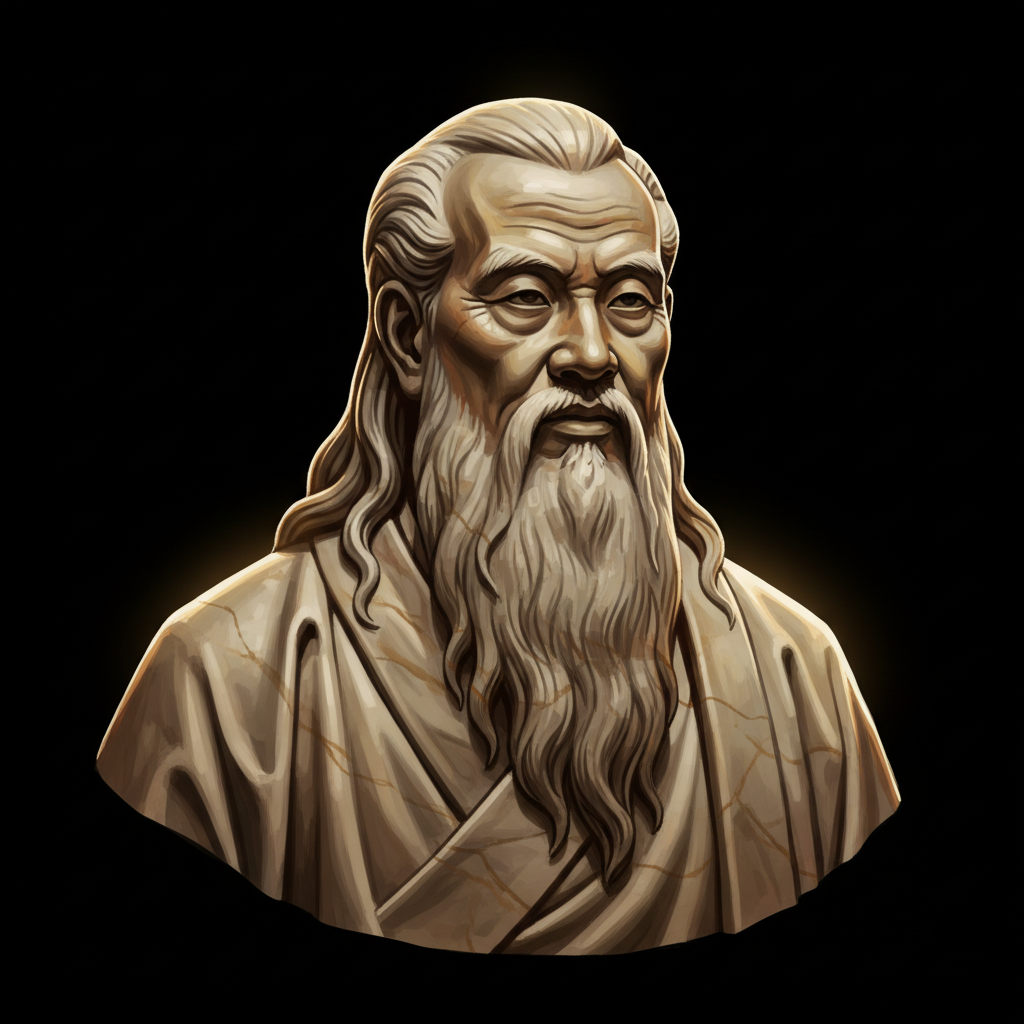
Laozi is the traditional founder of Taoism and author of the Tao Te Ching, which repeatedly praises wu wei, or effortless non-action. Legend says he worked as an archivist in the Zhou royal court, saw the decay of meddling government firsthand, and left civilization westward on a water buffalo. This saying distills his core teaching that the Tao governs best by not governing, mirroring his own withdrawal from bureaucratic life.
The era
Laozi is placed in the 6th century BCE, during the late Zhou dynasty's slide toward the Warring States period. Rival lords raised taxes, conscripted peasants, and fought constantly, while Confucian reformers pushed rigid ritual and hierarchical duty as the cure. Against that backdrop of heavy-handed statecraft and moral engineering, Laozi's call for rulers to do less and trust the people's nature was a sharp, countercultural rebuke to the era's managerial obsession.
AI-generated insights based on extensive research and information for context. Factual errors? Email [email protected].