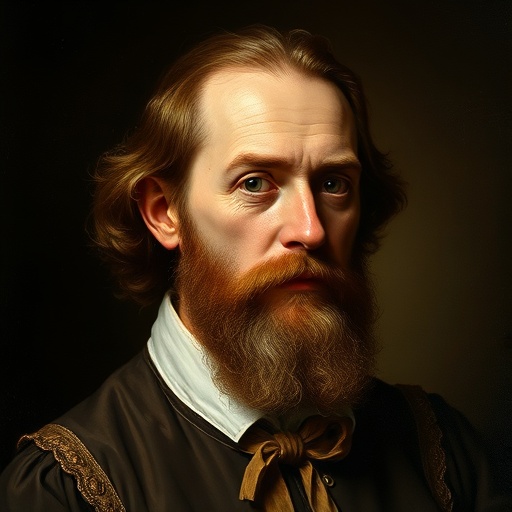
William Harvey — "The heart by its pulsific action moves, perfects, and cherishes the blood, and p…"
The heart by its pulsific action moves, perfects, and cherishes the blood, and preserves it from corruption and coagulation.
The heart by its pulsific action moves, perfects, and cherishes the blood, and preserves it from corruption and coagulation.
Click any product to generate a realistic preview. Up to 3 at a time.
* Initial load can take up to 90 seconds — revising the preview in another color is nearly instant.
"I confess that I have been led to embrace this opinion by a careful consideration of the structure and use of the valves in the veins."
"All animals, even man himself, are produced from an egg."
"What remains to be said is of so novel and unheard of a character that I not only fear injury to myself from the envy of a few, but I tremble lest I have mankind at large for my enemies, so much to wo…"
"The heart, like a pump, perpetually propels the blood."
"He who studies anatomy knows more than he who studies books."
English physician whose On the Motion of the Heart and Blood in Animals (1628) demonstrated blood circulation, overturning 1,400 years of Galenic medicine. Closely associated with Francis Bacon (his contemporary in the new English empiricism). For an intellectual contrast, see Galenic medicine, the 2nd-century Greek medical tradition (humors, blood-as-consumed-fuel) — Harvey calculated that the heart pumps more blood per hour than the body could possibly produce as fuel — a single quantitative observation that demolished the entire Galenic-Aristotelian medical worldview. The cleanest example in medical history of arithmetic disproving 14 centuries of authority.
From 'De Motu Cordis' (1628). Describes the heart's multifaceted role beyond just pumping.
Date: 1628
PhilosophicalFound in 1 providers: gemini
1 source checked
The heart's rhythmic pumping isn't merely mechanical transport — it actively maintains blood quality, keeping it fresh, fluid, and alive rather than stagnant or clotted. The heart is a living engine that both circulates and sustains blood's vitality. Without constant cardiac motion, blood would decay and solidify. This positions the heart as an active guardian of blood health, not just a passive pump pushing fluid through vessels.
Harvey published De Motu Cordis in 1628, overturning Galen's 1,400-year-old model of blood production and consumption. His meticulous dissections and quantitative reasoning proved blood circulates continuously rather than being perpetually manufactured by the liver. This quote reflects his empirical conviction that the heart is the body's central engine — a belief he defended against fierce academic opposition for decades, staking his reputation on observable physiology over inherited doctrine.
In early 17th-century Europe, Galenic medicine still dominated — physicians believed the liver continuously produced new blood, which organs consumed like fuel. Harvey's era witnessed the Scientific Revolution's first breakthroughs: Galileo's telescope, Kepler's planetary laws, Bacon's empiricism. Against this backdrop, Harvey applied quantitative measurement to anatomy, calculating the heart pumps far more blood per hour than the body could produce, forcing medicine to abandon a millennium of inherited dogma.
AI-generated insights based on extensive research and information for context. Factual errors? Email [email protected].
Your cart is empty