Laozi — "Recompense injury with kindness."
Recompense injury with kindness.
Recompense injury with kindness.
Click any product to generate a realistic preview. Up to 3 at a time.
* Initial load can take up to 90 seconds — revising the preview in another color is nearly instant.
"The Tao never does anything, yet through it all things are done."
"He who knows others is wise; he who knows himself is enlightened."
"The heaviest thing in the world is a human heart."
"Therefore the sage manages affairs without doing anything, and conveys his instructions without the use of speech."
"To attain knowledge, add things everyday. To attain wisdom, remove things every day."
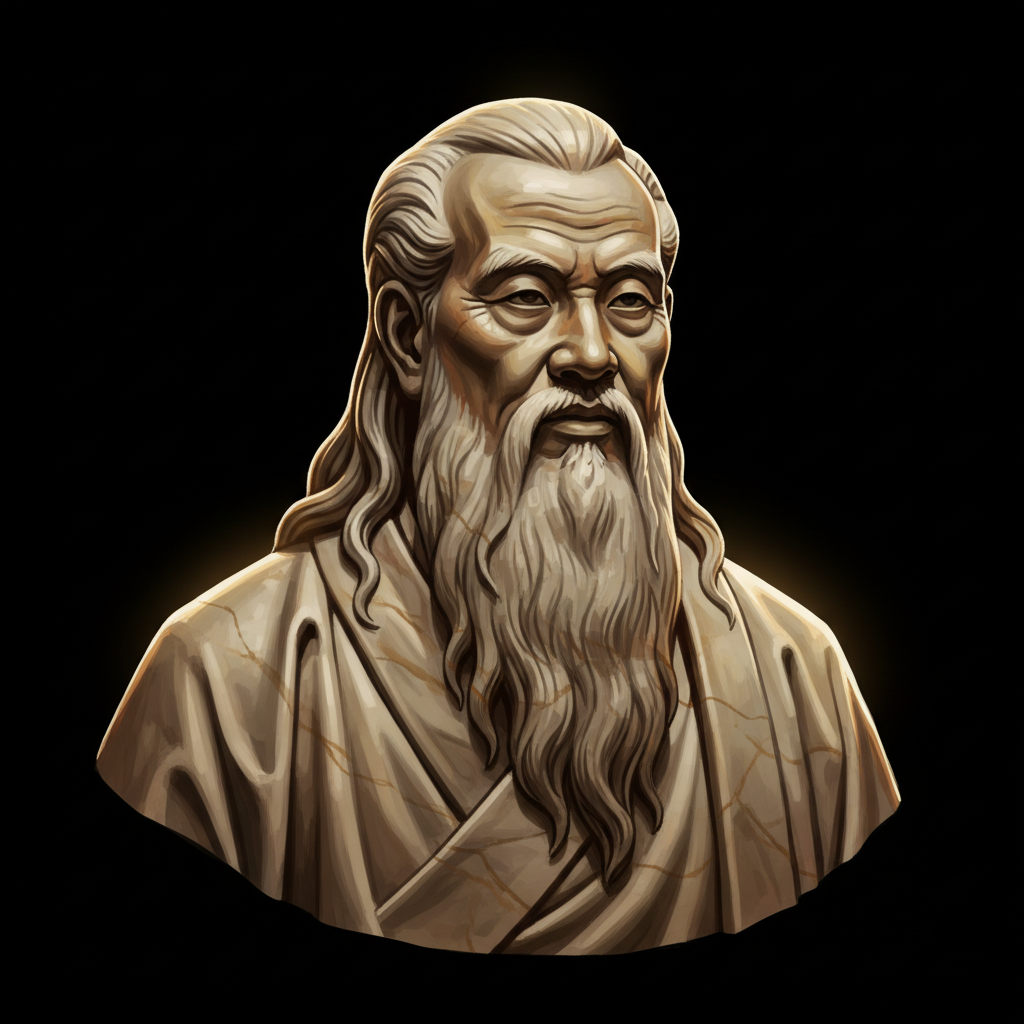
Reputed founder of Taoism and author of the Tao Te Ching, whose wu wei (effortless action) shaped East Asian philosophy. Closely associated with Zhuangzi (later Taoist who extended Laozi's framework). For an intellectual contrast, see Confucius, near-contemporary Chinese sage of social ritual and duty — Confucius systematized social order through ritual and hierarchy; Laozi argued that all such systems were the disease, not the cure — the two founding poles of Chinese moral philosophy.
Found in 1 providers: gemini
1 source checked
Respond to harm with goodwill rather than retaliation. When someone wrongs you, don't match their hostility with your own; instead answer with generosity, patience, or care. This breaks the cycle of escalating grudges and disarms the person who injured you. It's not weakness or passivity—it's a deliberate refusal to let another person's cruelty dictate your behavior, and often the most effective way to end a conflict.
Laozi taught wu wei, effortless action that works with nature rather than forcing outcomes. Returning kindness for injury fits his belief that yielding overcomes the rigid, as water wears down stone. As the legendary keeper of Zhou royal archives, he observed how court rivalries destroyed officials who repaid slights. His Tao Te Ching repeatedly urges rulers and sages to soften aggression with compassion rather than feed cycles of vengeance.
Laozi lived during China's late Zhou dynasty, an era sliding into the Warring States period when rival feudal lords waged constant wars and court intrigues produced routine assassinations and betrayals. Confucian ethics demanded proportional justice—injury answered with justice, kindness with kindness. Laozi's counter-teaching was radical: break the retaliation cycle entirely. In a collapsing political order drowning in vendetta, proposing kindness toward enemies challenged the era's dominant moral code.
AI-generated insights based on extensive research and information for context. Factual errors? Email [email protected].
Your cart is empty