Pythagoras — "Concern should drive us into action and not into a depression."
Concern should drive us into action and not into a depression.
Concern should drive us into action and not into a depression.
Click any product to generate a realistic preview. Up to 3 at a time.
* Initial load can take up to 90 seconds — revising the preview in another color is nearly instant.
"The soul of man is immortal and that it changes into other kinds of animals."
"Beatitude is the knowledge of the perfection of the numbers of the soul."
"Every man has been made by God in order to acquire knowledge and contemplate."
"Declining from the public ways, walk in unfrequented paths."
"The most momentous thing in human life is the art of winning the soul to good or to evil."
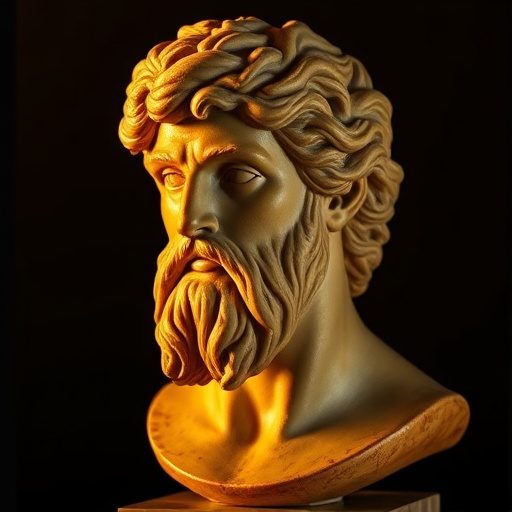
Greek philosopher and mathematician whose school in Croton combined geometry (the Pythagorean theorem), number-mysticism, and a religious-vegetarian way of life. Closely associated with Thales of Miletus (earlier pre-Socratic and the first philosopher). For an intellectual contrast, see Heraclitus, pre-Socratic Greek philosopher of flux — Heraclitus called Pythagoras 'the chief of swindlers' — among the founding insults of the philosophical-rivalry tradition. Their 'all is flux' vs 'all is number' poles still organize the philosophy of mathematics today (Platonist vs anti-realist).
An exhortation to productive engagement rather than despair.
Date: c. 5th Century BCE
PhilosophicalFound in 1 providers: gemini
1 source checked
Worry by itself accomplishes nothing and can trap you in paralysis. When something troubles you, let that feeling become fuel for doing something about it rather than sinking into hopelessness. Anxiety is a signal that a problem matters, but the proper response is measured effort toward fixing or improving the situation. Sitting with dread only multiplies it; channeling it outward produces results.
Pythagoras led a disciplined brotherhood that treated self-mastery, daily self-examination, and purposeful action as pathways to harmony. His followers studied mathematics, music, and ethics to bring order to inner chaos, believing reasoned effort could tame emotion. This saying matches that ethos: disturbance of the soul must be answered with constructive practice. For a thinker devoted to proportion and balance, wallowing violated the moral geometry he taught.
In the 6th century BCE, Greek thought was shifting from fate-bound myth toward personal responsibility and rational inquiry. City-states like Croton, where Pythagoras settled, faced political upheaval, warfare, and uncertain futures that tempted citizens toward fatalism. Philosophical schools began offering practical ethics for navigating hardship, emphasizing virtue, courage, and civic engagement. Urging action over despair aligned with an emerging worldview that humans, not the gods alone, shaped their circumstances through deliberate choice.
AI-generated insights based on extensive research and information for context. Factual errors? Email [email protected].
Your cart is empty