What it means
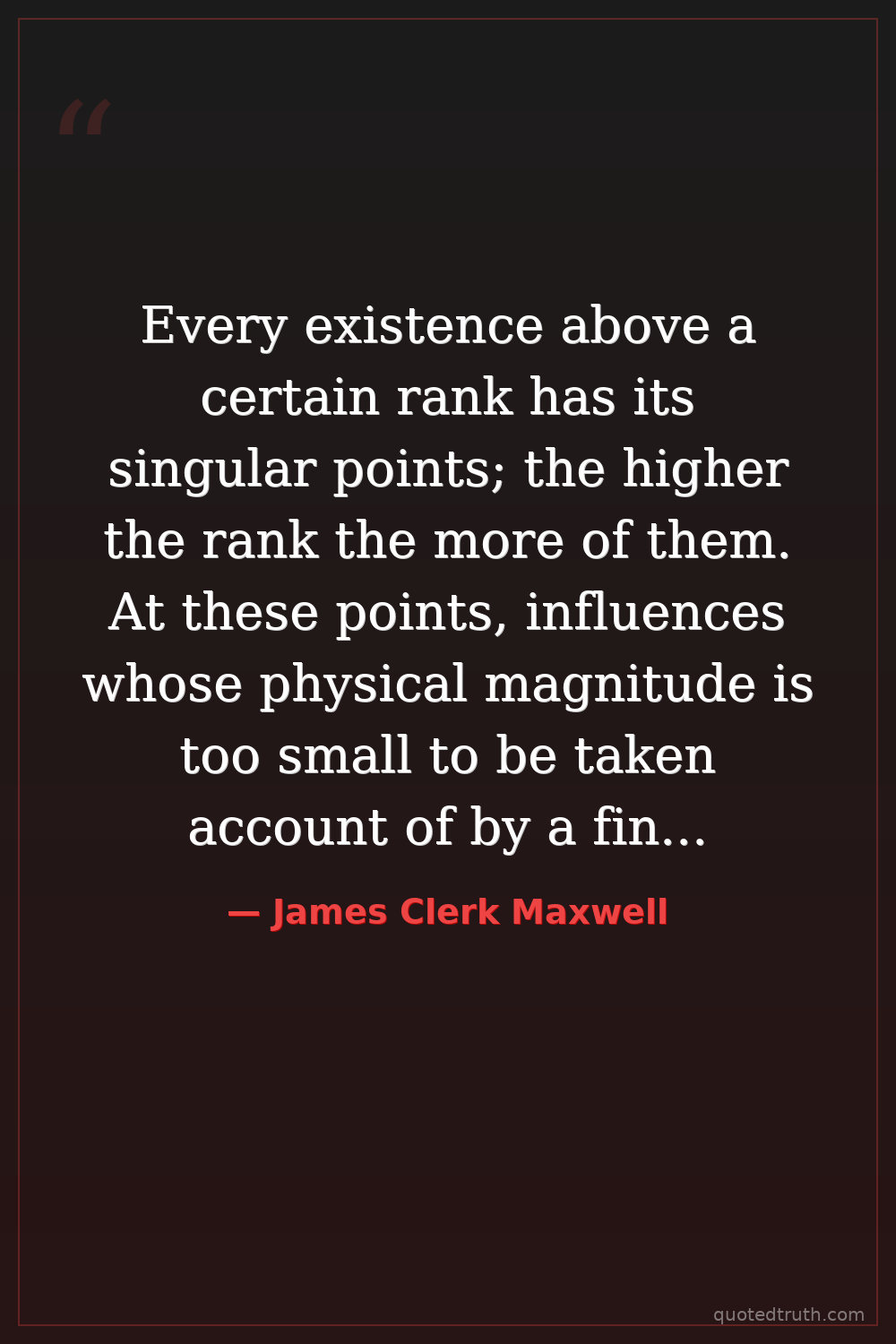
Complex systems have critical tipping points, and the more sophisticated the system, the more such points exist. At these delicate moments, tiny influences that seem too small to measure or matter can trigger enormous consequences. What looks insignificant in ordinary circumstances becomes decisive at the right moment, meaning small causes can produce effects wildly disproportionate to their apparent size when a system is poised at one of these sensitive thresholds.
Relevance to James Clerk Maxwell
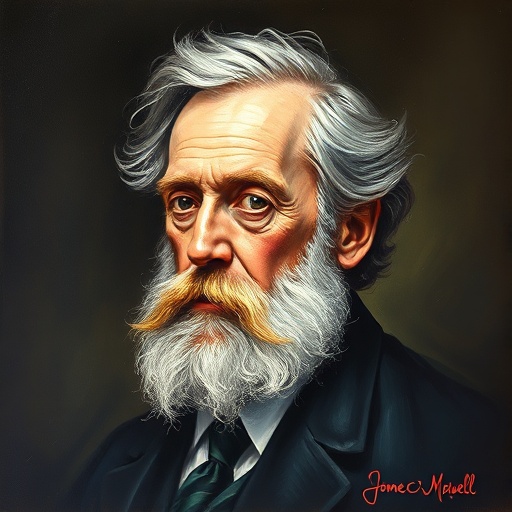
Maxwell, who unified electricity, magnetism, and light through his equations, thought deeply about determinism and free will. As a devout Christian and physicist, he wrestled with how human choice fit into a mechanical universe. This reflection on singular points was his scientific answer: even in a physical system, tiny impulses at critical junctures could pivot outcomes, leaving room for agency, meaning, and moral responsibility within otherwise law-bound nature.
The era
Writing in the 1870s, Maxwell lived amid Victorian debates over determinism sparked by Laplace's clockwork universe, Darwin's evolution, and thermodynamics. Many feared science reduced humans to mechanism. Maxwell's remark, from his essay on free will, engaged this crisis directly, anticipating ideas later formalized in chaos theory and bifurcation mathematics nearly a century before Lorenz's butterfly effect popularized sensitivity to initial conditions.
AI-generated insights based on extensive research and information for context. Factual errors? Email [email protected].