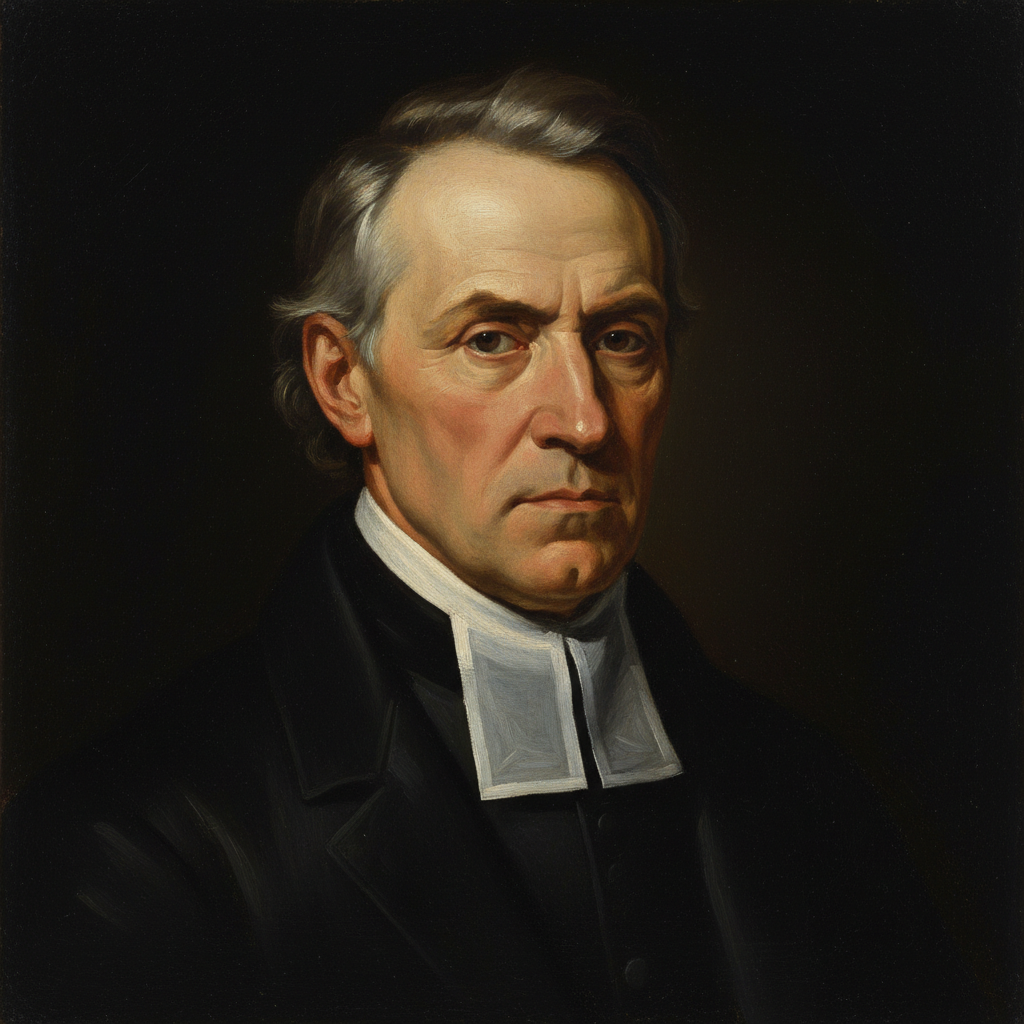
John Wesley — "I will not speak to you as a Methodist, but as a man of common sense."
I will not speak to you as a Methodist, but as a man of common sense.
I will not speak to you as a Methodist, but as a man of common sense.
Click any product to generate a realistic preview. Up to 3 at a time.
* Initial load can take up to 90 seconds — revising the preview in another color is nearly instant.
"The rich, the honourable, the great, will hardly enter into the kingdom of heaven."
"I have not lost a day since I was born."
"I am as much a High-Churchman as ever I was."
"And are we not to use our reason? Unquestionably. But no more than we are to use our hands or feet. We are to use it as a servant, not as a master."
"I was much disgusted at the way in which the people sing here. They bawl as loud as they can, but it is without any taste or judgment. They have no notion of singing in tune, or time, or harmony; but …"
English Anglican cleric and founder of Methodism, whose open-air preaching and class-meeting structure created the largest 18th-century evangelical revival. Closely associated with Charles Wesley (his hymn-writing brother) and George Whitefield (early co-revivalist, later doctrinal opponent). For an intellectual contrast, see George Whitefield, Calvinist evangelical revivalist — Whitefield's predestinarian Calvinism vs Wesley's free-grace Arminian theology split the early Methodist movement permanently in the 1739-41 break. The founding evangelical Calvinist-Arminian schism — the two parallel evangelical traditions American Christianity descends from.
Found in 1 providers: grok
1 source checked
Wesley is setting aside sectarian identity to appeal to basic human reasoning and shared logic. He's saying that what follows doesn't require religious affiliation to understand — it stands on rational, universally accessible grounds. He's invoking common ground over doctrine, prioritizing persuasion through reason rather than theological authority, and signaling that his argument should be evaluated on its merits alone.
Wesley was a relentless evangelist who preached to coal miners, prisoners, and the poor — audiences skeptical of institutional religion. Though he founded Methodism, he consistently resisted reducing Christianity to denominational tribalism. He was Oxford-educated, methodical, and deeply rational in his approach to faith, believing sincere reasoning and lived Christianity were inseparable. This quote reflects his pragmatic, non-elitist communication style.
Eighteenth-century Britain was fractured by religious sectarianism — Anglican establishment, Dissenters, Catholics, and emerging evangelical movements competed fiercely. Methodist preachers faced mob violence and legal opposition. Invoking 'common sense' was politically shrewd: the Enlightenment had elevated reason as the universal arbiter of truth, so appealing beyond denominational labels to shared rationality was both culturally resonant and strategically disarming.
AI-generated insights based on extensive research and information for context. Factual errors? Email [email protected].
Your cart is empty