What it means
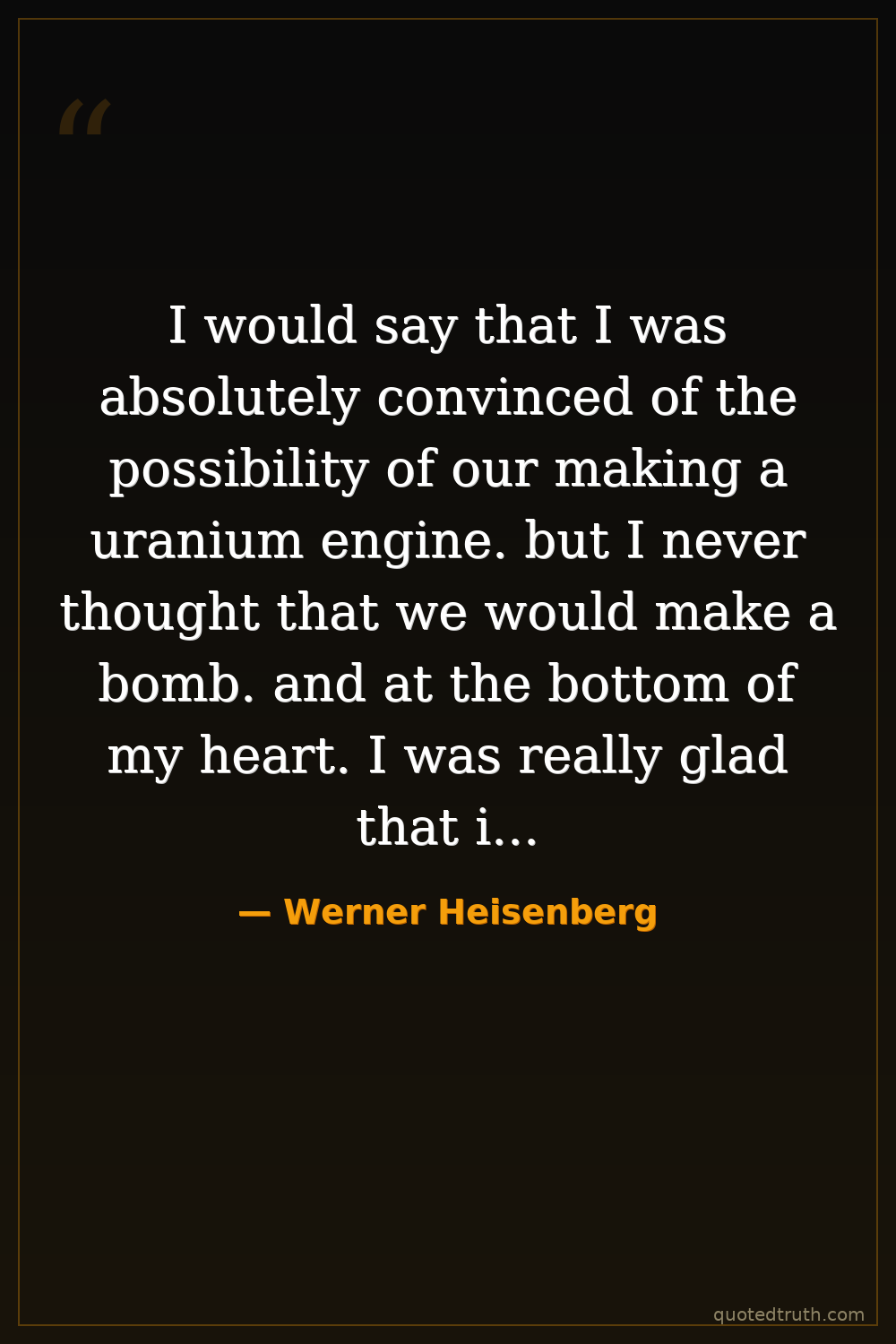
Heisenberg says he fully believed Germany could build a working nuclear reactor, which he calls a uranium engine, for power generation. He denies ever expecting they would build an actual atomic bomb. He admits privately feeling relieved that the project aimed at energy rather than weapons. He is drawing a sharp moral line between peaceful nuclear technology and destructive military use, and placing his own work on the safer side.
Relevance to Werner Heisenberg
Heisenberg led Nazi Germany's wartime uranium program, the Uranverein, and his exact intentions remain fiercely debated. Some historians argue he deliberately slowed bomb progress; others say German physics simply lacked the resources and key calculations. This quote reflects his postwar self-portrayal, consistent with his 1941 Copenhagen meeting with Niels Bohr and his recorded Farm Hall reactions in 1945, when interned scientists learned of Hiroshima and expressed shock at American success.
The era
World War II triggered parallel atomic programs in Germany, Britain, and the United States. The Manhattan Project succeeded in 1945, producing bombs dropped on Hiroshima and Nagasaki, while Germany never built a working reactor or weapon. After the war, captured German physicists were detained at Farm Hall in England, where their conversations were secretly recorded. The moral weight of nuclear weapons and each scientist's wartime role became defining questions of the early atomic age.
AI-generated insights based on extensive research and information for context. Factual errors? Email [email protected].