What it means
Progress requires questioning established knowledge rather than treating it as settled fact. If inventors and thinkers simply accepted prevailing wisdom without testing it, breakthroughs would be impossible. Real advancement comes from skepticism toward conventional answers and willingness to investigate whether accepted truths actually hold up under scrutiny. The comfortable path of agreement produces nothing new; doubt and independent verification create the conditions for discovery.
Relevance to Wright Brothers (Orville & Wilbur)
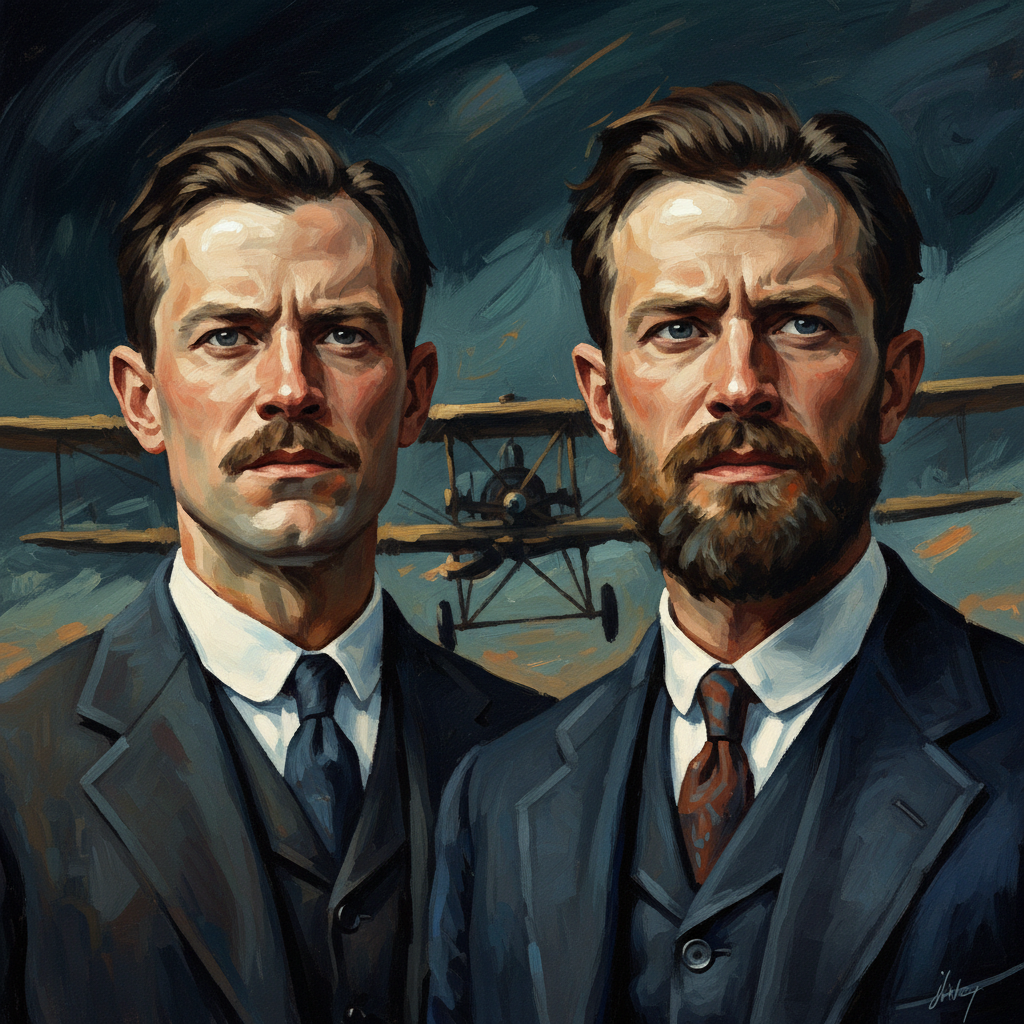
The Wrights defied expert consensus that heavier-than-air human flight was impractical or impossible. They discovered existing aeronautical data from Lilienthal and Langley contained errors, so they built their own wind tunnel in 1901 to retest lift and drag coefficients from scratch. Self-taught bicycle mechanics without formal engineering credentials, they trusted systematic experimentation over published authorities, which is precisely how they achieved controlled powered flight at Kitty Hawk in December 1903.
The era
Around 1900, prominent scientists publicly declared powered flight either impossible or decades away. Samuel Langley's well-funded government-backed aerodrome crashed into the Potomac just days before Kitty Hawk. The late Victorian and early Progressive era venerated credentialed experts and institutional science, yet it was also an age of independent tinkerers, patent races, and rapid mechanical innovation, where outsiders with workshops could still overturn academic assumptions through hands-on proof.
AI-generated insights based on extensive research and information for context. Factual errors? Email [email protected].