What it means
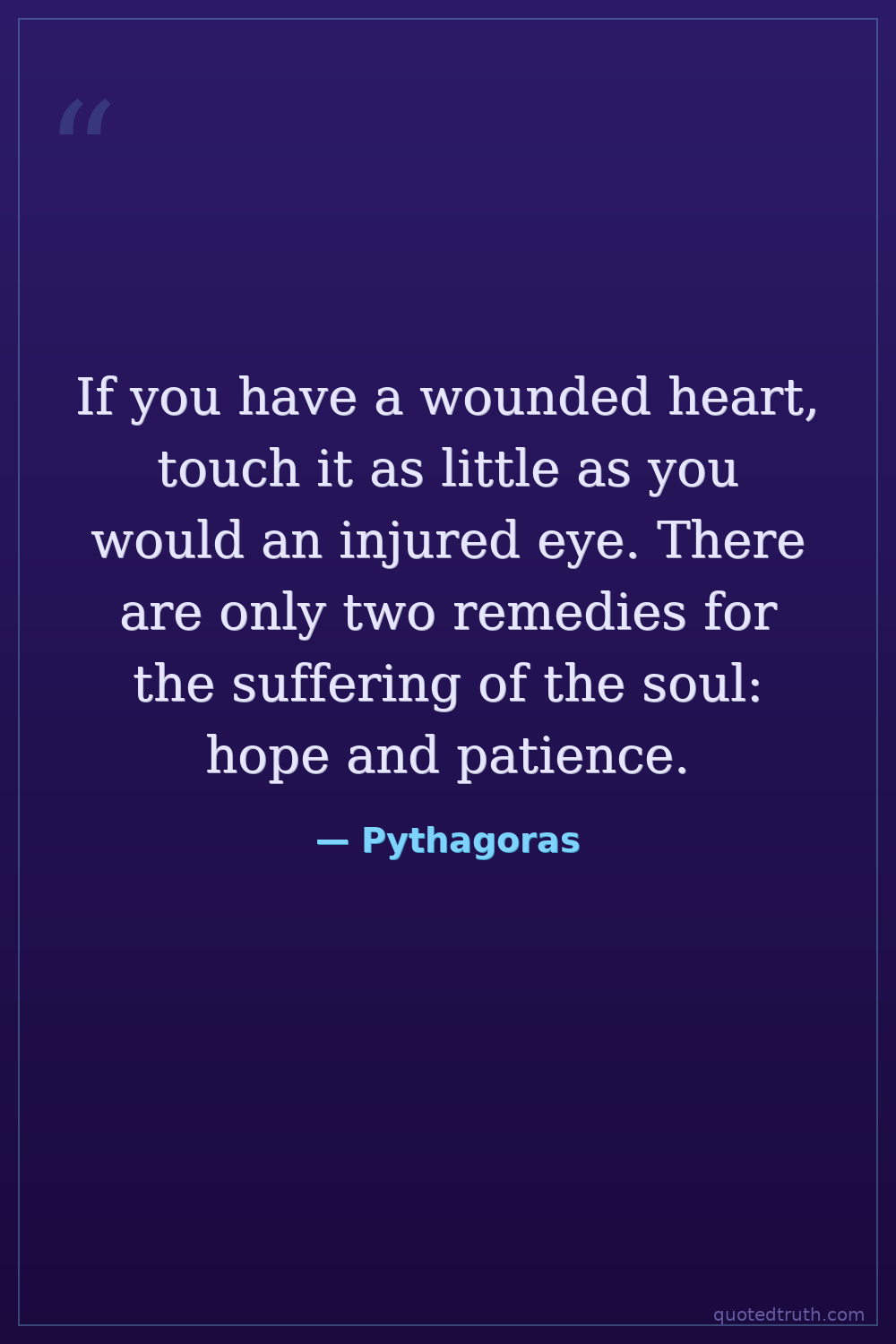
When emotional pain strikes, obsessing over it prolongs the suffering, just as repeatedly touching an injured eye worsens the damage. The quote counsels restraint in dwelling on heartbreak or grief. Rather than compulsively analyzing or reopening wounds, two internal resources offer genuine relief: hope, which orients us toward a better future, and patience, which allows natural healing to occur. Both require trusting that time and outlook, not intervention, restore the soul.
Relevance to Pythagoras
Pythagoras founded a philosophical brotherhood bound by strict ethics and belief in the soul's immortality through reincarnation. He viewed philosophy as medicine for the soul, shaping his community's rigorous daily practices. This quote's prescription of hope and patience mirrors his teaching that inner purification is gradual and requires endurance, not force. His focus on soul-care predates formal psychology, reflecting his conviction that inner life, not just mathematics, demanded systematic cultivation and attention.
The era
In 6th-century BC Greece, emotional suffering was commonly attributed to divine punishment or divine interference, not understood psychologically. Greek medicine was only beginning to move toward naturalistic explanations; Hippocrates would not codify this shift for another century. Pythagoras's analogy between physical injury and emotional pain was radical, suggesting both followed natural principles. Amid frequent wars, political upheaval, and short life expectancies, prescribing hope and patience as systematic remedies offered an unusually rational framework for personal resilience.
AI-generated insights based on extensive research and information for context. Factual errors? Email [email protected].