Wright Brothers (Orville & Wilbur) — "It is not necessary to be a horse to be a good jockey."
It is not necessary to be a horse to be a good jockey.
It is not necessary to be a horse to be a good jockey.
Click any product to generate a realistic preview. Up to 3 at a time.
* Initial load can take up to 90 seconds — revising the preview in another color is nearly instant.
"We were lucky enough to grow up in an environment where there was always much encouragement to children to pursue intellectual interests; to investigate whatever aroused curiosity."
"The machine is now a commercial success."
"We were very much surprised at the ease with which the machine was controlled."
"We were confident that we had solved the problem of human flight."
"It was the first time in the history of the world that a machine carrying a man had raised itself by its own power into the air in full flight, had sailed forward without reduction of speed, and had f…"
American aviation pioneers who achieved the first sustained powered controlled airplane flight at Kitty Hawk, NC, on December 17, 1903. Closely associated with Octave Chanute (their gliding mentor and aeronautical correspondent). For an intellectual contrast, see Samuel Pierpont Langley, Smithsonian Institution Secretary and government-funded aviation researcher — Langley's Aerodrome crashed twice into the Potomac in October-December 1903 with $50,000 of War Department funding; the Wright Brothers' bicycle-shop empiricism beat Langley's institutional Big Science by 9 days. The most-cited example in engineering history of empirical-tinkerer beating institution-funded credentialism.
Wilbur Wright, in a letter to Octave Chanute, referring to their lack of formal engineering education
Date: 1900
ShockingFound in 1 providers: grok
1 source checked
You don't need to personally embody something to master it or guide it skillfully. A person can excel at directing, operating, or understanding a subject without being that subject themselves. Expertise comes from observation, study, and skill rather than from being part of what you work with. The rider and the ridden are different roles, and mastery of the former does not require becoming the latter.
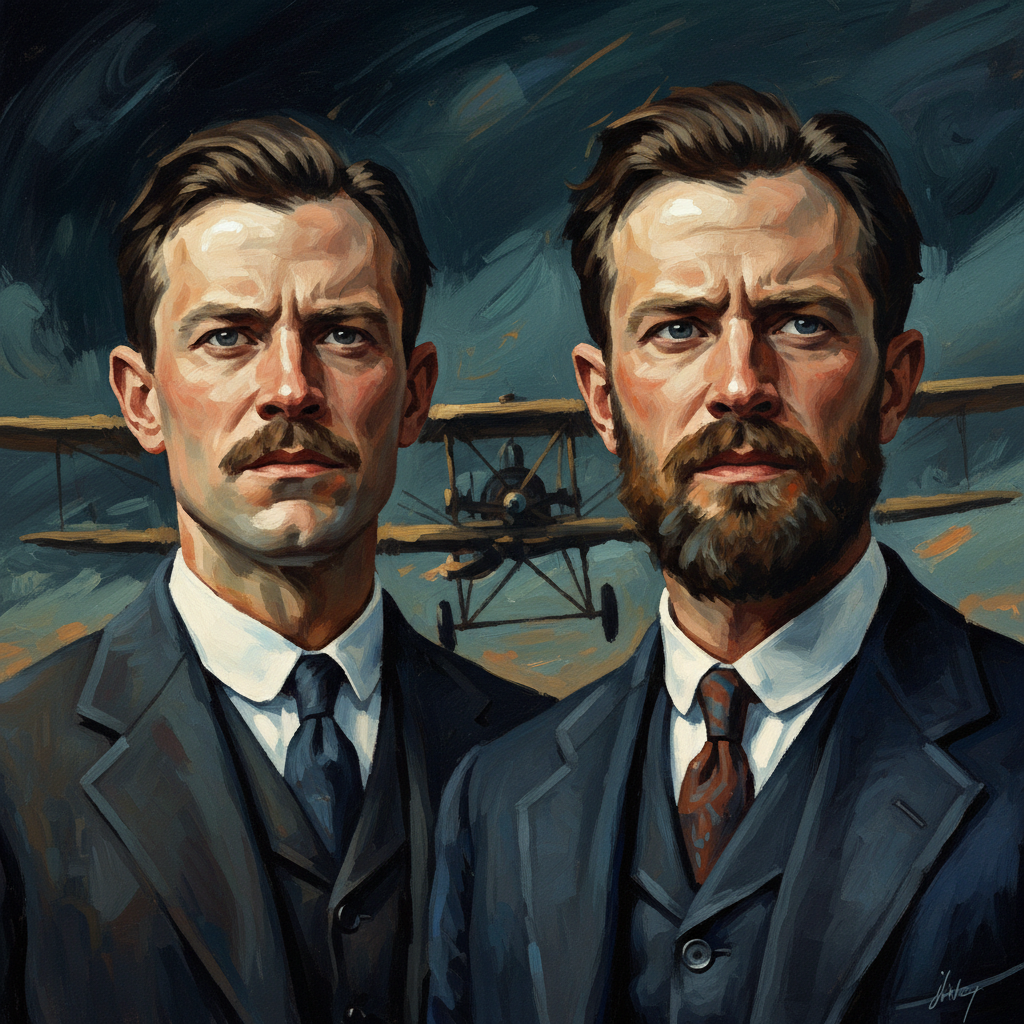
The Wrights were bicycle mechanics, not birds, yet they cracked powered flight by studying avian wing-warping and translating it into mechanical control. Neither brother had formal engineering training or a pilot's pedigree before Kitty Hawk in 1903. They proved that patient outsiders, armed with wind-tunnel data and hands-on tinkering, could master a domain previously reserved for dreamers and credentialed scientists, embodying the jockey-not-horse principle.
In the early 1900s, aviation was dominated by well-funded figures like Samuel Langley, whose Smithsonian-backed aerodrome famously failed weeks before the Wrights' success. The Progressive Era prized self-taught inventors, and Dayton, Ohio brimmed with small-shop innovation. Credentialism was rising, yet practical Yankee ingenuity still commanded respect. The Wrights' triumph over academic rivals reinforced a cultural belief that outsiders with grit and method could outpace established experts.
AI-generated insights based on extensive research and information for context. Factual errors? Email [email protected].
Your cart is empty