Wright Brothers (Orville & Wilbur) — "Success comes from being prepared for opportunities."
Success comes from being prepared for opportunities.
Success comes from being prepared for opportunities.
Click any product to generate a realistic preview. Up to 3 at a time.
* Initial load can take up to 90 seconds — revising the preview in another color is nearly instant.
"The problem of flight was not one of power, but of control."
"We are not content to walk upon the ground."
"We learn much by tribulation, and by adversity our hearts are made better."
"We have at last succeeded in making a machine that will fly."
"The best thing about being a man of science is that you never have to be bored."
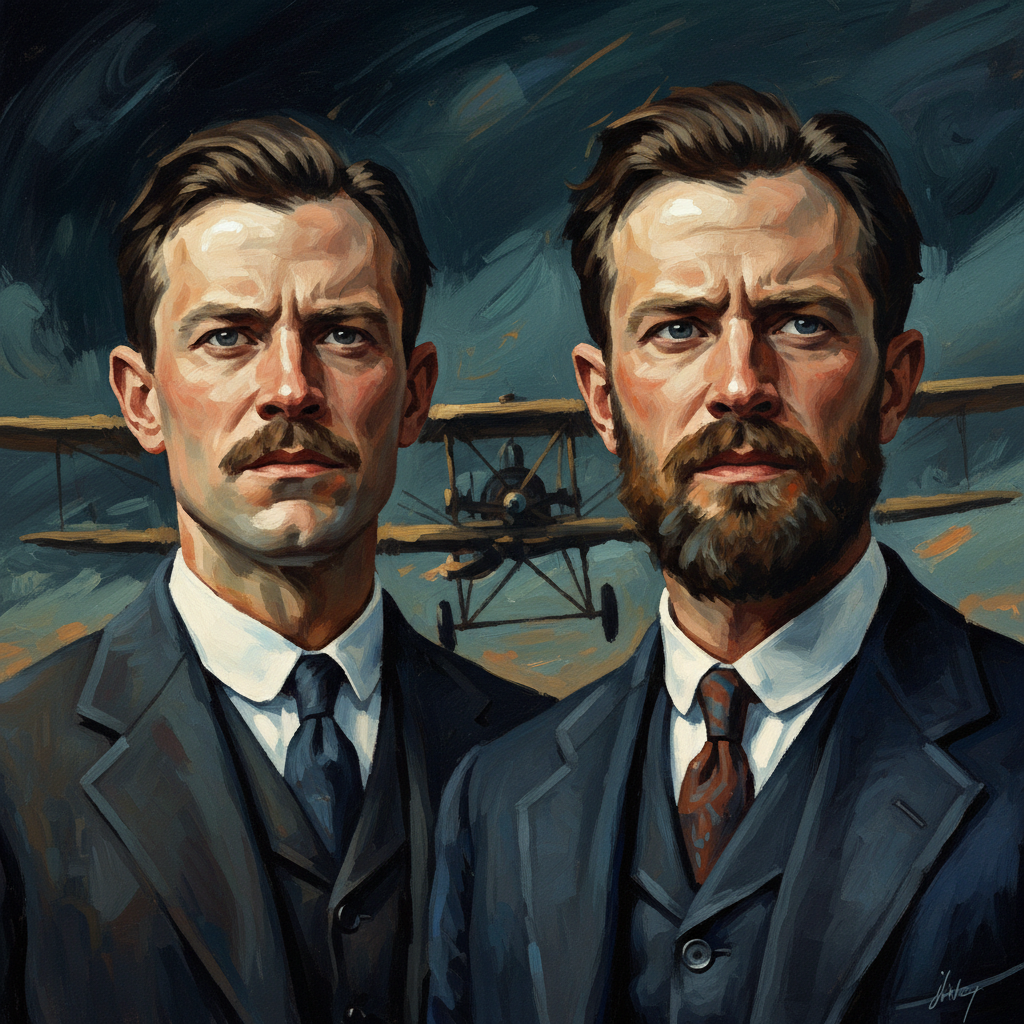
American aviation pioneers who achieved the first sustained powered controlled airplane flight at Kitty Hawk, NC, on December 17, 1903. Closely associated with Octave Chanute (their gliding mentor and aeronautical correspondent). For an intellectual contrast, see Samuel Pierpont Langley, Smithsonian Institution Secretary and government-funded aviation researcher — Langley's Aerodrome crashed twice into the Potomac in October-December 1903 with $50,000 of War Department funding; the Wright Brothers' bicycle-shop empiricism beat Langley's institutional Big Science by 9 days. The most-cited example in engineering history of empirical-tinkerer beating institution-funded credentialism.
Found in 1 providers: grok
1 source checked
This saying argues that opportunity alone does not produce achievement. When a chance appears, only those who have already built the skills, knowledge, and tools to act on it can turn it into a real result. Luck favors the ready. The work happens before the moment arrives, through steady practice and study, so that when the window opens, you can step through it instead of scrambling to catch up.
The Wrights embodied this. Before their 1903 Kitty Hawk flight, they spent years studying Lilienthal's gliders, building a wind tunnel to test over 200 wing shapes, and mastering control through hundreds of glider trials. Bicycle mechanics by trade, they self-taught aerodynamics and engineered their own engine when none existed. When favorable wind and a workable design finally aligned, they were ready. Rivals with more funding, like Langley, failed because preparation, not resources, decided the race to powered flight.
The turn of the 20th century was an era of feverish invention: electricity, automobiles, radio, and a global race for heavier-than-air flight. Governments and wealthy academics poured money into aeronautics and mostly failed. The Industrial Revolution had democratized tools and knowledge, letting two Ohio bicycle shop owners compete with funded institutions. It was a culture that worshipped self-taught tinkerers, where patient experimentation could still outpace prestige, and opportunity rewarded those who did the quiet groundwork.
AI-generated insights based on extensive research and information for context. Factual errors? Email [email protected].
Your cart is empty