What it means
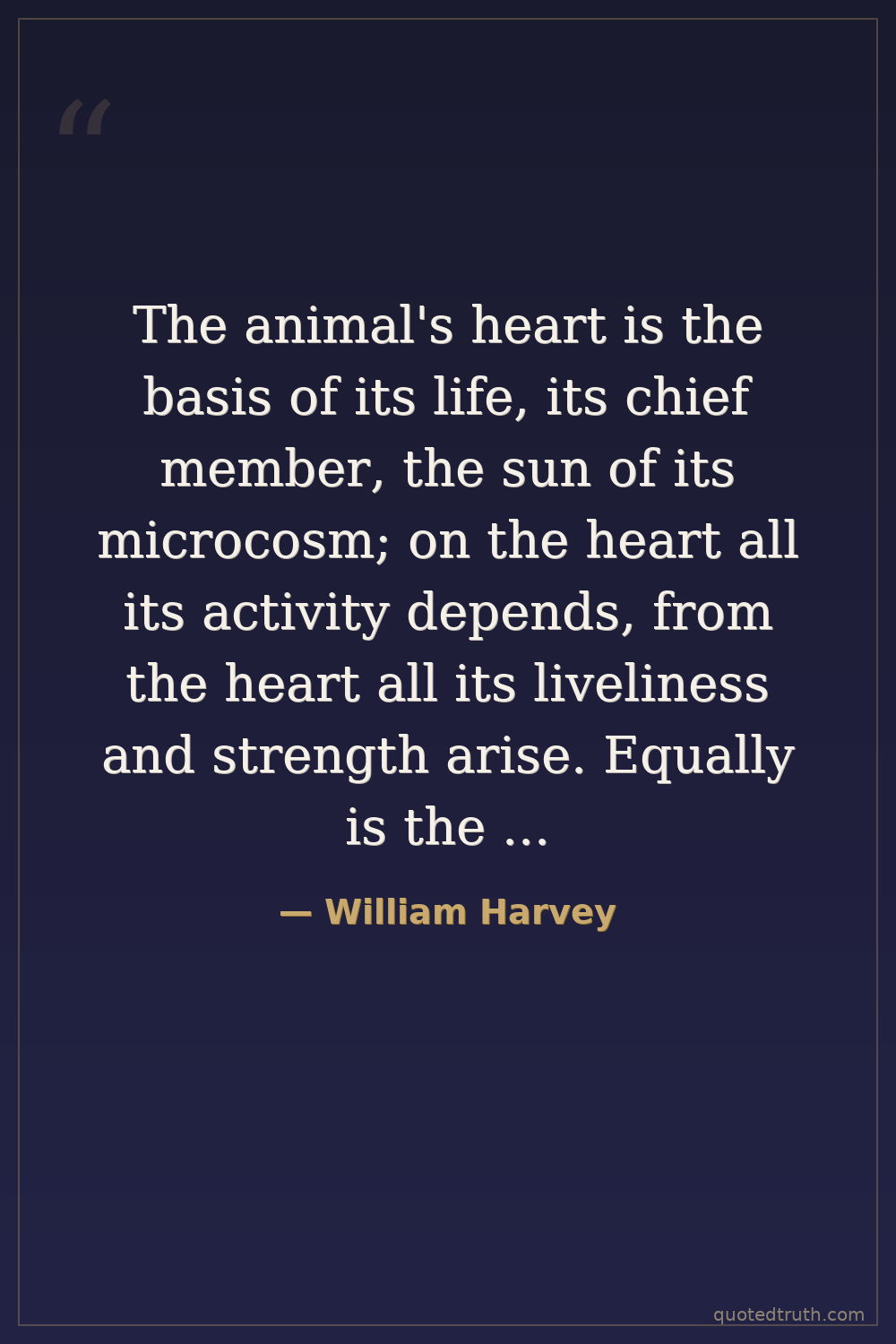
The heart is the central engine of a living creature — the origin of all vitality, movement, and strength. Harvey then maps this directly onto political structure: a king occupies the same role in a nation that the heart does in a body. Both are supreme centers from which power and life radiate outward to every part. Remove either and the whole system collapses.
Relevance to William Harvey
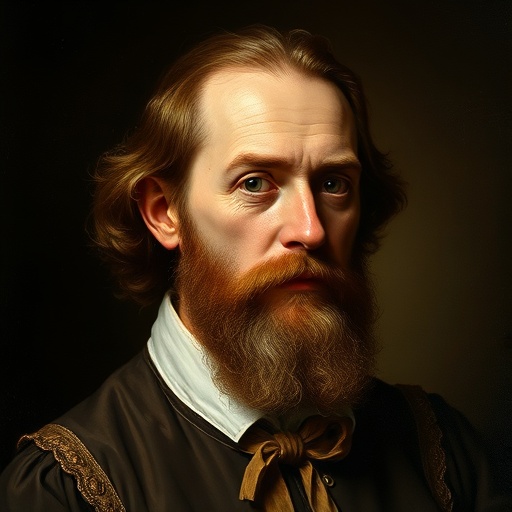
Harvey published this in De Motu Cordis (1628), his landmark proof of blood circulation. He served as royal physician to James I and Charles I, so the heart-king parallel was personal conviction, not mere flattery. His discovery repositioned the heart from passive chamber to active pump — the most powerful organ — mirroring his belief that centralized authority, whether biological or political, was the source of all order.
The era
Harvey wrote during the height of divine-right monarchy in England, years before the Civil War that would behead Charles I. Political theorists routinely used body metaphors to justify royal power. Simultaneously, 1,500 years of Galenic medicine — which made the liver, not the heart, supreme — was being dismantled by empirical observation. Anchoring revolutionary anatomy in familiar monarchist imagery made Harvey's findings less threatening to Church and Crown.
AI-generated insights based on extensive research and information for context. Factual errors? Email [email protected].