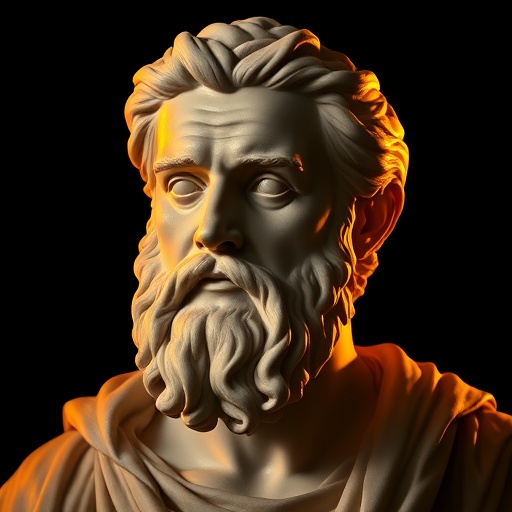
Hippocrates
Father of medicine
Sayings by Hippocrates
If you want to live a long life, you must be careful not to eat too much of the same thing.
The brain is the seat of the soul.
Sleep, when disturbed, is a sign of disease.
If a man takes a bath, and has a fever, and afterward he has a chill, that is bad.
The patient must combat his disease along with the physician.
Those diseases which medicines do not cure, iron cures; those which iron does not cure, fire cures; and those which fire does not cure, are to be reckoned wholly incurable.
It is cold that generates disease.
Wherever the art of medicine is loved, there is also a love of humanity.
Diseases which are advanced, and those which are of long standing, are difficult to cure.
Men ought to know that from nothing else but thence (from the brain) come joys, delights, laughter and sports, and sorrows, griefs, despondency, and lamentations.
When a fever is present, the bowels should be loose; when absent, they should be costive.
Hot diseases are cured by cold, and cold diseases by hot.
The healthy stomach makes a good digestion.
Eating alone will not keep a man well; he must also take exercise. For food and exercise, while possessing opposite qualities, yet work together to produce health.
It is well to be up before daybreak, for such habits contribute to health, wealth, and wisdom.
The powers of drugs are not to be trusted, but the power of nature is to be trusted.
Much suffering is caused by the humors.
When a man has a pain in his head, and it is in the back of his head, it is a sign that he will have a fever.
A physician without a knowledge of astrology has no right to call himself a physician.
For it is not the physician who cures, but nature, who is the physician of diseases.