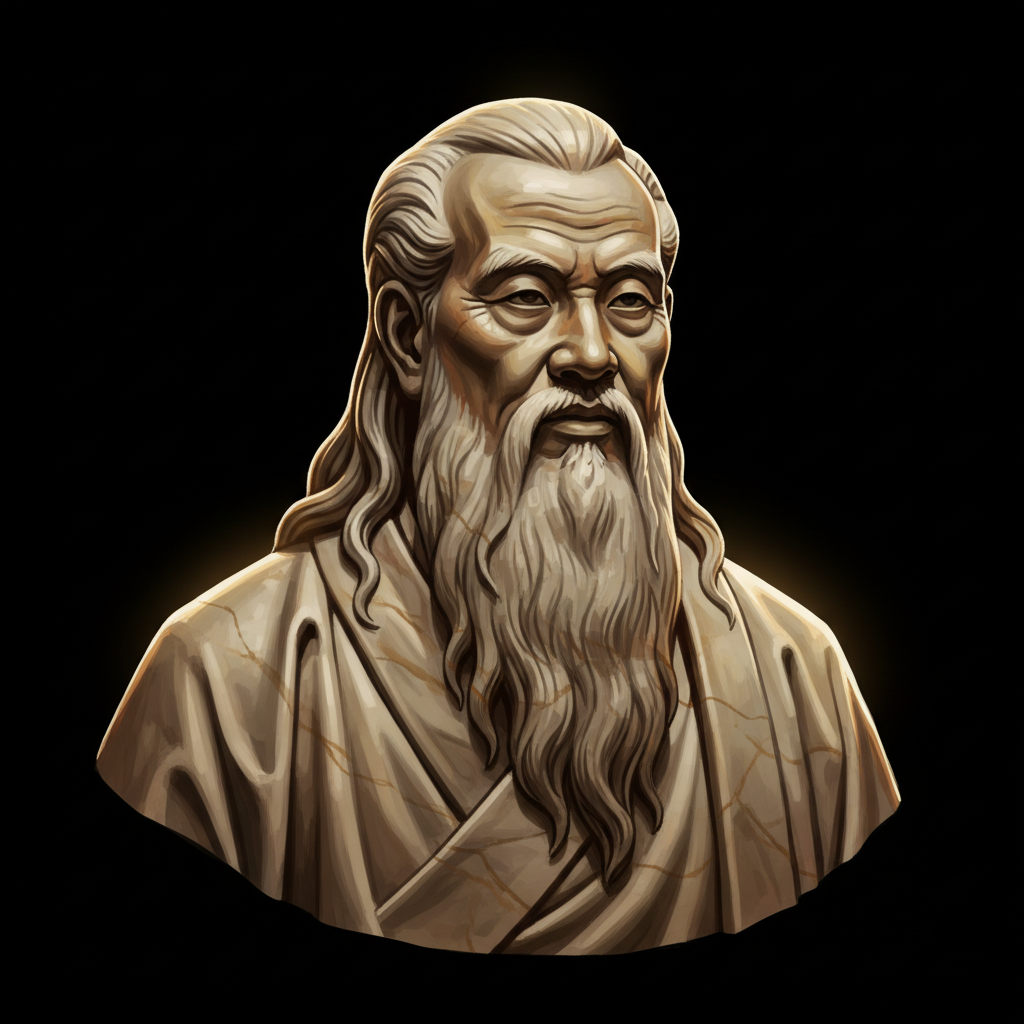
Portrait of Laozi

Laozi

Founder of Taoism

Ancient influential 196 sayings

Sayings by Laozi

Deal with the small as with the large.

c. 6th-4th century BCE — Daodejing, Chapter 63
Wisdom Unverifiable

Deal with the small as with the large.

c. 6th-4th century BCE — Daodejing, Chapter 63
Wisdom Confirmed

Keep your mouth shut, guard your senses, and you will be free from trouble. Open your mouth, always be busy, and you will be beyond hope.

c. 6th-4th century BCE — Daodejing, Chapter 52
Wisdom Unverifiable

Keep your mouth shut, guard your senses, and you will be free from trouble. Open your mouth, always be busy, and you will be beyond hope.

c. 6th-4th century BCE — Daodejing, Chapter 52
Wisdom Confirmed

The Way that can be told of is not an unvarying way.

6th-4th century BCE — Tao Te Ching, Chapter 1 - paradoxical opening
Wisdom Unverifiable

The sage is sharp but not cutting, pointed but not piercing, straightforward but not unrestrained, brilliant but not dazzling.

6th-4th century BCE — Tao Te Ching, Chapter 58
Nature & World Unverifiable

Governing a large country is like frying a small fish.

6th-4th century BCE — Tao Te Ching, Chapter 60 - minimal intervention advice
Wisdom Unverifiable

The sage wears rough clothing and holds the jewel in his heart.

6th-4th century BCE — Tao Te Ching, Chapter 70
Art & Creativity Unverifiable

When the great way falls into disuse, there are benevolence and rectitude.

6th-4th century BCE — Tao Te Ching, Chapter 18 - critique of conventional morality
Wisdom Unverifiable

The five colors make one blind in the eyes; the five tones make one deaf in the ears.

6th-4th century BCE — Tao Te Ching, Chapter 12 - warning against sensory excess
Wisdom Unverifiable

The greatest paradox of life is that death is the ultimate goal.

6th century BCE (approx) — Interpretation of Taoist philosophy.
Life & Death Unverifiable

The best fighter is never angry.

6th century BCE (approx) — From the 'Tao Te Ching', Chapter 68.
War & Conflict Confirmed

When I let go of what I am, I become what I might be.

6th century BCE (approx) — Interpretation of Taoist philosophy, often attributed as a direct quote.
Wisdom Unverifiable

The more prohibitions there are, the poorer the people will be.

6th century BCE (approx) — From the 'Tao Te Ching', Chapter 57.
Wisdom Unverifiable

He who controls others may be powerful, but he who has mastered himself is mightier still.

6th century BCE (approx) — From the 'Tao Te Ching', Chapter 33.
Power & Leadership Confirmed

To know that you do not know is the best. To think you know when you do not is a disease.

6th century BCE (approx) — From the 'Tao Te Ching', Chapter 71.
Wisdom Unverifiable

The sage puts his own person last, and yet is found in the foremost place.

6th century BCE (approx) — From the 'Tao Te Ching', Chapter 7.
Wisdom Unverifiable

He who is content with what he has, is rich.

6th century BCE (approx) — From the 'Tao Te Ching', Chapter 33.
Money & Business Unverifiable

If you do not change direction, you may end up where you are heading.

6th century BCE (approx) — Interpretation of Taoist philosophy.
Wisdom Unverifiable

The wise man does not lay up his own treasures. The more he gives to others, the more he has for his own.

6th century BCE (approx) — From the 'Tao Te Ching', Chapter 81.
Wisdom Confirmed
Your Cart

Your cart is empty