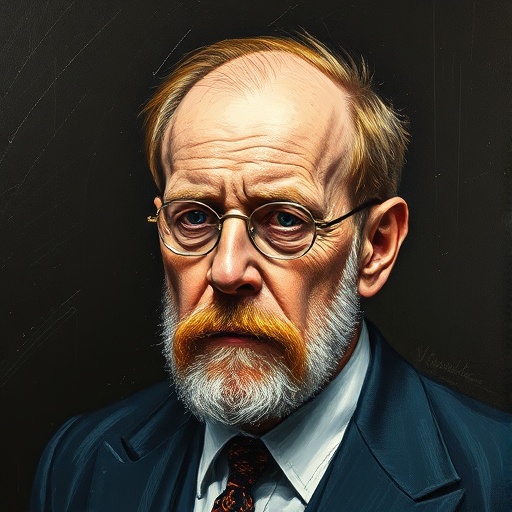
Werner Heisenberg
Quantum mechanics, uncertainty principle
Sayings by Werner Heisenberg
Not only is the Universe stranger than we imagine, it is stranger than we *can* imagine.
The more I think about the physical aspects of the electron, the more it becomes a puzzle.
The Copenhagen interpretation of quantum mechanics starts from the paradox that we describe our experiments in terms of classical physics, and we describe the elementary particles in terms of quantum mechanics.
If we want to describe what happens in an atomic event, we must realize that the word 'happens' can apply only to the observation, not to the state of affairs between two observations.
When we speak of a picture of reality, we always mean a classical picture.
Every word or concept, clear as it may seem to be, has only a limited range of applicability.
The path to the new physics was paved by the discovery of the quantum of action.
Science is made by men, not by apparatus.
The more precise the measurement of position, the more imprecise the measurement of momentum, and vice versa.
Quantum theory does not really describe the behavior of 'things'; it describes the behavior of 'what we can know' about things.
The atoms or elementary particles themselves are not real; they form a world of potentialities or possibilities rather than one of things or facts.
The existing scientific concepts cover always only a very limited part of reality, and the other part which has not yet been understood is infinite.
One cannot be a physicist without feeling that a religious element is present in the world.
The problems of atomic physics are not problems of technology, but problems of philosophy.
I remember discussions with Bohr which went through many hours till very late at night and ended almost in despair; and when at the end of the discussion I went alone for a walk in the neighboring park, I repeated to myself again and again the question: Can nature possibly be as absurd as it seemed to us in these atomic experiments?
The idea of an objective real world whose smallest parts exist objectively in the same sense as stones or trees exist, independently of whether or not we observe them... is impossible.
One day, when we have learned to understand the elementary particles, we will have understood the whole world.
The concept of the objective reality of the elementary particles has thus evaporated not into the fog of some new, unclear, or not yet understood reality concept, but into the transparent clarity of a mathematics that represents no longer the behavior of the elementary particles but rather our knowledge of this behavior.
The smallest units of matter are not physical objects in the ordinary sense; they are forms, structures or—in Plato's sense—Ideas.
We have to remember that what we observe is not nature in itself but nature exposed to our method of questioning.